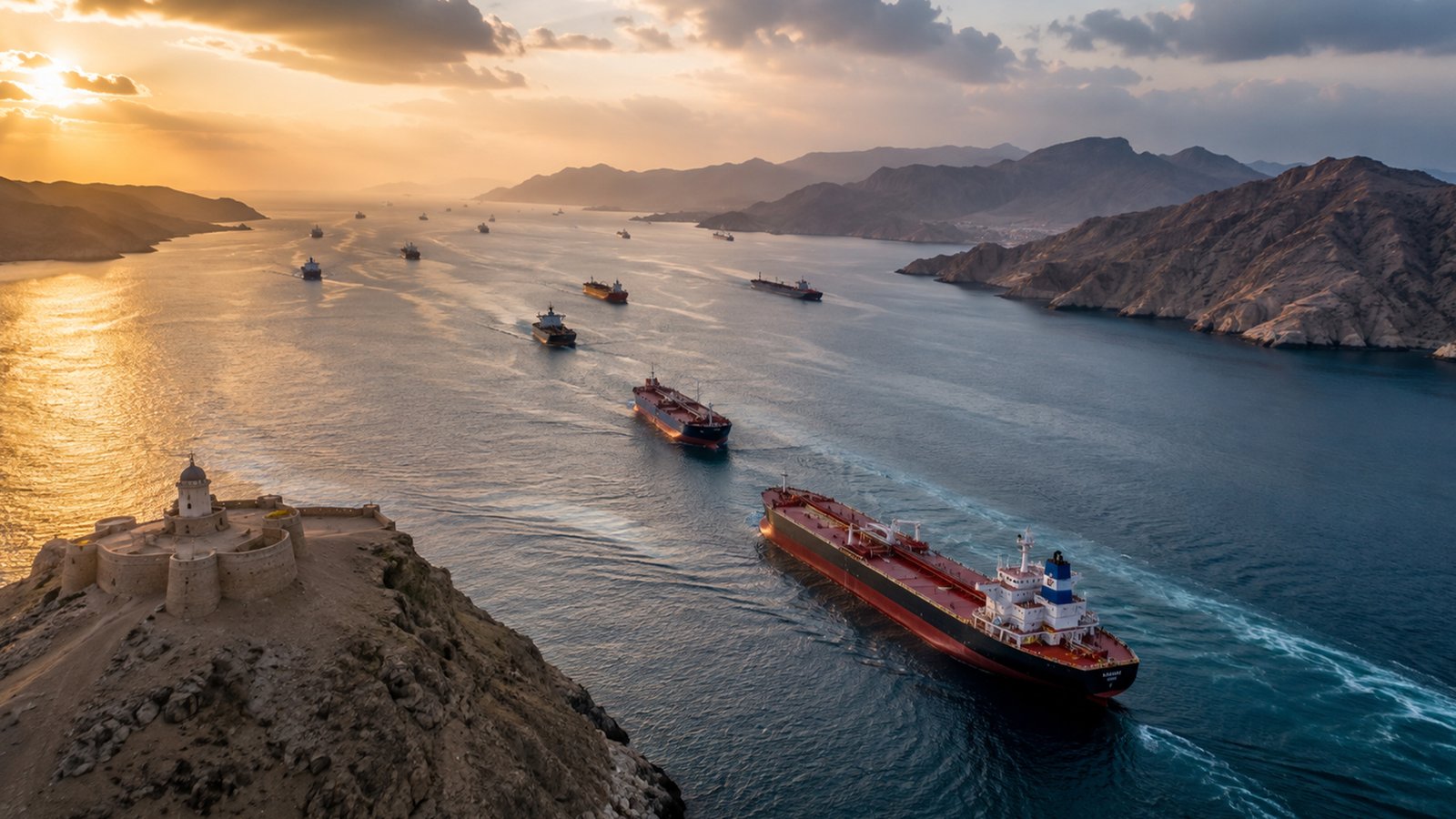
Iran and Oman are moving closer to an arrangement that could restore commercial shipping through the Strait of Hormuz, one of the world’s most important maritime routes. The two countries are negotiating a temporary shipping corridor designed to allow tankers and cargo vessels to pass through the strategic waterway while addressing security concerns raised by both sides.
The proposal under discussion would create a single, two-way shipping route instead of maintaining separate northern and southern passages. Iranian Foreign Ministry spokesperson Esmaeil Baqaei said negotiations with Oman are in their final stages. The proposed corridor would serve as an interim arrangement until Iran and Oman can agree on a longer-term system for managing maritime traffic through the Strait of Hormuz.
The development is significant because the Strait of Hormuz connects the Persian Gulf with the Gulf of Oman and the wider Indian Ocean. It is a crucial route for global oil, gas and other energy shipments. Any prolonged disruption to traffic through the strait can affect crude oil supplies, shipping costs, insurance premiums and fuel prices well beyond the Middle East.
Under the plan described by Iran, vessels would use a single corridor for both entry and exit. The route would incorporate areas close to Iranian and Omani waters and is intended to address the security and operational concerns of both countries. The arrangement would remain temporary while the two sides work towards a permanent replacement for the existing international Traffic Separation Scheme.
The talks also highlight the complicated political and security issues surrounding the waterway. Iran has objected to the use of a southern route through Omani waters, arguing that the arrangement promoted by Washington does not comply with the terms of an earlier understanding reached after the conflict. Tehran has also raised national security and environmental concerns and alleged that some vessels using the southern route carried military equipment.
Iran has stressed that the proposed corridor should primarily support commercial shipping. The issue has become particularly sensitive because Tehran wants greater control over how vessels move through the strait, while the United States has insisted that the waterway should remain freely accessible to international shipping.
For shipping companies, the immediate priority is predictability. The disruption in the Strait of Hormuz has forced operators to assess whether vessels can safely enter the Persian Gulf, while war-risk insurance costs have risen sharply. Maritime traffic has remained far below normal levels, with some vessels choosing routes closer to Oman to reduce exposure to the risks associated with the main shipping lanes.
Recent shipping data underline the scale of the disruption. Lloyd’s List Intelligence reported that only 22 non-Iranian-linked vessel transits were recorded during July 20-26, compared with 30 the previous week. Inbound Gulf traffic was more than 90% below pre-conflict levels, while many vessels continued to avoid Iran’s prescribed corridor and instead used routes closer to Oman.
The proposed Iran-Oman corridor therefore offers a possible short-term solution rather than a complete return to normal shipping. If implemented, it could provide shipowners with a defined route and greater clarity over navigation procedures. But the arrangement still needs to overcome disagreements about who controls the route, how security is provided and whether vessels should pay fees for passage or related services.
The question of fees has emerged as another major sticking point. Earlier proposals discussed voluntary payments for operational, environmental and security services, while Iran has pushed for a system that would give it a greater role in managing traffic. The United States has opposed any arrangement that would allow Iran to impose a toll on international shipping.
The United States is also watching the Iran-Oman discussions closely. While Tehran says it is negotiating directly with Muscat and denies that Washington is part of the current talks, US officials have acknowledged progress towards a possible solution for reopening the strait. The differing descriptions of the negotiations reflect the wider disagreement over how the waterway should be managed once commercial traffic resumes.
Oman’s role is particularly important because it shares control of the strategic waterway with Iran and has traditionally positioned itself as a mediator in regional disputes. Muscat has been involved in diplomatic efforts aimed at reducing tensions between Iran and the United States, making it a key channel for discussions over maritime security and the reopening of shipping routes.
The economic stakes are high. The Strait of Hormuz has traditionally carried a significant share of global oil trade, along with liquefied natural gas and other commodities. A reliable reopening would therefore be welcomed by energy importers, refiners, shipping companies and businesses dependent on Gulf supplies.
For India and other Asian energy importers, the situation is especially important because disruptions in the Gulf can translate into higher crude prices, increased freight costs and pressure on domestic fuel markets. A sustained improvement in shipping through Hormuz could help reduce some of the uncertainty affecting global energy markets.
However, officials have not yet announced a final agreement or a full reopening of the Strait of Hormuz. The current discussions should therefore be viewed as a possible pathway towards restoring maritime traffic, rather than confirmation that normal shipping has resumed.
For now, Iran and Oman are trying to turn a highly sensitive geopolitical dispute into a workable maritime arrangement. A temporary corridor could provide an immediate lifeline for commercial shipping while the two countries negotiate a more permanent framework. Whether the plan succeeds will depend on security guarantees, control of the route, international acceptance and the broader political situation between Iran and the United States.
If an agreement is reached, it could mark an important step towards stabilising one of the world’s most critical shipping chokepoints. For global markets already dealing with uncertainty over oil supplies and freight routes, even a limited reopening of the Strait of Hormuz could bring some much-needed relief.