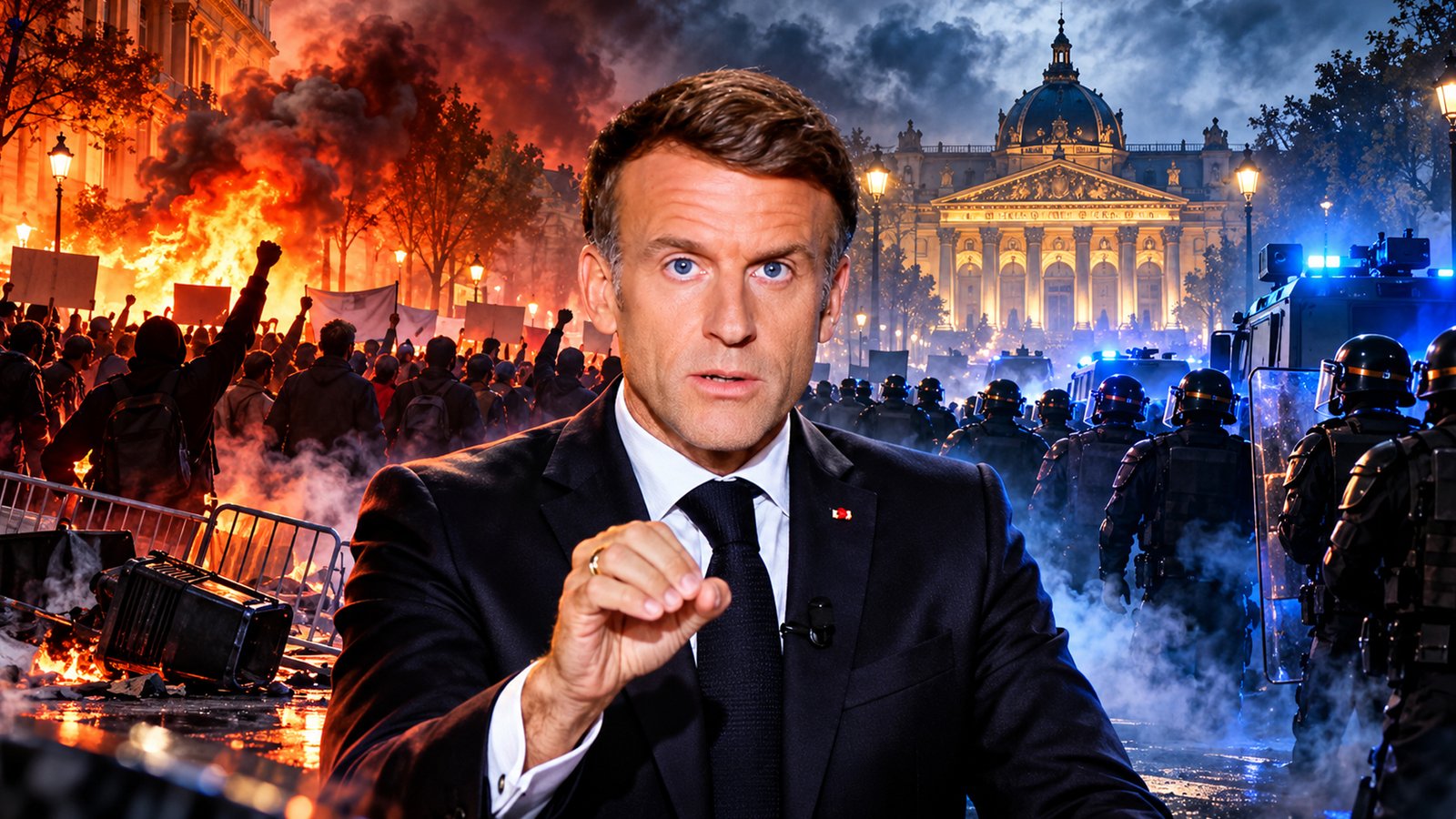
French President Emmanuel Macron is facing mounting political pressure as student-led demonstrations spread across France, drawing in trade unions and activists protesting rising living costs and declining public services. The government has announced education concessions and promised stronger security measures, but student leaders say the proposals fall short of their demands. With further demonstrations expected around Halloween and a nationwide protest planned for November 5, the unrest has become a significant political challenge for Macron’s minority government.
During a visit to Marseille on October 26, Macron said the government would respond to what he described as the legitimate demands behind the protests. He promised concrete measures while warning that fresh demonstrations could create further risks to public order. The visit came after earlier unrest damaged public buildings and businesses, highlighting the challenge facing the administration as it attempts to restore calm while addressing public dissatisfaction.
The protests initially focused on education, including teacher shortages, overcrowded classrooms, deteriorating school buildings and concerns about unequal access to higher education. However, the movement has widened into a broader expression of frustration over living costs and public services. Trade unions and activists associated with France’s Yellow Vest movement have joined the demonstrations, increasing pressure on the government to respond to grievances that extend beyond schools.
The political difficulty for Macron is that the government must balance demands for additional public spending against France’s strained finances. National debt is approaching 120% of gross domestic product, limiting the administration’s room to introduce expensive new programmes. The unrest has therefore placed education policy, fiscal constraints and the government’s ability to maintain public confidence at the centre of the national debate.
The government has offered a package of measures intended to address student concerns. These include €4 billion in loans for school renovations, €1 billion for university campuses, inflation-linked student grants and 15,000 additional higher education places. It has also proposed limiting class sizes in some high schools and replacing the university admissions platform Parcoursup by 2028.
Parcoursup has been criticised by students who argue that its selection process lacks transparency and reinforces social inequalities. Replacing the platform is intended to address concerns about access to university courses, although the full details of the alternative system remain to be established. The government is also under pressure to improve classroom conditions and provide sufficient teachers and educational resources.
Student representatives have nevertheless rejected the idea that the announced concessions should bring the movement to an end. Louis Letoublon, a representative of high school students, said not all their demands had been met and that demonstrations would continue for as long as necessary. Their response suggests that the government will need to demonstrate progress on the ground if it hopes to reduce tensions.
The security response has become another political issue. Interior Minister Laurent Nunez warned that Halloween celebrations on October 31 could be accompanied by further disturbances. Authorities have prepared for possible clashes, vandalism and looting after violence affected several cities during earlier demonstrations.
The Interior Ministry deployed around 70,000 police officers for nationwide demonstrations on October 24. Authorities reported 1,435 arrests that Saturday, while officials said organised far-right groups had confronted far-left activists in cities including Nice and Montpellier. The government has defended its security measures as necessary to protect businesses and public institutions, although the continuing unrest has raised questions about how authorities can prevent violence without further escalating tensions.
Macron has also criticised social media platforms, arguing that online networks can direct people towards locations where attacks and looting occur. His comments have brought the role of digital communication into the political debate. Social media can help protesters organise demonstrations and share information, but it can also accelerate the spread of unverified claims and inflammatory material. The government has yet to demonstrate that online platforms alone explain the scale or violence of the protests.
The unrest is unfolding as France approaches its 2027 presidential election. Macron cannot seek another consecutive term, making the final phase of his presidency particularly important for his political legacy. His administration must now manage public anger while attempting to maintain stability and implement policies within tight budgetary limits.
Far-right leader Marine Le Pen has featured prominently in political debate surrounding the crisis, while opposition groups across the spectrum have sought to capitalise on dissatisfaction with the government. However, the protests involve varied grievances and do not necessarily indicate unified support for any single political party or candidate.
The demonstrations are also affecting businesses, with some retailers closing their premises as a precaution and reporting losses linked to disrupted trading. Trade unions have called for continued mobilisation, including a nationwide protest on November 5, signalling that the dispute may extend beyond the immediate education reforms.
Macron’s immediate challenge is to turn announced concessions into measures that students and workers consider meaningful, while maintaining public order. Whether the government can ease tensions will depend on implementation, further negotiations and the scale of upcoming demonstrations. The unrest has placed social policy, public spending and security at the heart of France’s political debate, leaving Macron under sustained pressure as his presidency enters its final months.