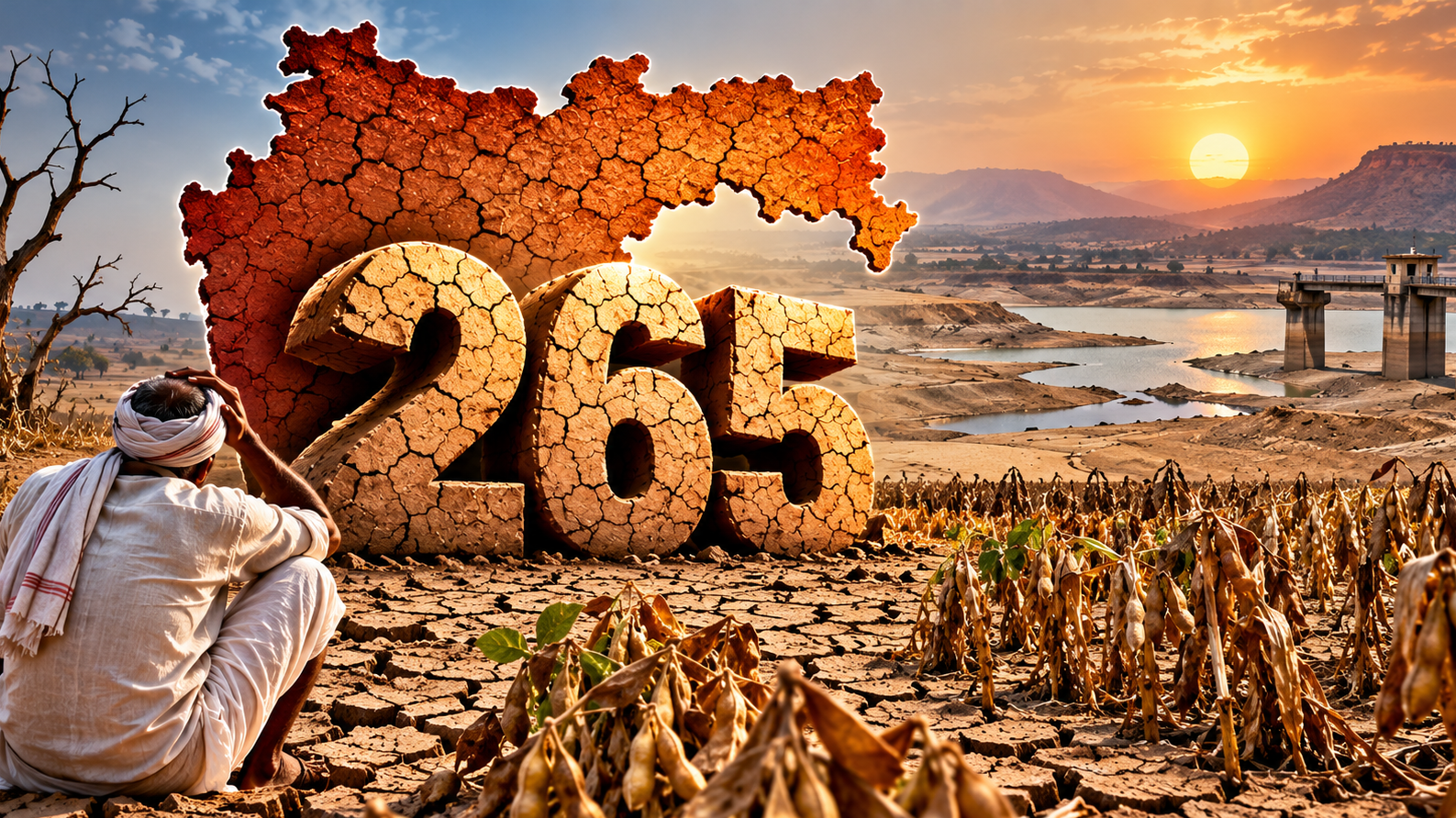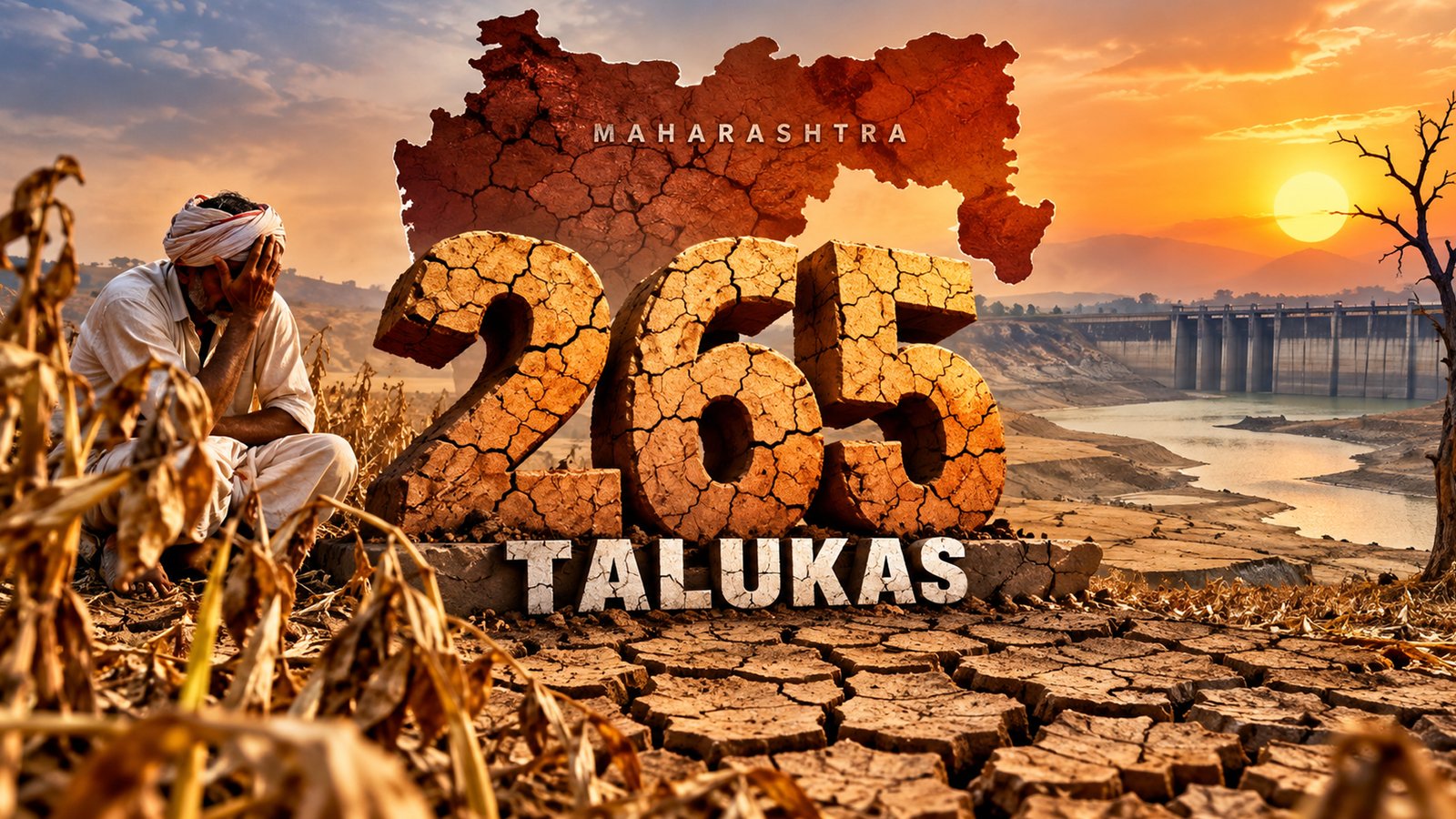
Maharashtra has declared 265 of its 358 talukas drought-affected, covering about 74% of the state, after deficient rainfall and prolonged dry spells disrupted agriculture and worsened water shortages.
The declaration, issued through a government resolution, covers areas across several regions, including Marathwada, Vidarbha, northern Maharashtra, western Maharashtra and parts of Konkan. The state government has activated Trigger-1 under its drought management framework and announced a package of relief measures for affected communities.
The move comes after an assessment by the Agriculture Commissioner found drought-like conditions across the affected talukas. Maharashtra recorded an 18.8% rainfall deficit, receiving 755.9 mm of rain between June 1 and September 18 against the normal 932.3 mm. Some regions recorded significantly larger shortfalls.
The Chhatrapati Sambhajinagar division has the highest number of drought-affected talukas at 74, followed by Amravati with 56, Nashik with 49, Nagpur with 39 and Pune with 35. The affected areas together span dozens of districts and include some of the state’s major agricultural regions.
The rainfall deficit has put pressure on the 2026 kharif season, with farmers growing soybean, cotton, millet, maize, tur, moong and urad among those affected.
Reports from drought-hit areas indicate crop failures, rising pest and disease problems and shortages of water and fodder. Some districts in Marathwada have experienced particularly severe rainfall shortages, while several other regions have also recorded deficits of around 30% or more.
The government has directed district collectors to begin crop-loss assessments immediately. Officials have been asked to document damaged farmland through photographs and GPS coordinates so that the extent of losses can be verified before financial assistance is determined.
Chief Minister Devendra Fadnavis has asked district administrations to speed up the assessment process and keep farmers and agricultural workers at the centre of the relief response.
The drought declaration activates a series of measures aimed at reducing the immediate financial pressure on farmers and rural households.
The government has announced restructuring of crop loans and a temporary halt to recovery of agriculture-related loans. Land revenue concessions have also been provided in the affected areas.
Relief has been extended to agricultural electricity consumers as well. Electricity bills for agricultural pumps up to 7.5 horsepower had already been waived, while concessions have now been extended to higher-capacity pumps in drought-affected areas. Power connections to agricultural pumps in villages facing water shortages are also not to be disconnected.
The package also includes a waiver of examination fees for school and college students in affected areas. Rules under the Rural Employment Guarantee Scheme will be relaxed to create additional employment opportunities.
Authorities have also been instructed to arrange drinking water through tankers where necessary and ensure supplies of foodgrains and fodder for people and livestock dependent on agriculture.
While the government has announced several concessions, direct financial compensation for crop losses has not yet been fixed.
The administration has said a separate decision will be taken after field-level crop assessments are completed. Deputy Chief Minister Sunetra Pawar has said the amount of financial assistance will depend on the findings of the ground survey.
This has become a point of concern for farmers and Opposition parties, who have called for quicker financial support. Opposition leaders have argued that loan and electricity concessions alone may not address the immediate losses suffered by farmers whose crops have failed.
The government, meanwhile, is relying on the damage assessment process to determine the scale of compensation.
The drought declaration comes at a critical stage of the agricultural season. More than 30% rainfall deficits have been recorded in several divisions, while some districts have faced much sharper shortages.
The coming weeks will be important as authorities monitor water availability, crop conditions and the possibility of further rainfall.
With 265 talukas officially declared drought-affected, Maharashtra now faces the challenge of managing crop losses, drinking-water needs, farm debt and rural employment across a large part of the state.
The immediate priority will be completing crop surveys and ensuring that the announced relief reaches affected households while the government works out direct compensation for farmers.
The situation could also put additional pressure on rural incomes in the coming months. Authorities will need to closely track groundwater levels, drinking-water availability and fodder supplies as the dry period continues. The effectiveness of the relief package will depend on how quickly surveys are completed and assistance reaches farmers and families in the affected talukas.