Prepaid mobile users are set to get more flexibility in choosing recharge plans, with the Telecom Regulatory Authority of India (TRAI) introducing new rules covering plan validity and voice-and-SMS-only services.
The Telecom Consumer Protection (Thirteenth Amendment) Regulations, 2026, notified by TRAI on September 22, require telecom operators to provide more options for customers who do not need mobile data. The changes are aimed at giving users greater choice while reducing the need to pay for services they may not use.
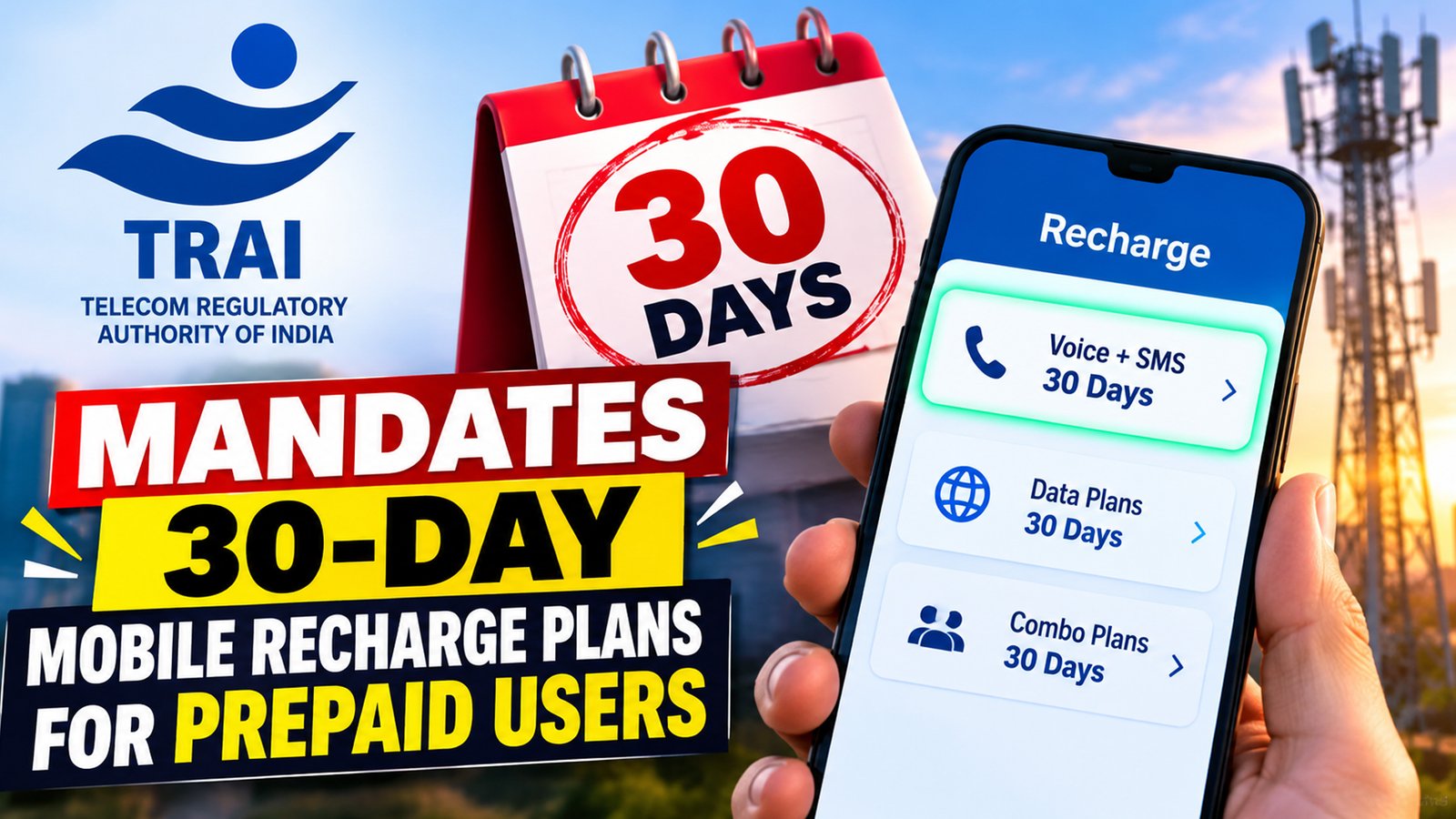
One of the key changes is the availability of 30-day prepaid recharge plans. The move addresses concerns around the common 28-day validity cycle, under which customers maintaining uninterrupted service may have to recharge 13 times in a year instead of 12.
A 30-day plan would align the recharge cycle more closely with the calendar month. However, the new regulation should not be read as an order requiring every existing 28-day plan to be converted into a 30-day plan. The main regulatory change is aimed at ensuring appropriate voice-and-SMS-only options alongside the validity periods already offered by operators.
Another important part of the new framework is the expansion of voice-and-SMS-only Special Tariff Vouchers (STVs).
TRAI has directed telecom service providers to offer voice-and-SMS-only vouchers corresponding to bundled plans with validity periods of 30 days or less. These plans must come with an appropriate reduction in tariff because they do not include mobile data.
The regulator has also required operators to provide at least one voice-and-SMS-only option with longer validity, corresponding to a longer-duration bundled plan.
This is significant for customers who primarily use their mobile phones for calls and text messages. Feature-phone users, some senior citizens, low-income households and customers with limited data requirements could have more suitable choices instead of having to purchase plans that include data.
TRAI has said its decision followed concerns that existing voice-and-SMS-only plans were concentrated around longer validity periods, such as 80 or 84 days and 336 or 365 days. This meant that consumers looking for shorter-duration options had fewer choices.
The new rules also introduce a monthly renewal provision for voice-and-SMS-only plans.
Telecom operators will have to provide at least one such voucher that can be renewed on the same date every month. If that date does not exist in a particular month, the renewal will take place on the last day of that month.
The provision is designed to make prepaid recharges easier to manage and give customers a predictable monthly cycle.
The changes could be particularly relevant for consumers who carefully manage their monthly telecom expenses. Instead of committing to longer-duration plans, they will have greater scope to select a recharge based on their immediate requirements and budget.
The new TRAI framework requires an appropriate reduction in tariff for voice-and-SMS-only vouchers because customers are not receiving bundled data services.
However, the regulation does not prescribe a single price for every operator or plan. The actual tariffs will be decided by telecom service providers within the regulatory framework.
Reliance Jio, Bharti Airtel and Vodafone Idea currently offer some voice-and-SMS-only plans, but many of their existing options are focused on quarterly or annual validity. The new rules are expected to expand the range of shorter-validity choices.
The impact on consumers will therefore depend on the plans and prices that operators introduce after implementing the regulations.
TRAI’s intervention follows a consultation process that examined consumer concerns around prepaid recharge options. The regulator received 1,132 stakeholder responses during the consultation process, according to reports on the final regulations.
The regulator found that consumers who did not require mobile data had limited options when choosing shorter validity periods. Longer voice-and-SMS-only vouchers could also require customers to make a larger upfront payment.
The latest amendment seeks to address that gap by linking voice-and-SMS-only options more closely with the validity periods available for bundled plans.
Rajya Sabha MP Raghav Chadha, who had raised concerns about the 28-day recharge cycle in Parliament, welcomed the new regulations.
Chadha had questioned why customers often needed 13 recharges a year when there are 12 months in a calendar year. He had also called for more affordable voice-only options for consumers who do not use mobile data.
He said the new framework would give consumers greater choice, particularly those who use their phones mainly for calls and SMS.
The regulations are expected to come into force 30 days after publication in the Official Gazette. This means consumers may have to wait for telecom operators to roll out the corresponding plans.
The new framework does not mean every existing recharge will immediately change. Instead, customers should gradually see a wider range of prepaid options as operators implement the requirements.
The key changes are 30-day validity options, shorter voice-and-SMS-only vouchers, monthly renewal choices and lower tariffs for plans that exclude data.
For telecom companies, the changes will require adjustments to their prepaid tariff portfolios. For consumers, the broader choice could make it easier to match a recharge with actual usage rather than paying for bundled services they do not need.
The effectiveness of the new rules will ultimately depend on how operators price and market these plans. For millions of prepaid subscribers, however, the changes mark a shift towards more flexible mobile recharge choices and greater control over monthly telecom spending.