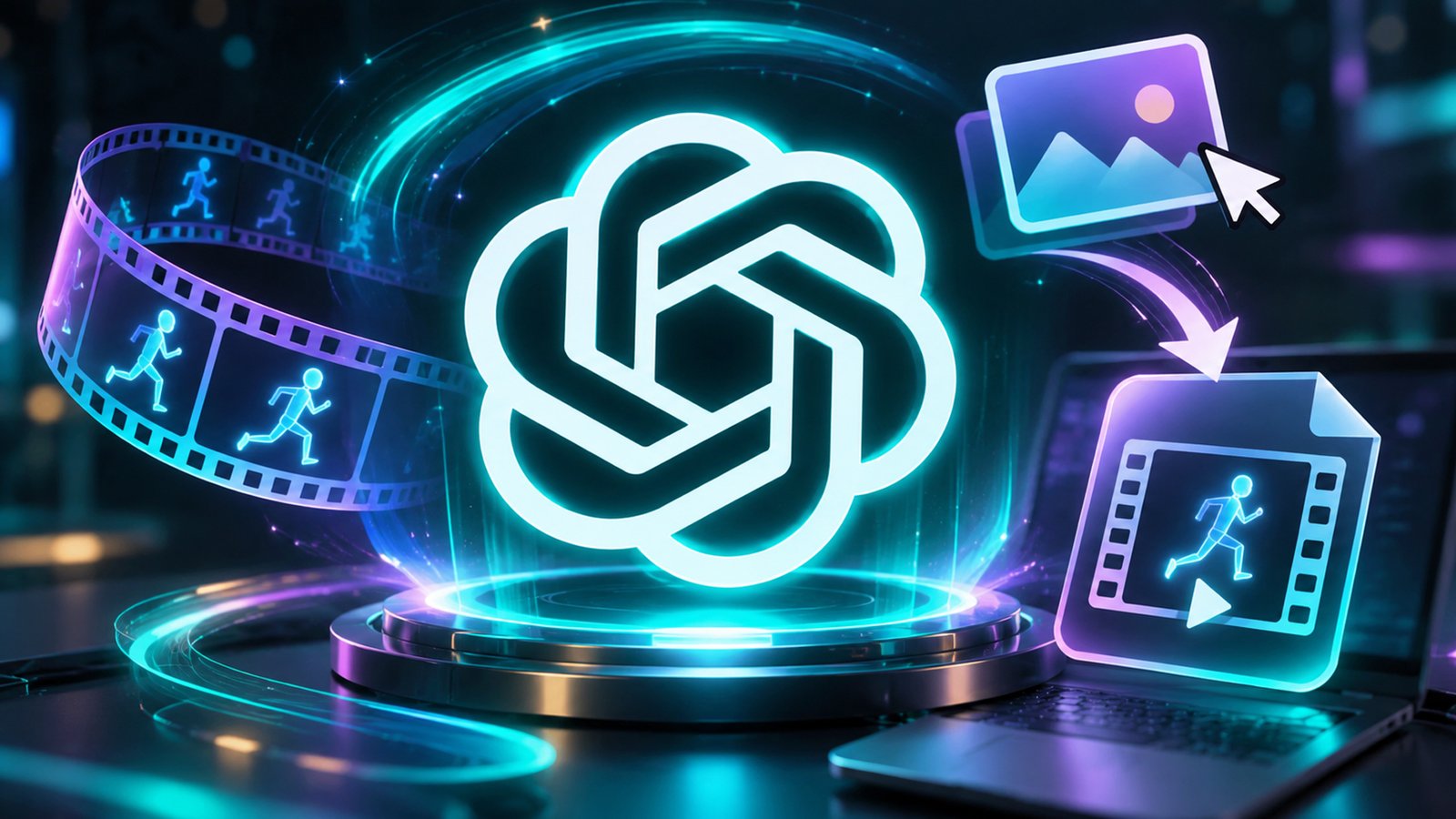
OpenAI has rolled out Images 2.6, an upgraded image-generation model that brings faster image creation, animated GIF generation and advanced editing capabilities to ChatGPT. The latest update aims to expand the platform’s creative capabilities by allowing users to generate, animate and modify visual content without depending on multiple applications.
Announced on November 4, Images 2.6 introduces several features, including the ability to convert text prompts and existing photographs into animated GIFs. Users can also inspect individual animation frames, make changes to selected sections and adjust the speed of the final animation. The update is available across ChatGPT, Codex and OpenAI’s application programming interface (API).
One of the biggest additions is native GIF generation within ChatGPT. Previously, users looking to turn an AI-generated image or an existing photograph into an animation often had to rely on separate editing software. The latest model brings this process directly into ChatGPT, allowing users to describe the movement they want and generate an animated visual through a prompt.
The new frame-level editing capability gives users greater control over how their animations look. Rather than accepting an automatically generated GIF, they can examine individual frames and modify specific elements. They can also change the animation speed to achieve the desired effect.
This could prove useful for social media creators, digital artists and businesses looking to develop short animated content. Reaction GIFs, animated characters, promotional visuals and simple storyboards are among the possible applications. The ability to make changes to individual frames could also help creators experiment with movement and visual effects before moving to more complex video production.
Businesses may find the feature particularly useful for digital advertising and marketing campaigns. Animated product images, brand mascots and promotional material can help make online content more engaging. Designers could also use the tool to test creative concepts and develop visual assets without switching between different editing platforms.
Another major improvement is the speed of image generation. OpenAI says Images 2.6 generates visuals 50% faster than its predecessor. The improvement is expected to make the creative process more efficient, particularly for users who generate several versions of an image before settling on the final design.
Faster generation could also encourage users to experiment with different prompts, compositions and editing instructions. Instead of spending considerable time waiting for each result, creators can make changes and review multiple versions more quickly.
The company has also introduced two versions of its image-generation model for developers using the API: GPT-Image-2.6 Flare and GPT-Image-2.6 Sunburst. Both are designed to address different requirements, particularly in terms of generation speed, image quality and editing consistency.
Flare is focused on speed and rapid image generation. OpenAI says it can produce an image in as little as six seconds when the quality setting is kept low. This version could be suitable for applications that require frequent image generation, quick edits and faster turnaround times.
Sunburst, on the other hand, is designed for tasks that demand greater visual detail, precision and consistency. It is intended to deliver more reliable results across successive edits, particularly when users work with medium and high-quality settings.
Maintaining visual consistency has been a challenge for AI image-generation tools. When users repeatedly modify an image, certain details may change unexpectedly. For instance, a character’s appearance, a product’s design or specific brand elements may not remain identical across different versions. The latest model aims to address these issues by improving consistency during repeated editing.
OpenAI has also expanded the image markup feature, previously available in ChatGPT, to its API. The feature allows users to identify specific areas of an image and indicate exactly where changes are needed. This makes the editing process more straightforward, as developers and creative teams can highlight the relevant portions instead of relying entirely on detailed text instructions.
Another addition is support for exporting images in Scalable Vector Graphics (SVG) format. Unlike conventional image formats, SVG files can be resized without losing visual quality. This makes them useful for websites, mobile applications, logos, icons and print-related designs. The addition could help developers and designers integrate AI-generated visuals into existing professional workflows.
The update also introduces a complexity setting that allows developers to control how much planning the model undertakes before generating an image. Lower settings are intended for straightforward requests and routine edits, while medium and high settings are better suited to complicated scenes involving multiple objects, visual elements and detailed instructions.
This gives developers greater flexibility in balancing generation speed and output quality. Simple editing requirements can be handled with lower complexity settings, while more demanding visual projects can use higher settings to achieve the desired results.
The launch comes as the use of AI-powered image-generation tools continues to expand. OpenAI said users worldwide now generate approximately four billion images every week across ChatGPT, Codex and its API. This translates to more than 500 million images each day, underlining the growing role of visual content generation within the company’s AI ecosystem.
Images 2.6 is being made available globally across ChatGPT and Codex on desktop, mobile and web, covering all subscription tiers. Developers can access the two specialised versions, GPT-Image-2.6 Flare and GPT-Image-2.6 Sunburst, through the API.
With faster image generation, native GIF creation, frame-level editing and additional developer controls, OpenAI is expanding the scope of what users can accomplish through ChatGPT. The platform is increasingly moving beyond generating static images from text prompts towards offering a more comprehensive creative environment where users can create, animate and refine visual content within a single workflow.