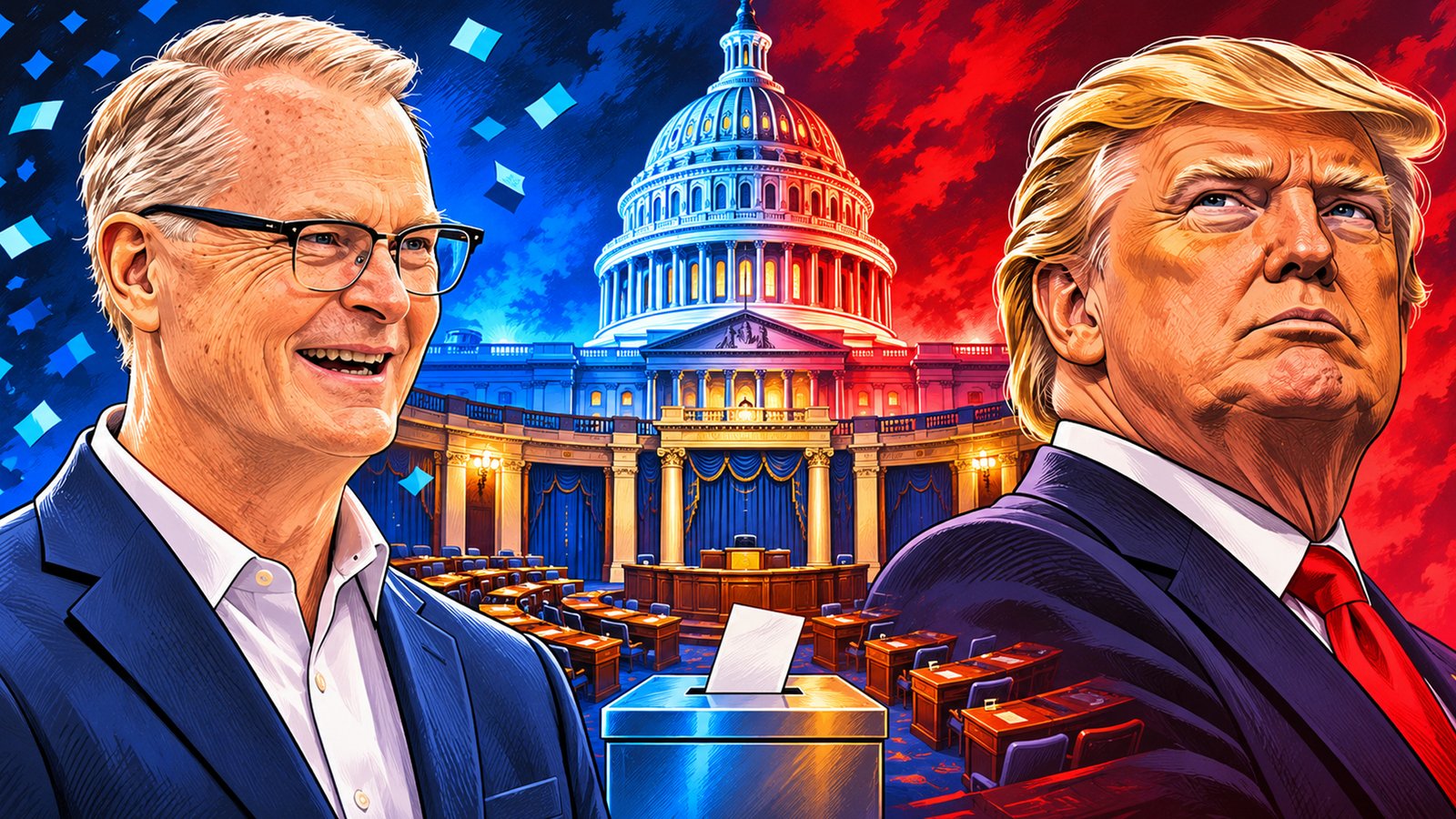
Democratic Senator Jon Ossoff has won re-election in Georgia, defeating Republican challenger Mike Collins in one of the most closely watched contests of the 2026 US midterm elections. The victory allows the 39-year-old lawmaker to retain his seat and gives the Democratic Party an important boost as it seeks to challenge President Donald Trump’s influence over American politics.
Ossoff’s win carries significance beyond Georgia. The state was narrowly won by Trump in the 2024 presidential election, making the Senate contest a major test of the president’s popularity and the Republican Party’s ability to hold on to voters. Ossoff was also the only Democratic senator seeking re-election in a state Trump had carried in the previous presidential election, placing him among the Republicans’ biggest targets.
The senator, who became the youngest member of the US Senate, ran an outspoken campaign against Trump and his administration. He repeatedly questioned the president’s policies, alleged misuse of political power and business dealings involving people close to the White House. His campaign also focused on the economic pressures facing ordinary Americans, including the impact of tariffs and the cost of living.
Ossoff’s re-election campaign proved to be a major fundraising success. He collected more than $100 million, giving him a substantial financial advantage over Collins. The Republican candidate, a two-term congressman backed by Trump, struggled to gain momentum during the campaign and faced controversies involving people associated with his political circle.
Ossoff repeatedly attacked Collins over alleged links between former campaign associates and white nationalist groups. Collins denied supporting racism and antisemitism, but the controversy became a recurring issue during debates and campaign advertisements. Collins also faced questions over an unresolved House ethics investigation.
The Democratic senator presented himself as an independent voice willing to challenge the president, even in a politically competitive state. His campaign criticised Trump’s trade policies, called for an end to the US war with Iran and raised concerns about political corruption. He also highlighted his efforts to secure federal funding for Georgia, including support for hurricane relief and infrastructure projects.
Ossoff first entered the Senate after winning a special election runoff in January 2021. His victory, alongside fellow Democrat Raphael Warnock’s win, helped the party secure control of the chamber at the time. Ossoff also made history as Georgia’s first Jewish senator, while Warnock became the state’s first Black senator.
The 2026 election result has now placed Ossoff among the prominent Democratic leaders expected to play a significant role in the party’s political strategy. His name has also featured in discussions about possible Democratic presidential contenders for the 2028 election, although he has not formally announced any such plans.
The result in Georgia was part of a much wider Democratic advance across the United States. The party made significant gains in several states that had previously favoured Republicans, turning the midterm elections into a major setback for Trump’s political agenda. Democrats were projected to win control of both the Senate and the House of Representatives, giving them control of Congress for the remaining two years of Trump’s current term.
Among the notable victories was Democrat James Talarico’s Senate win in Texas, a state that has traditionally been a Republican stronghold. Democrat Sherrod Brown also won in Ohio, while Annie Andrews secured a historic Senate victory in South Carolina. Adam Hamilton’s win in Kansas marked the first time a Democrat had captured a Senate seat in the state in nearly a century. Former North Carolina governor Roy Cooper also won his Senate contest.
These results reflected a shift in voter sentiment across several parts of the country. Economic concerns, particularly rising prices and household expenses, emerged as major issues during the campaign. Voters were also concerned about the direction of the country, government accountability and the administration’s handling of key policy matters.
According to exit polls cited by Reuters, nearly nine in 10 voters considered the cost of living an important factor in their decision. Nearly two-thirds blamed Trump for high prices, while around three-quarters said they were angry or dissatisfied with the country’s direction. The findings suggested that economic anxiety played a major role in the Republican setbacks.
Trump’s declining approval ratings had already raised concerns within the Republican Party ahead of the elections. The president had urged voters to treat the midterms as a judgement on his leadership, but the results indicated that many Americans were unhappy with the administration’s performance. His tariffs and the economic consequences of the conflict with Iran also became important campaign issues.
The Republican losses have raised questions about Trump’s influence over candidate selection and his ability to mobilise the coalition that helped him win the 2024 presidential election. Several candidates backed by him failed to secure victories, suggesting that his endorsement was not enough to overcome voter dissatisfaction.