The Centre has notified a new set of rules for India’s civil aviation sector, giving the government powers to intervene when airline ticket prices rise sharply during extraordinary situations. The new framework also requires airlines to provide passengers with a detailed breakdown of ticket prices, including taxes, fees, cancellation charges and refund conditions.
Called the Bharatiya Vayuyan Niyam, 2026, the rules will come into effect on January 1, 2027, replacing the nearly 90-year-old Aircraft Rules, 1937. The notification was published in the Gazette of India on October 31 following approval by the Ministry of Civil Aviation.
The new provisions come amid growing concerns over rising airfares in India, particularly during periods of high demand, flight disruptions and limited seat availability. Under Rule 192, the Central government can issue written directions to airlines if it believes an extraordinary situation has arisen and intervention is necessary in the public interest.
The government can also direct an airline to revise its tariffs for a specified period. However, such directions must be proportionate to the circumstances and remain effective only for the period mentioned in the order.
An important aspect of the provision is that it does not define what qualifies as an extraordinary situation. A senior official from the Ministry of Civil Aviation said the notification did not specify the circumstances under which the government could exercise these powers. This means the Centre will have to assess individual situations before deciding whether intervention is necessary.
The new rules do not introduce a permanent cap on airline ticket prices or require carriers to seek government approval every time they revise fares. Airlines will continue to determine ticket prices under normal circumstances, taking into account factors such as operating costs and market demand.
However, scheduled airlines will have to submit their tariff details to the Directorate General of Civil Aviation (DGCA) in the format and at intervals specified by the regulator. The DGCA will continue to monitor the fares charged by airlines, while carriers will be required to publish their tariffs on their websites and other digital platforms.
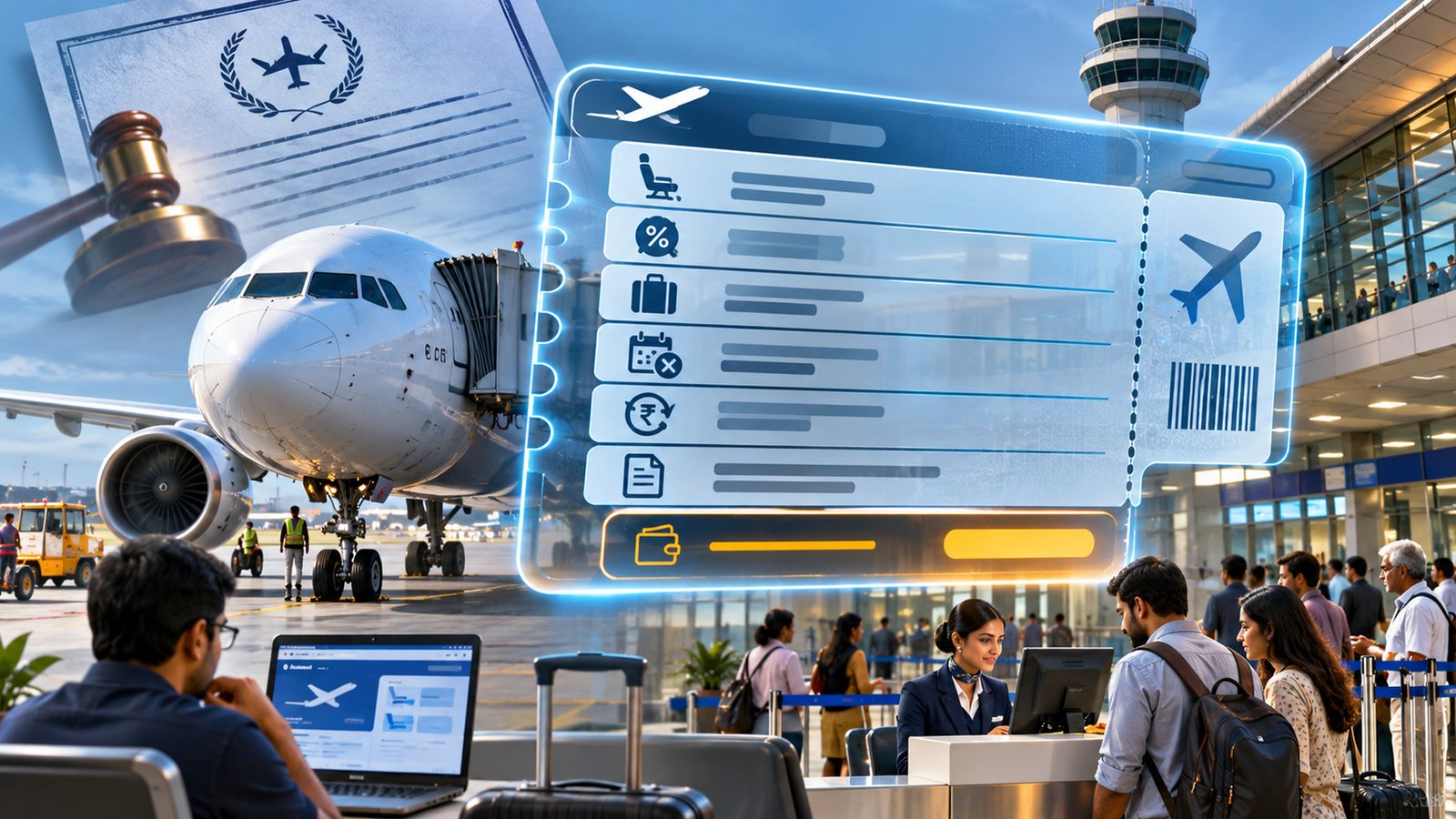
A major passenger-focused change is the requirement for airlines to display the total amount payable during the booking process and on the ticket issued to travellers. The fare must be accompanied by a clear breakdown of its different components, rather than being presented as a single consolidated amount.
The disclosure must separately mention the base fare, government taxes, fees, cancellation charges, refund conditions and any other applicable charges. The rules also distinguish between taxes payable to the government and fees collected for services or facilities provided to passengers.
This provision is expected to make flight ticket pricing more transparent and help travellers understand the actual cost of their journey before completing a booking. Passengers will also be able to compare fares more effectively and check cancellation and refund conditions without having to search through separate sections of an airline’s website.
The revised framework also changes the way the government can intervene in airline pricing. Under Rule 135(4) of the earlier Aircraft Rules, 1937, the DGCA had powers to issue directions in cases involving excessive tariffs, predatory pricing or oligopolistic practices.
Under the new Rule 192, the Central government itself can issue written directions when it considers intervention necessary during an extraordinary situation. The DGCA, meanwhile, retains its responsibility for monitoring airline tariffs and receiving pricing details from operators.
The notification comes at a time when high airfares have become a subject of concern among passengers and policymakers. Airline ticket prices can vary significantly depending on the time of booking, seat availability, travel dates and demand. Last-minute bookings during holidays and periods of disruption can be particularly expensive.
The issue was also discussed by a parliamentary panel on November 2, which questioned representatives of IndiGo and Air India over rising ticket prices. The airlines cited higher aviation turbine fuel costs and longer flying routes following the closure of Pakistan’s airspace since Operation Sindoor as factors contributing to increased operating expenses.
India had deregulated airline fare fixation in 1994, allowing carriers to determine ticket prices largely according to market conditions. Since then, airlines have followed different fare categories based on demand, booking periods and operational costs. The new rules retain this market-based approach while providing the Centre with a mechanism to respond to exceptional circumstances.
The Bharatiya Vayuyan Niyam, 2026, is part of a wider overhaul of India’s aviation regulatory framework. It has been framed under the Bharatiya Vayuyan Adhiniyam, 2024, which replaced the Aircraft Act, 1934, and covers several areas of civil aviation, including aircraft registration, manufacturing, safety certification, maintenance, flight operations, personnel licensing and airport operations.
The issue of airfare regulation has also been raised before the Supreme Court. On October 16, Solicitor General Tushar Mehta informed the court that the new rules had received administrative approval and would be notified shortly. The court subsequently directed the Centre to place the notified rules before it by November 16.
The changes promise greater clarity on ticket pricing and give the government an additional tool to address sharp fare increases in exceptional circumstances. However, they do not guarantee cheaper flights or prevent airlines from raising prices under normal market conditions.
The effectiveness of the new framework will depend on how the government defines and responds to extraordinary situations, and how closely the regulator monitors airline tariffs. From January 1, 2027, the rules will replace the colonial-era framework and introduce a new approach to airfare transparency and government oversight in India’s aviation sector.