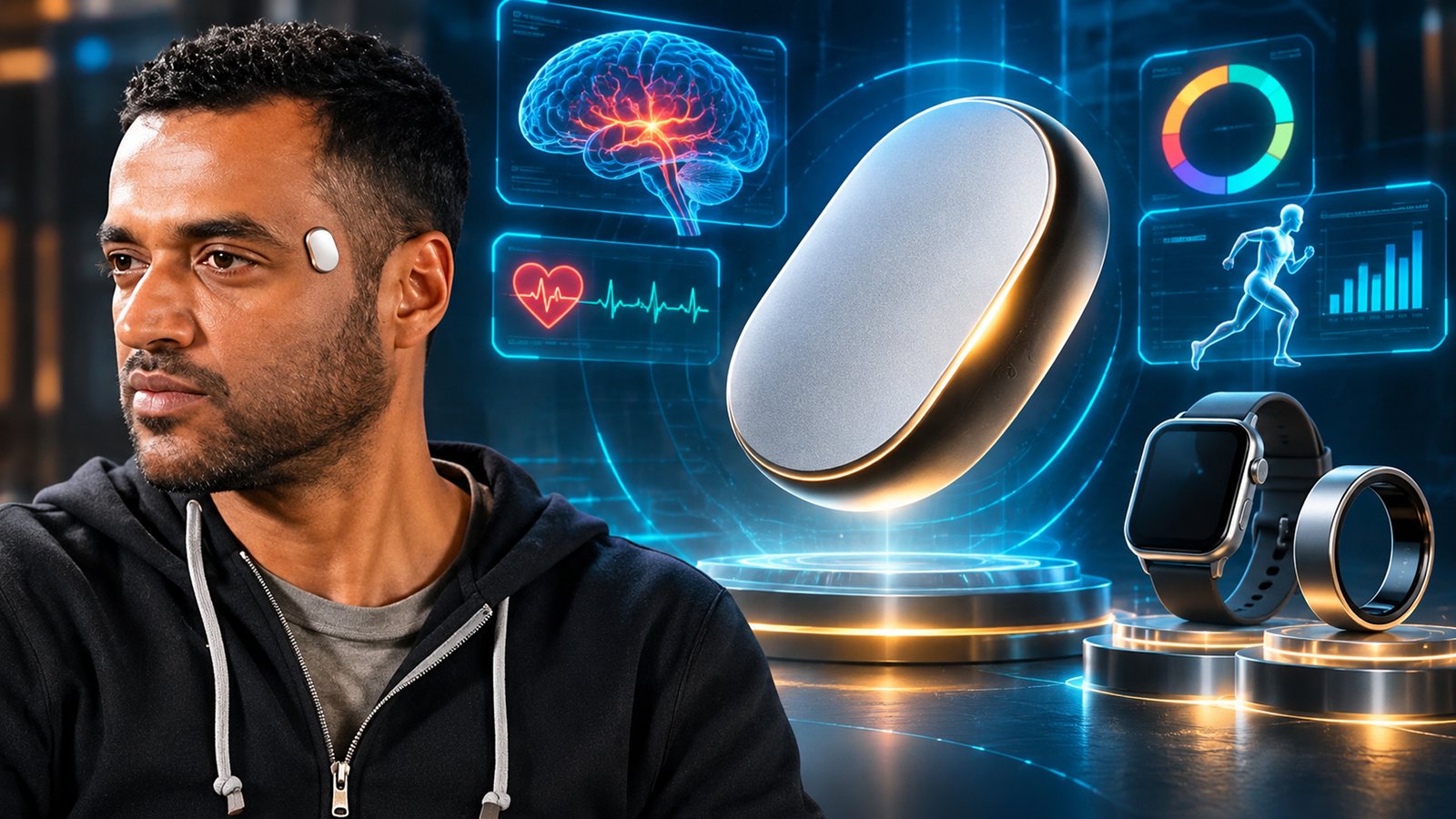
Deepinder Goyal, founder of Zomato and Eternal, has claimed that his new wearable technology venture, Temple, has outperformed several leading fitness devices in heart-rate accuracy tests. The company says its device recorded lower measurement errors than the Apple Watch, WHOOP, Garmin, Fitbit and Oura Ring during an internal study, putting its technology in the spotlight even before deliveries begin.
Goyal shared the findings on social media, saying Temple performed better than all five competing wearables included in the comparison. The devices tested were the Apple Watch Series 12, Fitbit Air, WHOOP MG, Garmin Forerunner 970 and Oura Ring 5.
According to the study, Temple recorded a mean absolute error (MAE) of 1.18 beats per minute (bpm), the lowest among the devices tested. The Apple Watch Series 12 came next with an error of 1.94 bpm. Fitbit Air recorded 2.96 bpm, while WHOOP MG and Garmin Forerunner 970 registered errors of 3.14 bpm and 3.18 bpm, respectively. Oura Ring 5 recorded the highest error at 5.21 bpm.
A lower mean absolute error indicates that a device’s readings are closer to those of the reference measurement. The comparison also examined performance during high-intensity exercise, an area where accurate heart-rate tracking is particularly important for athletes.
Temple recorded an average error of 1.16 bpm across exercise heart-rate Zones 4 and 5. In Zone 5, which represents very high-intensity activity, its error dropped to 0.95 bpm. The company also reported that only 1.8% of its exercise readings had an error greater than 5 bpm, compared with figures ranging from 9% to 36.1% for the competing devices.
The study involved 43 healthy adults aged between 20 and 35 years. Participants completed treadmill sessions covering resting conditions and five heart-rate zones. Researchers used a Polar H10 chest strap as the reference device, with the strap taped to the participants’ skin to minimise contact loss during intense exercise.
Goyal attributed Temple’s reported performance to two main factors: its adhesive-based design and the location where it is worn. Unlike wrist-based fitness trackers and smartwatches, Temple is attached to the skin near the temple, on the side of the forehead. He said the location sits over a major artery and may offer more reliable readings during strenuous physical activity.
The founder also argued that the adhesive design allows the device to remain in contact with the skin during exercise, reducing the possibility of inaccurate readings caused by movement. According to him, the company tested the same sensor at four different body locations and found the temple to be the most accurate.
However, the findings have not yet been independently established. Temple funded, conducted and analysed the study, which was carried out at a single indoor laboratory in Gurugram. The white paper has not been peer-reviewed, and the testing was limited to treadmill activity during one session per participant. Activities such as outdoor running, cycling, strength training and everyday movement were not included.
Goyal has said that independent researchers are conducting an extended study and invited other researchers to replicate the findings under different conditions. He also offered to fund further independent testing. He advised sceptics to wait for these results before deciding whether to purchase the device.
Temple has also attracted attention because of its reported price of Rs 85,000. Pre-orders opened on November 1, and the company’s website reportedly experienced a surge in traffic that caused it to crash shortly after the launch. Deliveries are expected to take around three months. The company has also indicated that it is considering changes to its existing 14-day no-questions-asked return policy.
The product has generated considerable discussion online, particularly over its price, technology and marketing strategy. Some users have questioned whether the device’s features justify its premium cost, while others have asked how its performance will hold up during everyday activities.
Goyal has acknowledged that his association with Zomato may be affecting how people view his latest venture. Responding to criticism on social media, he said being known as the “Zomato guy” works against Temple because people find it difficult to associate him with hardware engineering and science-led products.
Questions have also emerged over whether influencers and public personalities received the wearable for free to promote it. Goyal denied the suggestion, saying that everyone who received a beta version had paid for the device. He maintained that Temple does not pay people to wear or promote its product.
Indian athletes, including badminton player PV Sindhu and cricketer Shubman Gill, have been spotted wearing the device. Sindhu also publicly stated that she was not being paid to promote it.
Temple is designed to track brain blood flow and a metric the company calls entropy, which it describes as an indicator of how hard the body is working to shed heat. The wearable aims to provide information about how the body responds to physical and mental stress, positioning itself as a product for performance-focused users and athletes.