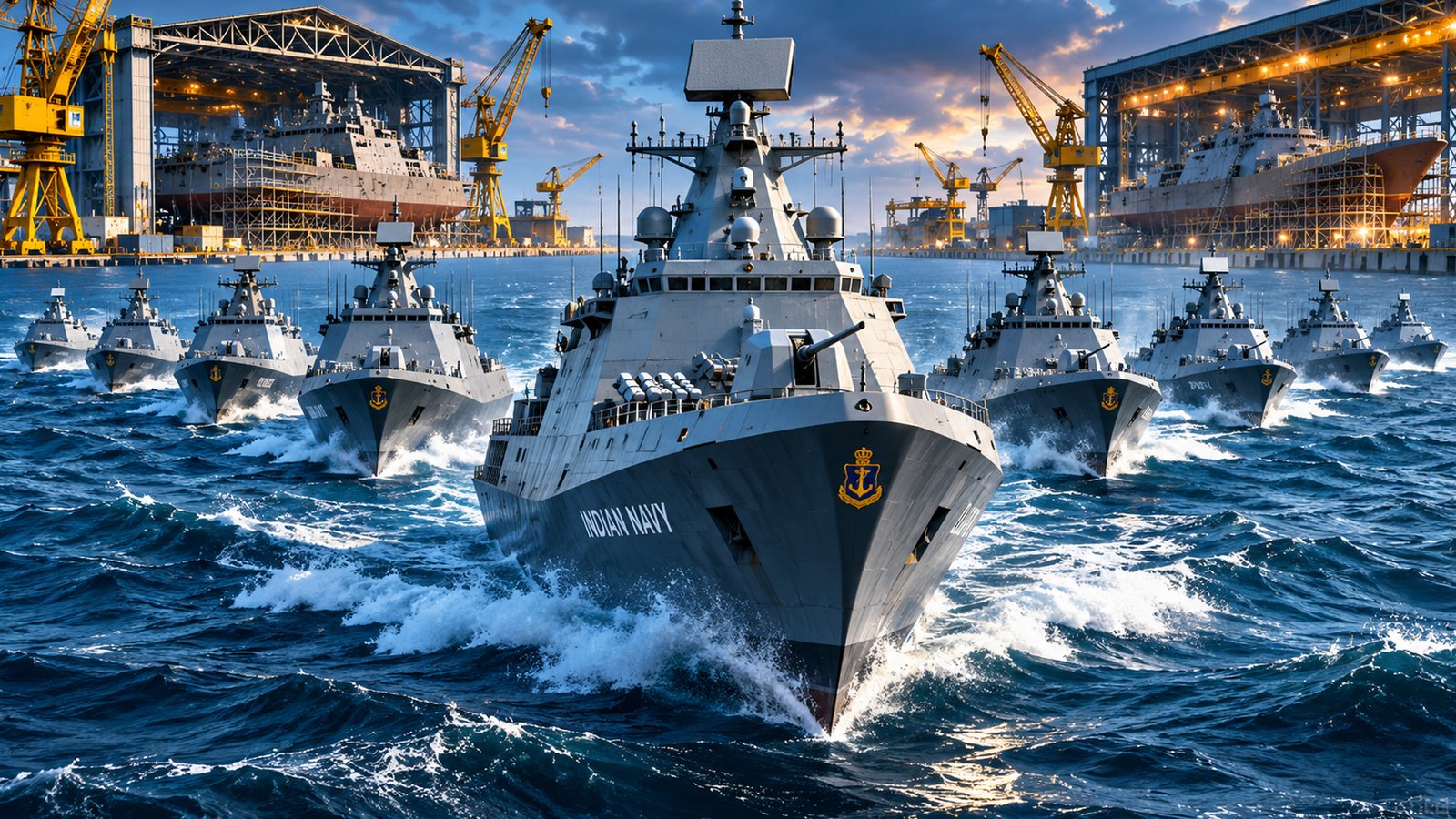
The Indian Navy has successfully rescued all 20 crew members of an Iranian fishing vessel hijacked by Somali pirates, bringing an end to a tense 48-hour operation in the Arabian Sea. The mission, completed on November 2, involved a Navy warship, surveillance aircraft and elite Marine Commandos, with crucial support from the Indian Air Force.
The vessel, named Azini, was seized by an armed pirate group on October 29 off the northeastern coast of Somalia. The rescue operation took place more than 3,000 km from Mumbai, highlighting the Indian Navy’s ability to respond to maritime threats far beyond the country’s coastline.
The hijacking had raised serious concerns among maritime security agencies because the pirates could potentially use the fishing vessel as a ‘mother ship’ to launch attacks on merchant ships operating in the region. A mother ship is a larger vessel used by pirates as a base to approach commercial shipping routes and carry out further attacks.
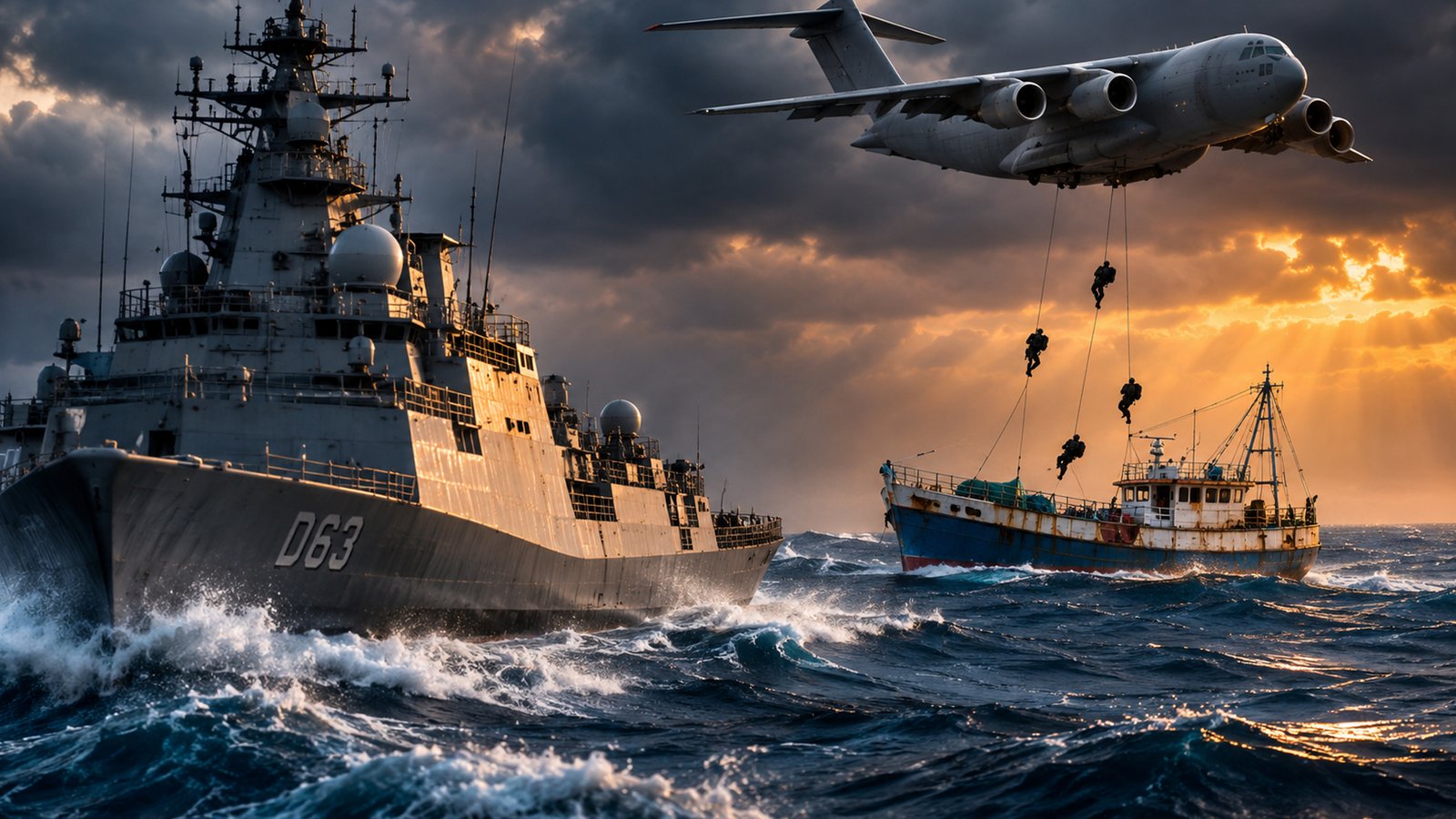
According to the Indian Navy, a mission-deployed warship was sent to intercept the hijacked vessel, supported by a maritime reconnaissance aircraft. The platforms worked together to locate Azini, monitor its movements and prevent the pirates from taking it further out to sea.
The Navy maintained surveillance over the vessel and used calibrated non-kinetic measures to restrict its movement. These measures helped contain the vessel and prevent its escape while the rescue operation was being prepared.
The operation also involved the deployment of Marine Commandos, the Navy’s elite special operations unit. The commandos were brought into the mission through a precision airdrop by an Indian Air Force C-17 transport aircraft. Their deployment allowed the Navy to carry out a coordinated tactical intervention and regain control of the vessel.
The Navy said the operation ended with the safe release of all 20 crew members. There were no casualties or injuries reported during the mission. The fishing vessel was also secured, bringing the immediate threat posed by the hijacking to an end.
Reports said the armed group involved in the hijacking comprised 12 pirates. The vessel was seized between the coastal towns of Bandar Bayla and Hafun in northeastern Somalia. Its location and movement had caused concern because it was approaching busy commercial shipping routes.
The Defence Ministry described the rescue as an example of the Indian Navy’s operational preparedness and its ability to conduct complex missions through coordination between different branches of the armed forces. The use of a Navy warship, aerial surveillance and an Air Force transport aircraft demonstrated how military resources can be brought together for operations at sea.
Defence Minister Rajnath Singh congratulated the Navy for completing the mission. He said the swift identification and interception of the vessel, followed by the safe release of the crew, reflected the Navy’s readiness to respond to maritime threats across the region. He also acknowledged the timely support provided by the Indian Air Force.
The Iranian Embassy in New Delhi also expressed appreciation to the Indian government, Navy and Air Force for rescuing the 20 Iranian crew members. The acknowledgement added a diplomatic dimension to an operation that highlighted India’s role in responding to maritime security emergencies in the wider Indian Ocean Region.
The rescue comes amid renewed concerns over piracy off the Somali coast. After a period of reduced activity, Somali pirate groups have become increasingly active again, targeting vessels operating along important international shipping routes. Such incidents threaten the safety of seafarers and can disrupt commercial shipping, particularly in areas connecting the Arabian Sea with the wider Indian Ocean.
The possibility of hijacked fishing vessels being used as platforms for further attacks makes these incidents particularly serious. Pirates can use such vessels to approach merchant ships, extend their operational reach and create additional risks for commercial traffic.
India has maintained a regular naval presence in the region to protect maritime trade and support safe passage through important shipping lanes. The Indian Navy has conducted anti-piracy patrols in the Gulf of Aden since October 2008, helping protect Indian commercial interests and reassure the maritime community.
The latest operation reinforces India’s position as a security partner in the Indian Ocean Region. The Navy said it remained committed to safeguarding seafarers, protecting vital trade routes and ensuring a safe and stable maritime environment.
For the 20 crew members aboard Azini, the operation brought a frightening ordeal to a safe conclusion. For India, it demonstrated the importance of sustained naval surveillance, rapid deployment and coordination between the armed forces in responding to threats at sea.