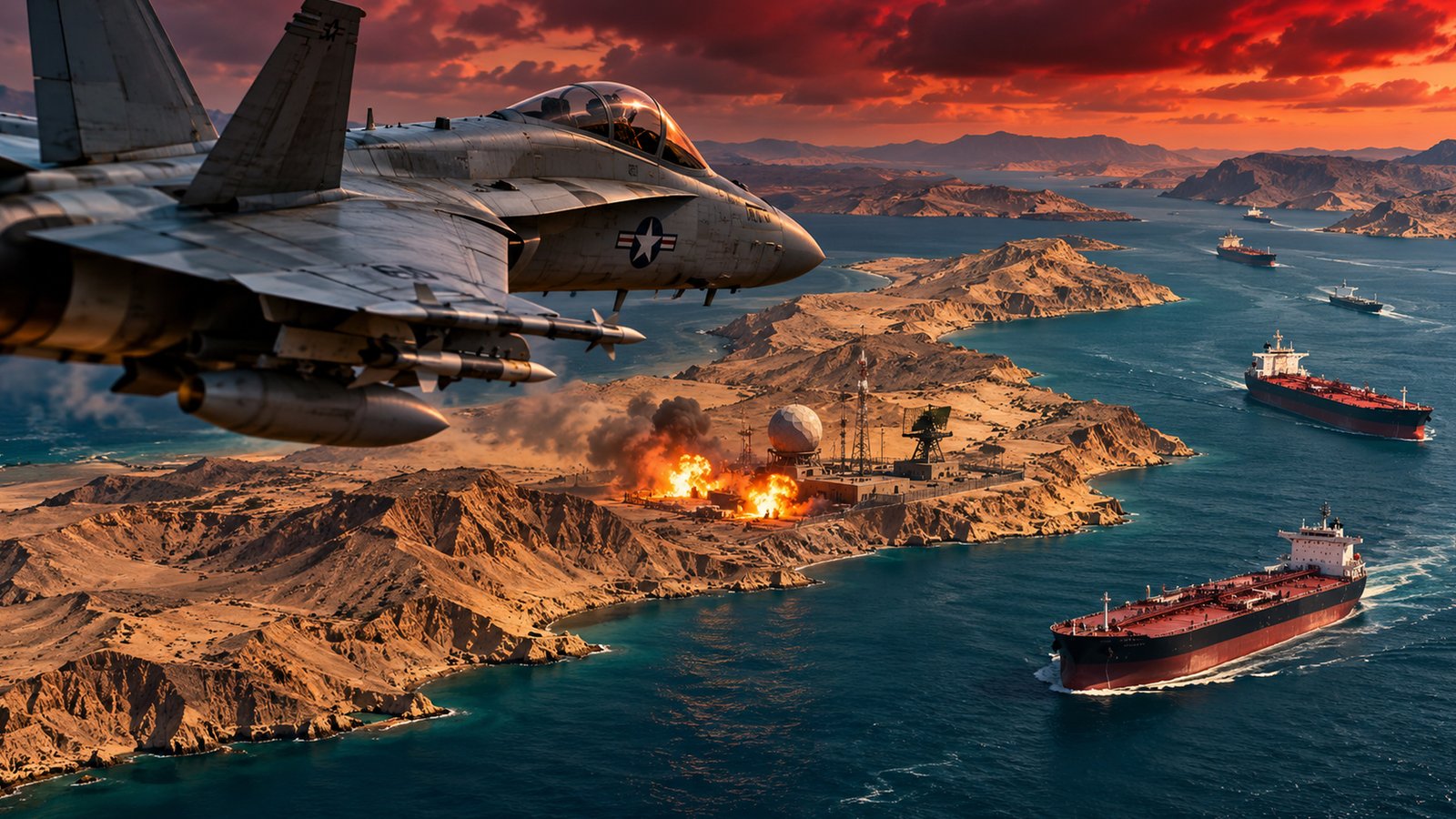
The United States has carried out fresh military strikes on Iran’s Qeshm Island near the strategically important Strait of Hormuz, even as President Donald Trump signals progress in negotiations with Tehran. The limited operation, described by American officials as defensive, has raised fresh questions about the future of the conflict just hours before crucial US midterm elections.
The strikes took place on Monday, November 2, with US officials confirming that American forces had targeted Iranian positions in the Strait of Hormuz. One official said the operation was aimed at Iranian forces using surface-to-air missiles against US assets. Another indicated that the action was a response to an Iranian attack on an American aircraft.
Washington has maintained that the operation does not signal a return to major combat operations against Iran. However, reports suggest that the latest attack is part of a series of limited strikes conducted by American forces in recent weeks. Some of these operations were not publicly announced, reportedly to avoid creating the impression that the United States was restarting a large-scale military campaign.
The military action followed reports of explosions on Qeshm Island, located off Iran’s southern coast near the entrance to the Strait of Hormuz. Iran’s state-owned IRNA news agency reported that several blasts were heard in quick succession late on Monday. Witnesses also said they saw aircraft flying over the island.
Explosions were reported in the nearby coastal city of Bandar Lengeh as well. The semi-official Fars news agency said the blasts appeared to come from the direction of the sea. Iranian media did not immediately provide details of casualties or the extent of damage. The full impact of the American strikes also remained unclear.
The latest confrontation came after Iran’s Islamic Revolutionary Guard Corps claimed that it had brought down American reconnaissance drones near the waterway using electronic warfare systems. Iranian media reported that two drones had been intercepted south of Qeshm Island. These claims were disputed by a US official and have not been independently verified.
The timing of the strikes is significant because Americans are voting in the November 3 midterm elections. Trump’s Republican Party is seeking to retain control of Congress, while the administration’s handling of the Iran conflict has become a political challenge. The war, its impact on fuel prices and the wider cost of living have drawn criticism from voters.
Trump had earlier said that the United States would not launch fresh attacks on Iran before the midterm elections. However, the latest operation took place on the eve of polling, adding to questions about Washington’s military strategy. During remarks on Monday, the President played down the scale of the conflict, saying the United States had already won the war and that there had been little fighting in recent months.
At the same time, Trump expressed confidence that a diplomatic agreement with Tehran could be reached. In a post on his Truth Social platform, he indicated that Iran wanted a settlement and suggested that an agreement could be close.
Vice-President JD Vance also struck an optimistic note. Speaking to reporters, he said he and Trump believed there were prospects for a negotiated settlement. Vance’s remarks came as indirect discussions between the two countries continued through regional mediators.
Iranian Foreign Minister Abbas Araghchi said consultations with mediators were continuing. He identified Qatar and Pakistan as playing active roles in the discussions. Iran, however, has maintained that Washington must address its demands before an agreement can be reached.
One of Tehran’s key conditions is the lifting of the US naval blockade on Iranian ports. Discussions have reportedly explored a possible arrangement under which Iran would stop attacks in the Strait of Hormuz in return for the United States easing the blockade. Iran has also indicated that it is preparing a plan to reopen the strategic waterway, with implementation potentially beginning within two days. No final agreement has been announced.
The diplomatic efforts are taking place against the backdrop of differences among regional powers. Israeli Prime Minister Benjamin Netanyahu has reportedly urged Trump to consider further military action against Iran. Several other countries in the region, however, have warned that expanding the conflict could destabilise the Gulf and threaten commercial shipping.
The Strait of Hormuz remains central to the crisis because it is a major route for global oil and gas shipments. Disruptions to shipping through the narrow waterway can affect energy supplies, transportation costs and international markets. Oil prices moved higher in early trading on Tuesday following reports of the Qeshm Island strikes, reflecting renewed concern among traders.
The latest strikes have therefore exposed the uncertainty surrounding Washington’s approach to Iran. While the administration continues to pursue negotiations, it has also maintained limited military operations to protect American assets and shipping routes. Whether diplomacy can prevent another escalation will depend on the next steps taken by Washington and Tehran.