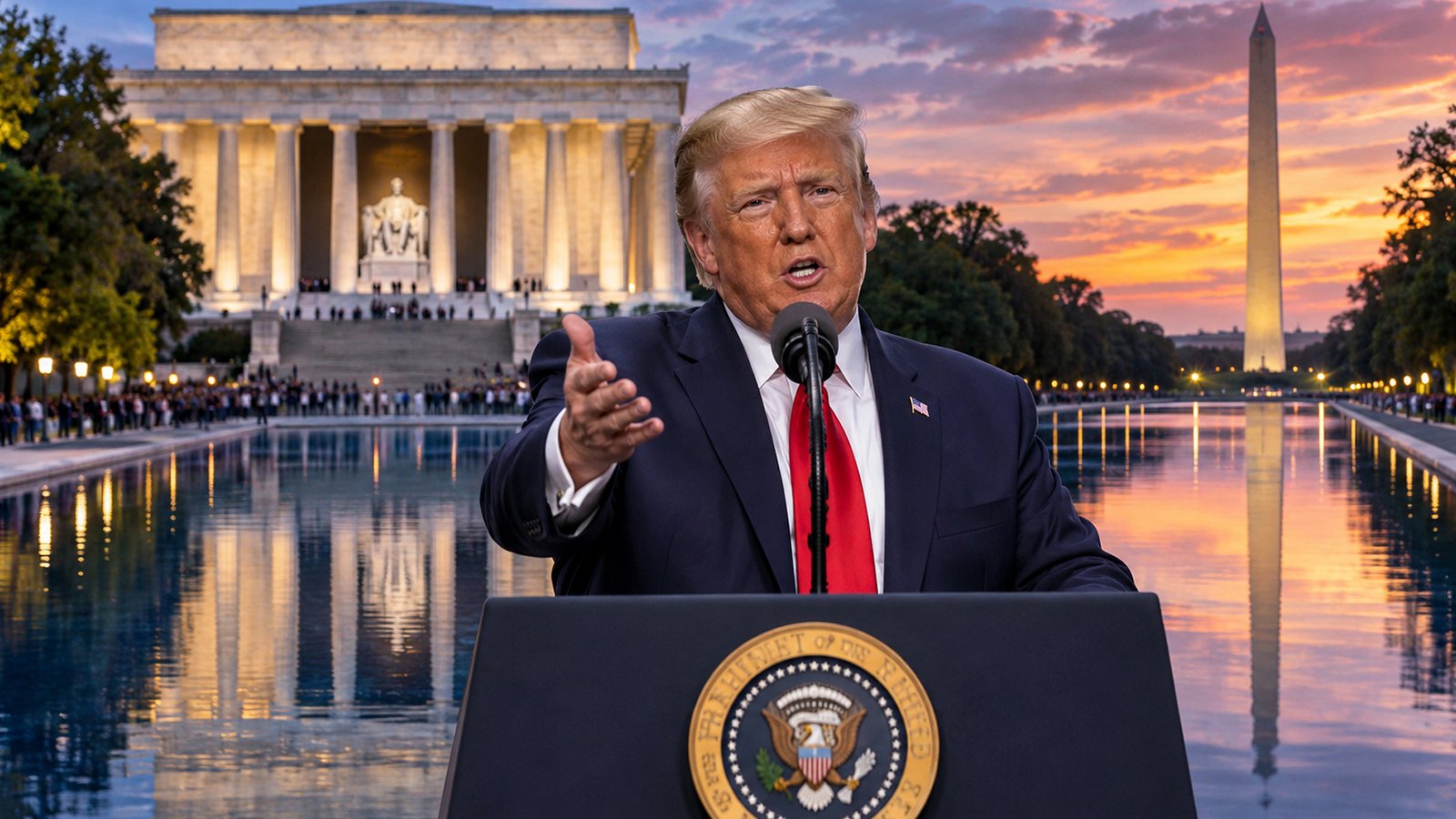
US President Donald Trump devoted much of his final public appearance before the November 3 midterm elections to showcasing the renovated Lincoln Memorial Reflecting Pool, turning a speech expected to focus on his administration’s record into a detailed presentation about construction work in Washington.
Speaking on November 2 in front of the historic landmark, Trump announced that the reflecting pool was ready to reopen after months of renovation work. He described the makeover as an improvement to one of the capital’s best-known monuments, displayed photographs of the repairs and discussed everything from new pipes and joints to the blue coating and measures taken to prevent algae.
The event was billed as part of Trump’s closing appeal to voters ahead of the midterm elections, in which Republicans are defending their control of Congress. However, the president spent roughly the first 20 minutes discussing the pool before turning to the election and other political issues. His remarks lasted around 54 minutes.
The renovation has attracted considerable attention because the work did not go according to the original plan. Trump announced the project in April, saying it would address leaks and improve the appearance of the 2,000-foot-long pool. He initially suggested the work could be completed in about a week for approximately $1.5 million, with the intention of having it ready for the country’s July 4 celebrations.
Instead, the project ran months behind schedule and its cost increased substantially. The administration awarded a $14.7 million contract to Atlantic Industrial Coatings without a competitive bidding process. Overall, more than $16 million in contracts were associated with the renovation, according to reports.
The problems became visible after the pool was refilled. The newly applied blue surface began peeling, while algae growth turned the water green. Sections of the coating reportedly separated from the underlying surface, forcing workers to drain the pool again and carry out additional repairs.
Trump repeatedly blamed vandalism for the damage and spoke about efforts to prevent further incidents. During Monday’s appearance, he displayed photographs of the pool’s earlier condition and highlighted the new pipework, resurfacing and other measures intended to prevent algae from returning. He also praised the finished appearance, saying the new surface offered better reflectivity.
However, investigations into the damage complicated the administration’s explanation. Federal prosecutors initially charged former Olympic canoeist David Hearn over alleged vandalism at the site. The case was subsequently dropped after information indicated that problems with the installation, rather than deliberate damage, had caused the coating to fail. A judge later prevented prosecutors from bringing the same charges again.
The contractor also acknowledged flaws in the renovation process. Reports based on company documents indicated that insufficient primer and incompatibility between materials contributed to the peeling surface. The rushed schedule, which was intended to meet the July 4 deadline, added to the problems.
Trump nevertheless continued to refer to vandalism during his speech. He also criticised earlier administrations over previous work on the landmark, although claims about the scale and cost of those repairs have been disputed.
At one point, the president joked about renaming the Lincoln Memorial Reflecting Pool after himself. The comment came as he discussed the improvements and his administration’s wider plans for Washington. He also mentioned other projects, including the recently completed White House helipad, a proposed triumphal arch near Arlington National Cemetery, a planned promenade and changes to a golf course along the Potomac River.
The speech reflected Trump’s broader focus on reshaping the appearance of the US capital during his second term. His administration has presented the projects as efforts to improve public spaces and restore Washington’s appearance. Critics, however, have questioned the spending, procurement process and decision to prioritise construction projects while voters remain concerned about household expenses.
That contrast was particularly significant on the eve of the midterm elections. The cost of living, inflation, grocery bills and fuel prices have remained important concerns for American voters. Polling cited in recent election coverage showed low approval ratings for Trump’s handling of the economy and the cost of living.
Democrats have sought to make those concerns central to their final campaign appeals, arguing that the administration’s policies have not provided sufficient relief to households. Republicans, meanwhile, have defended Trump’s record, highlighting issues including immigration, tax changes and national security.
Trump acknowledged the political challenge facing his party, noting that the president’s party often loses seats in midterm elections. He said Republicans had made a strong effort and urged supporters to turn out. He also criticised Democratic candidates and defended his administration’s record.
The president’s decision to make the reflecting pool the setting for his final public appearance offered a striking contrast with the traditional election-eve campaign message, which generally focuses on voters’ immediate concerns and the stakes of the congressional contest.
The Lincoln Memorial Reflecting Pool is an important part of American public history. It sits between the Lincoln Memorial and the Washington Monument and was the backdrop to Martin Luther King Jr’s 1963 ‘I Have a Dream’ speech. Its renovation therefore attracted attention beyond the construction issues, particularly because of the administration’s decision to change its appearance and the controversy surrounding the work.