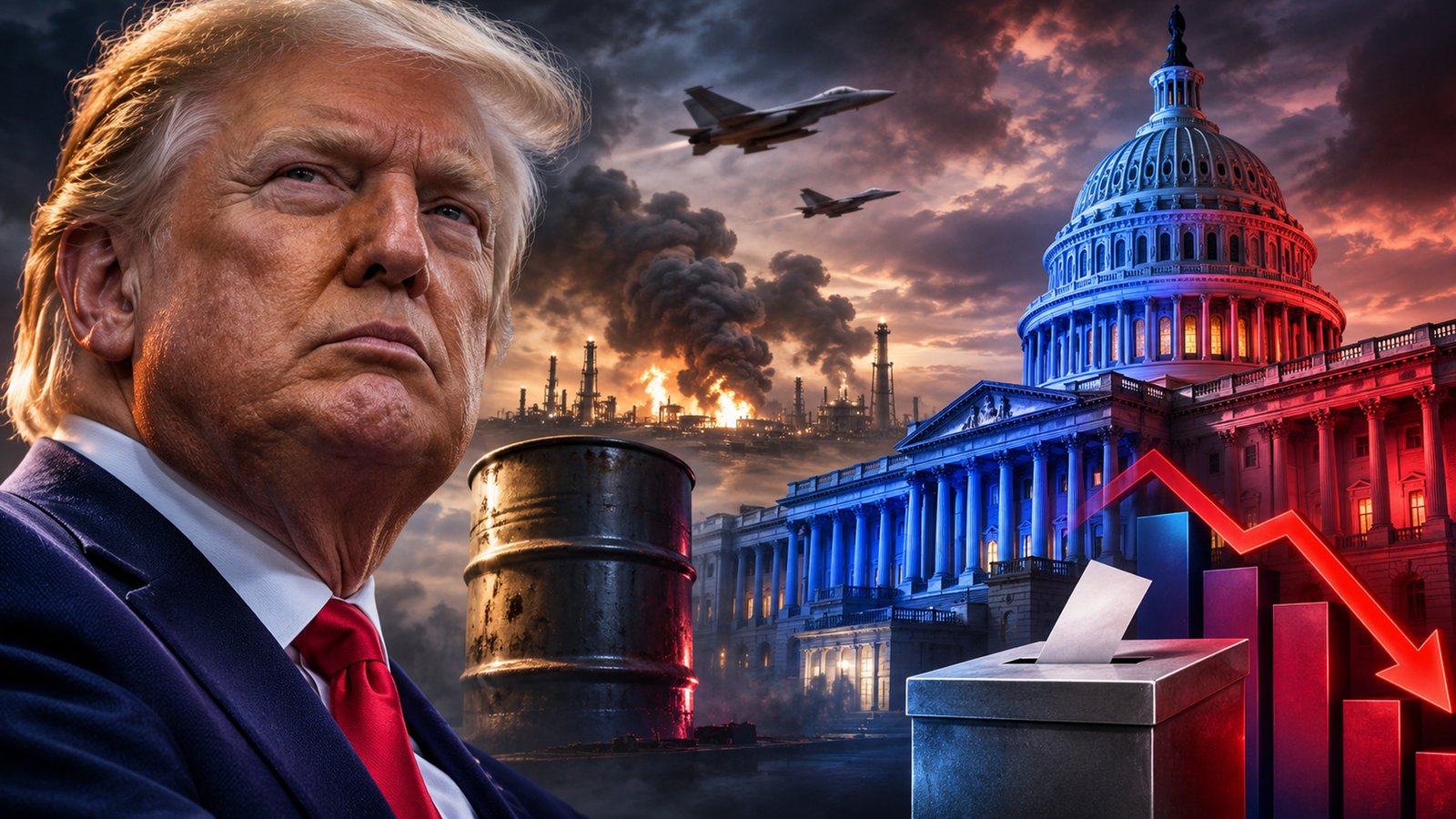
US President Donald Trump has acknowledged that the ongoing war with Iran contributed to the Republican Party’s crushing defeat in the November 3 midterm elections, even as he defended his decision to launch the military campaign, saying he would do it again if given another opportunity.
Trump’s remarks came after Democrats secured control of both the House of Representatives and the Senate, delivering a major electoral setback to the Republican administration. The results reflected growing voter dissatisfaction with the government’s handling of the economy, rising fuel prices and the prolonged conflict in the Middle East.
In interviews following the election, Trump admitted that the Iran conflict had affected Republican performance. Speaking to Fox News, he said Iran was partly responsible for the party’s losses. In a separate conversation with The Wall Street Journal, he also acknowledged that the war had played a role in the outcome.
The US President, however, remained firm on his decision to attack Iran. He argued that the military operation was necessary to prevent Tehran from acquiring nuclear weapons and insisted that the long-term security benefits outweighed the immediate political and economic costs.
Vice President JD Vance offered a much stronger assessment of the election outcome. In a post on social media platform X, Vance directly blamed the Iran war for the Republican defeat, saying, “The reason we lost is the war.”
He also questioned whether the political cost of the conflict had been worth it, pointing to the loss of the Senate and the party’s poor performance across several important races. Vance’s remarks marked a notable moment of public disagreement within the Republican leadership over the consequences of the military campaign.
Responding to Vance’s assessment on Wednesday, Trump described it as “largely true”, particularly because the conflict had pushed gasoline prices higher in the short term. However, he maintained that the United States had no alternative but to take military action against Iran.
Trump said he would make the same decision again, arguing that Iran could not be allowed to develop nuclear weapons. He also rejected the suggestion that the election results should lead to a change in his approach to the conflict.
The economic impact of the Iran war emerged as an important issue during the midterm election campaign. The conflict disrupted energy markets and contributed to higher fuel costs, putting additional pressure on American households already concerned about inflation and everyday expenses.
Democratic candidates repeatedly highlighted the financial consequences of the war, arguing that the administration’s foreign policy decisions were making life more expensive for ordinary Americans.
Higher gasoline prices became a particularly sensitive issue because they directly affect household budgets, transportation expenses and the cost of moving goods. The increase also strengthened criticism that the administration had diverted attention and resources towards an overseas military conflict instead of addressing domestic economic concerns.
The war has continued for nearly nine months, making it an increasingly difficult political issue for the Republican administration. Its objectives and expected duration have also attracted criticism, with Trump offering varying explanations about how and when the conflict could end.
The Democratic victories represent a major shift in the balance of political power in Washington. With control of both chambers of Congress, the party is expected to gain greater influence over legislation, government spending and investigations into the Trump administration.
The results also expose divisions within Republican leadership over the future direction of the party and its approach to foreign policy. While Trump continues to defend the military campaign, Vance’s comments suggest that concerns about its political consequences are growing within the administration.
The election outcome has also drawn attention in Tehran. Iranian Parliament Speaker Mohammad Baqer Qalibaf welcomed the Republican losses, saying American voters had rejected the war.
For Iran, the Democratic victories offer a political opportunity to highlight domestic opposition to the conflict in the United States. However, the election results do not automatically change Washington’s military or diplomatic position towards Tehran.