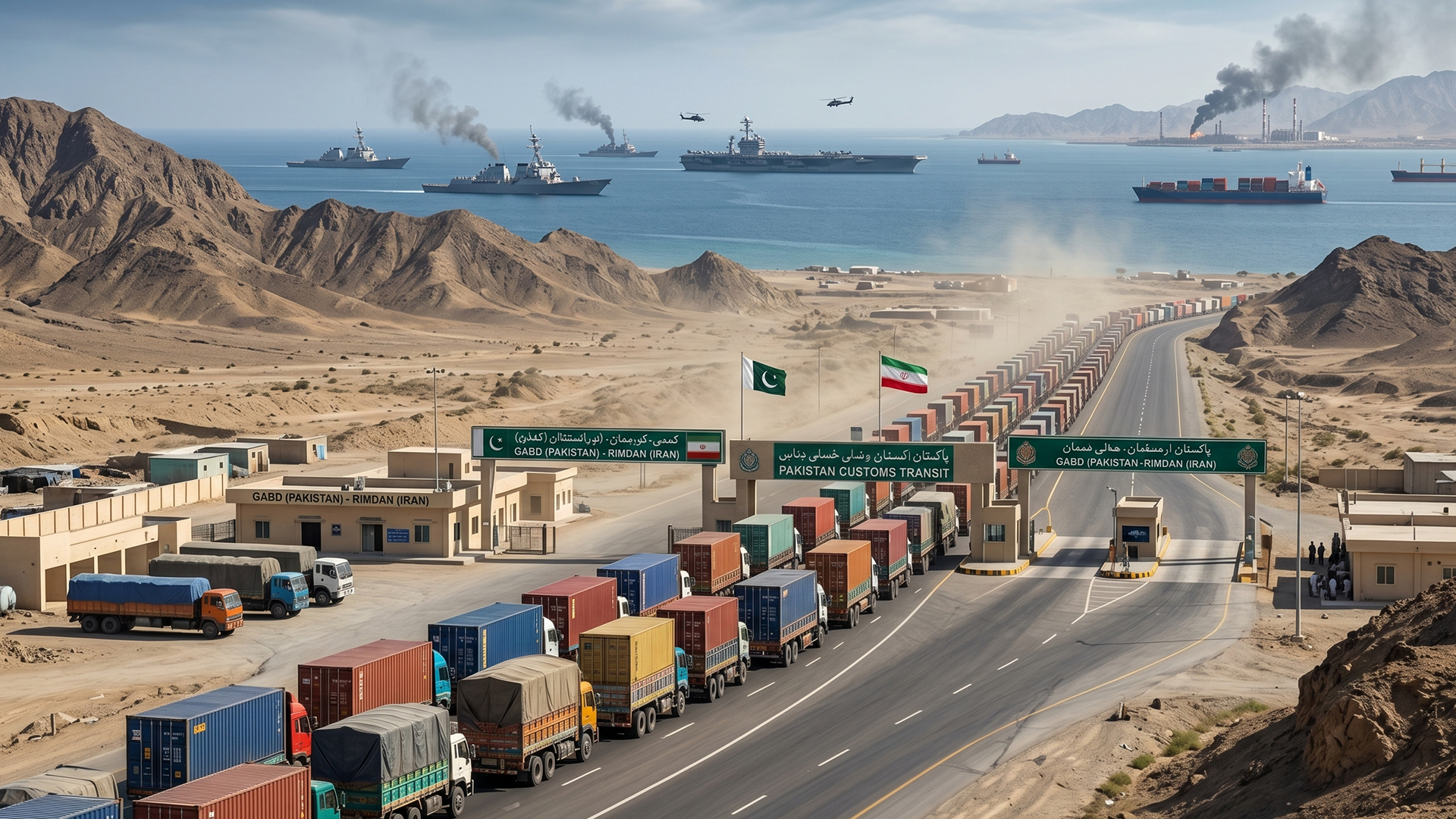
Pakistan has opened six land routes to Iran to keep trade moving as tensions in the Gulf disrupt shipping through the Strait of Hormuz.
The decision comes at a time when sea routes have been affected due to a US naval blockade and rising conflict in the region. With ships facing delays and restrictions, trade through the Strait of Hormuz has slowed significantly, impacting supply chains and global markets.
To ease the situation, Pakistan has allowed trucks to carry goods across its land borders into Iran using six designated corridors. These routes are expected to help transport essential goods and reduce some of the pressure caused by disrupted maritime trade.
The Strait of Hormuz is one of the world’s most important oil routes, and any disruption there has a direct impact on global energy supplies. The ongoing situation has already led to concerns over rising oil prices and delays in shipments.
Pakistan’s move is being seen as a practical step to support regional trade and maintain economic activity. Given its shared border with Iran, the country is in a position to offer an alternative route when sea transport becomes difficult.
However, the decision also comes with challenges. It highlights the delicate balance Pakistan must maintain, as it has ties with both Iran and the United States.
Also Read: Iran signals tough stand on Hormuz, hits out at US