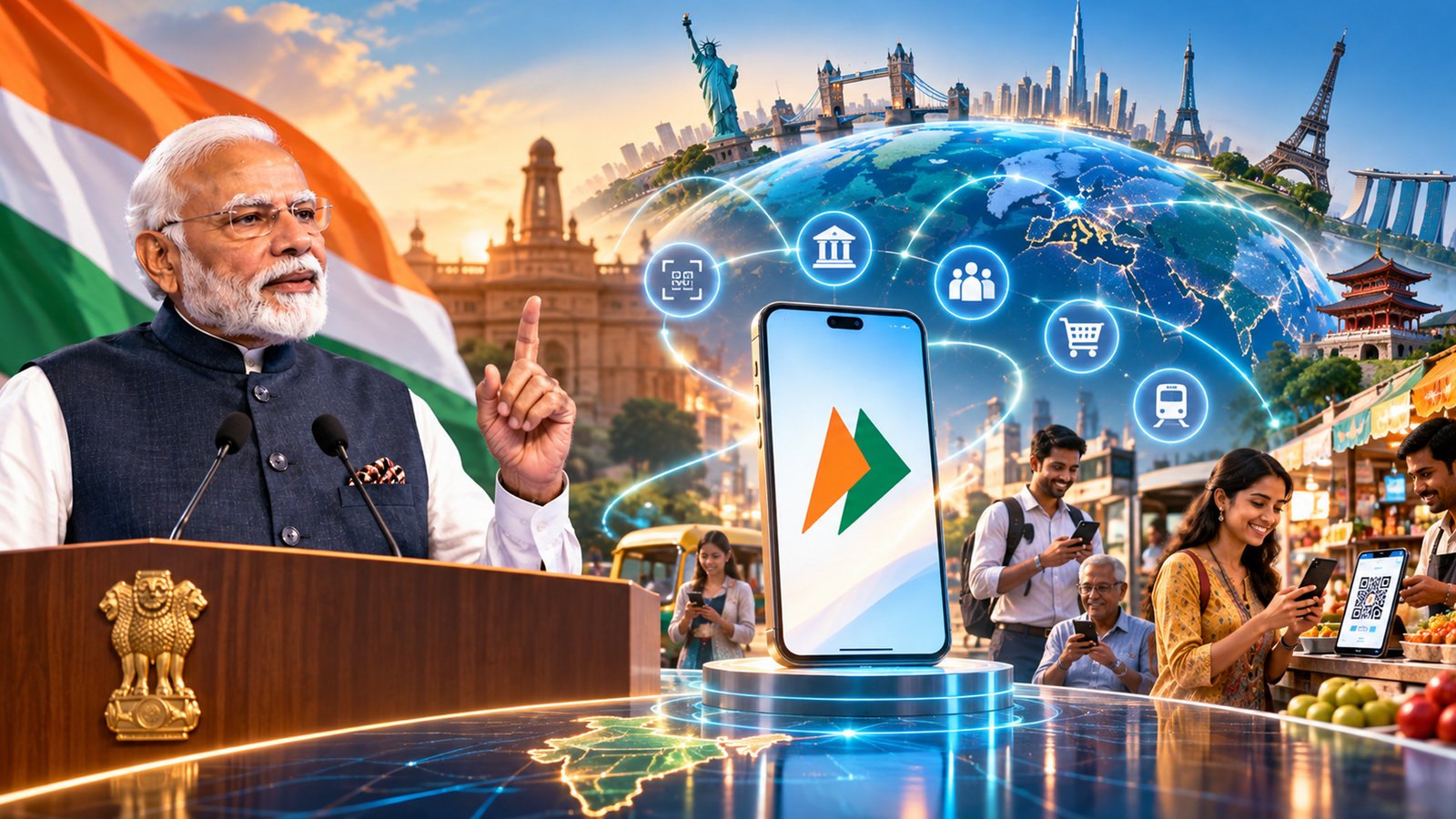
Prime Minister Narendra Modi has called for wider global adoption of India’s Unified Payments Interface (UPI), saying the country’s fintech success should now move beyond domestic payments and reach more international markets.
Speaking at the Global Fintech Fest 2026 in Mumbai on Tuesday, he said UPI had become a major example of India’s ability to build large-scale digital infrastructure. He urged the fintech industry to work with other countries and connect UPI with their existing payment systems.
UPI is currently operational in 11 countries, including Singapore, the UAE, France and Nepal. PM Modi said the next step should be to connect the Indian payment network with more international payment rails, particularly in countries that have a large Indian diaspora, strong trade links with India or an interest in digital cooperation.
Such partnerships could make cross-border payments quicker and cheaper. They could also help millions of Indians working overseas send money home at lower costs. Modi pointed to the link between India’s UPI and Singapore’s PayNow system as an example of how payment networks can work together across borders.
The scale of UPI’s domestic success has given India a strong base for this international push. The platform processed 24.51 billion transactions worth about ₹29.82 lakh crore ($314 billion) in August 2026, making it the world’s largest retail fast-payment system by transaction volume.
He said India’s fintech journey had been driven by a combination of technology, innovation and a growing willingness among entrepreneurs to take risks. He described UPI as one of the biggest champions of India’s fintech story and said the sector now needed to look at opportunities beyond digital payments.
The Prime Minister also highlighted the importance of emerging technologies such as agentic artificial intelligence, tokenisation and quantum technology. He said the challenge for the industry was to turn the potential of these technologies into practical solutions that could improve people’s access to financial services.
The next phase of fintech, he suggested, should not be limited to making payments easier. Areas such as insurance, lending, wealth management, cybersecurity and data protection will also become increasingly important as digital finance expands.
Security and consumer trust will be critical to that growth. PM Modi called for stronger cybersecurity and responsible use of data while stressing the need for an environment where financial innovation can continue without compromising consumer protection.
India’s fintech growth has also been closely linked with financial inclusion. Digital platforms such as UPI, Aadhaar-enabled payments and Jan Dhan accounts have helped bring formal financial services to people who were previously dependent largely on cash.
Reserve Bank of India Governor Sanjay Malhotra said fintech had helped make banking more accessible across the country, from rural communities to urban consumers. He also pointed to the growing use of technology in lending, fraud detection and services for small businesses.
The expansion of digital financial services could make access to credit easier for the micro, small and medium enterprises. Data-based lending and digital platforms are increasingly reducing the dependence on traditional processes and physical documentation.
The government also sees the fintech sector as part of India’s broader economic transformation. At the Mumbai event, he pointed to the country’s growth performance and improving global economic standing as signs of greater confidence in the Indian economy.
The push to take UPI overseas comes at a time when countries are looking for faster, cheaper and more efficient alternatives for cross-border payments. For India, international adoption could strengthen the country’s position as a global fintech hub while creating opportunities for Indian financial technology companies to export their services and expertise.
It could also make everyday transactions easier for Indian travellers and overseas Indians, allowing them to use familiar payment systems while reducing dependence on traditional cross-border payment channels.
India’s fintech story is no longer only about how many people use digital payments at home. The next challenge is to take the technology, standards and experience built in India to the rest of the world.
With UPI already handling billions of transactions every month, PM Modi’s call for greater international integration marks a shift towards making India’s digital payments infrastructure a bigger part of the global financial system.