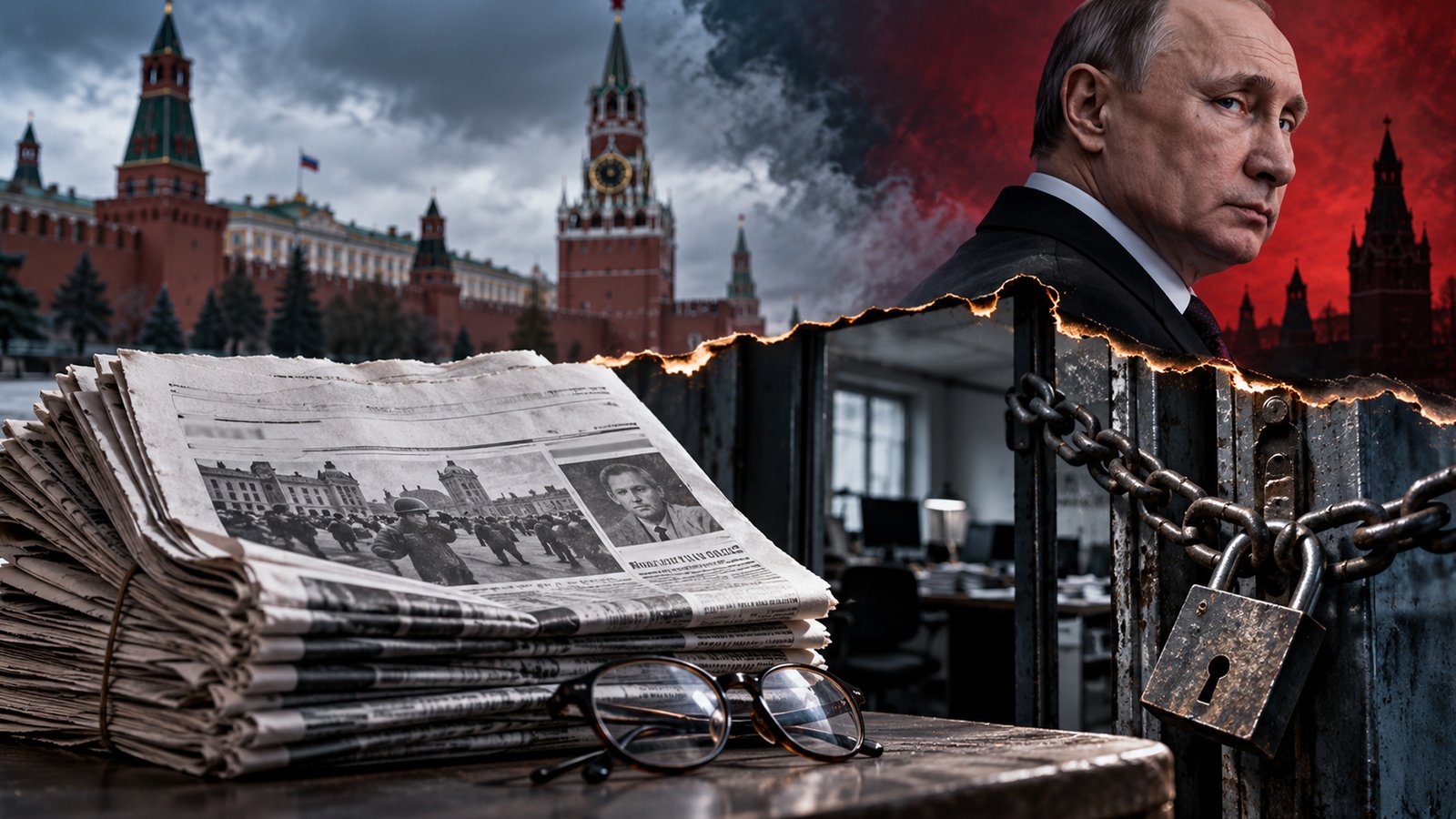
Russia’s prominent independent newspaper Novaya Gazeta has announced that it will end its remaining operations on November 9, bringing an end to more than three decades of investigative journalism. The newsroom says Russian authorities and security agencies have made it impossible for the publication to continue working.
In a statement released on October 30, the newspaper said it would publish one final issue before switching off its servers and leaving its Moscow office. The editorial team described the closure as the result of a coordinated campaign that had stripped it of its premises, financial support and ability to publish. Its stark farewell message read: “We have been killed.”
Founded in 1993, Novaya Gazeta emerged in the years following the collapse of the Soviet Union. Former Soviet leader Mikhail Gorbachev helped finance the newspaper using part of the money he received with the 1990 Nobel Peace Prize. Over the years, it became one of Russia’s best-known independent publications, recognised for reporting on corruption, political influence, human rights violations and abuses by state institutions.
The newspaper’s investigations often challenged powerful interests and brought attention to issues that received limited coverage in state-aligned media. Its journalists reported extensively on the wars in Chechnya, alleged abuses by security forces and the actions of political leaders. The publication became a symbol of the risks faced by independent journalists in Russia.
Six journalists and contributors associated with the newspaper were murdered, including investigative reporter Anna Politkovskaya. She was known for documenting alleged abuses during the Chechen conflict and was shot dead in her Moscow apartment building in October 2006. The newspaper’s office also housed a memorial museum dedicated to her, which is expected to close along with the publication.
Its co-founder and former editor-in-chief Dmitry Muratov shared the 2021 Nobel Peace Prize with Filipino journalist Maria Ressa for their efforts to safeguard freedom of expression. Muratov later stepped down as editor after Russian authorities designated him a “foreign agent”. In 2022, he was attacked on a train when an assailant threw red paint at him.
The pressure on Novaya Gazeta increased sharply after Russia launched its full-scale invasion of Ukraine in February 2022. New laws criminalised what authorities described as spreading false information about the military and discrediting the armed forces. The newspaper said these restrictions made it impossible to report freely on major developments in the war and other sensitive public issues.
Novaya Gazeta suspended its print edition inside Russia in March 2022 following warnings from the media regulator. A court later revoked its media registration, while its website was blocked and its printing press seized. The publication nevertheless continued producing online material from its Moscow newsroom.
The latest developments appear to have ended that effort. The newspaper said it had received an eviction notice for its office on Potapovsky Lane. Its reader-donation platform, which had helped finance its journalism, was also shut down. The newsroom said banks and other organisations had withdrawn services, leaving it without the resources needed to operate.
The newspaper also pointed to legal action and police searches involving its staff. Editor Oleg Roldugin was arrested and is awaiting trial over allegations linked to unlawfully accessing computerised information. The home of editor-in-chief Sergei Sokolov was also searched this month.
In its statement, Novaya Gazeta accused the Federal Security Service, the Justice Ministry and the Prosecutor General’s Office of driving the pressure campaign. It argued that the actions against the newspaper were part of a wider erosion of constitutional rights, civil society and independent institutions. These are the newspaper’s allegations; Russian authorities had not issued an immediate response to its closure announcement.
The shutdown is significant because Novaya Gazeta was among the few major Russian outlets that continued to criticise the Kremlin from inside the country after the invasion of Ukraine. Its closure further narrows the space for independent journalism and investigative reporting in Russia, where several media organisations have been blocked, restricted or pushed into exile.
Some journalists who left Russia earlier established Novaya Gazeta Europe, a separate publication based outside the country, with its main operations in Latvia. It continues to report critically on Russian politics and the war in Ukraine, but Moscow has designated it an “undesirable organisation”, making its activities inside Russia illegal.
The editorial team has said its final issue will still be published before November 9. After that, the newspaper’s servers will be switched off and its Moscow office vacated. The closure ends a publication that documented some of the most contentious events in modern Russian history. It also underlines the growing challenges confronting independent media, journalists and readers seeking information beyond state-controlled narratives.