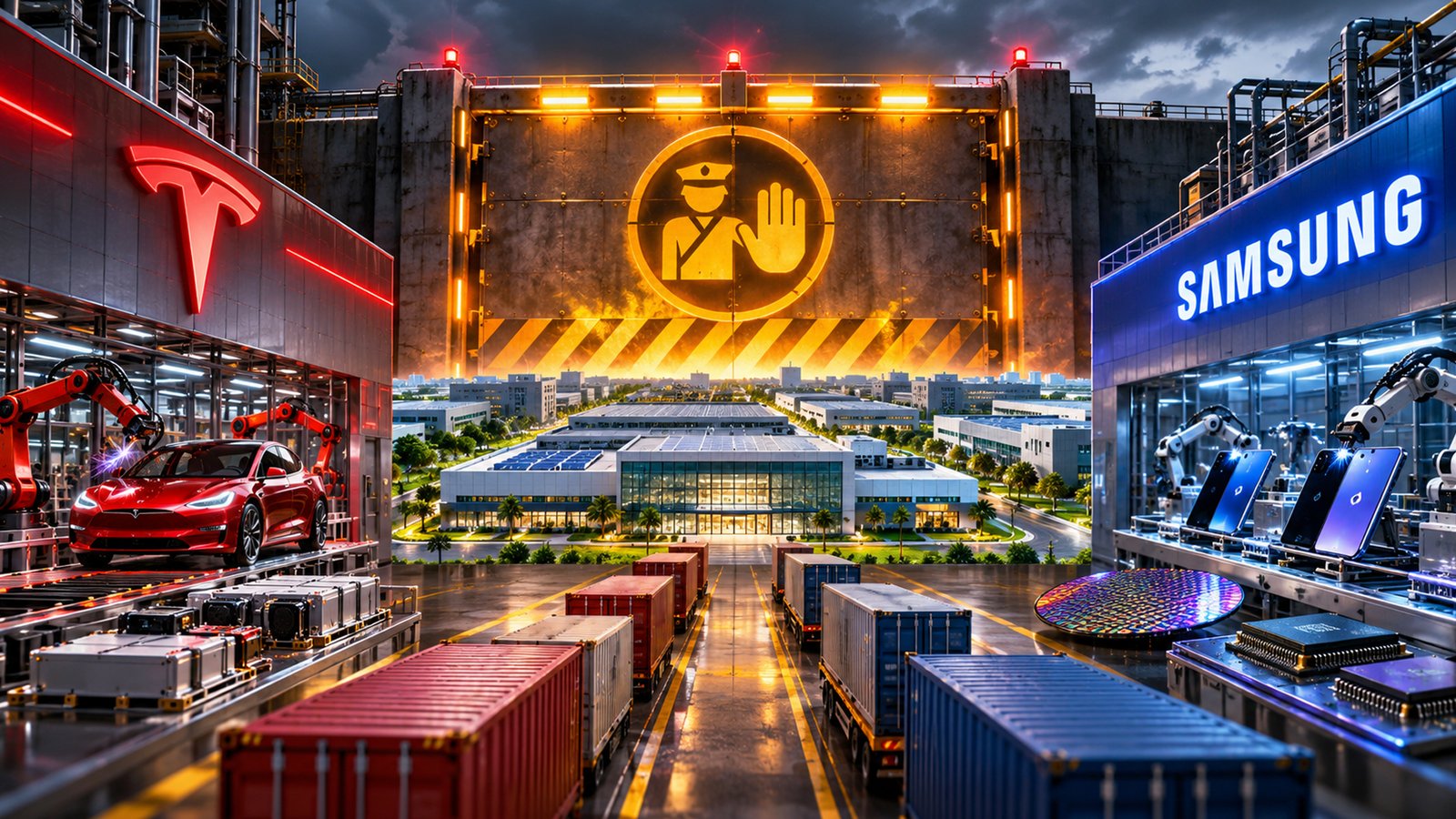
Tesla and Samsung have raised objections to the Trump administration’s proposed additional tariffs on imports from Vietnam, warning that fresh trade restrictions could increase manufacturing costs and disrupt technology supply chains. The companies have urged the US government to consider the country’s importance as a manufacturing hub for electronics, automotive components and other specialised products as Washington moves closer to completing an investigation into Vietnam’s intellectual property practices.
The development comes amid growing uncertainty over US trade policy under President Donald Trump. The investigation, conducted under Section 301 of the US Trade Act, is expected to conclude by November 29. Its findings could determine whether Washington introduces additional trade restrictions against Vietnam, potentially affecting technology companies and manufacturers with substantial operations in the country.
For Tesla and Samsung, Vietnam is an important part of their international manufacturing networks. Both companies depend on specialised suppliers and production facilities across different countries to manufacture products for global markets. They believe additional tariffs could make these arrangements more expensive and create complications for businesses operating in the United States.
Tesla, led by Elon Musk, has specifically highlighted the difficulties American manufacturers face in sourcing certain specialised components domestically. In its submission to the US Trade Representative (USTR) on July 2, the electric vehicle manufacturer argued that some precision equipment and advanced components are difficult to obtain from US suppliers despite investments in domestic manufacturing.
The company has therefore urged the administration to consider the wider consequences of additional import duties. According to its position, tariffs on Vietnamese products could increase expenses for American manufacturers that rely on international suppliers for essential components and production equipment.
For the electric vehicle industry, supply chain costs are particularly important. Automakers depend on a complex network of suppliers for electronic components, precision equipment and other specialised materials. Higher import duties could increase production expenses, potentially affecting vehicle prices and the competitiveness of American manufacturers.
Samsung has expressed similar concerns about the proposed US tariffs. The South Korean electronics major has developed an extensive manufacturing presence in Vietnam, making the country a significant base for its international operations.
Samsung’s Vietnamese facilities manufacture smartphones and network equipment, including products supplied to the American market. The company has invested approximately $25 billion in the country, making it Vietnam’s largest foreign investor.
Its manufacturing operations in Vietnam also form part of a broader strategy to diversify production across different markets. The company is expanding its semiconductor-related activities in the country, including a planned investment of around $1.5 billion in a chip-testing facility.
Additional tariffs could affect the economics of these operations by increasing the cost of exporting products to the United States. They could also create uncertainty for future investments and manufacturing decisions.
The objections from Tesla and Samsung highlight a challenge facing the Trump administration. While Washington wants to strengthen domestic manufacturing and protect American intellectual property, several major technology companies depend on international production networks to remain competitive.
The proposed tariffs have also attracted opposition from retail and industry associations representing businesses involved in footwear, apparel, bicycles, video game consoles and consumer electronics. These organisations have warned that higher import duties could increase costs for American businesses and consumers.
However, several American industries support stronger trade restrictions. Producers of steel, seafood, plywood, solar panels and wood products have called for additional tariffs, arguing that Vietnamese imports create unfair competition for domestic manufacturers.
At the centre of the dispute is an investigation into Vietnam’s intellectual property protection and enforcement practices. The Trump administration initiated the Section 301 investigation in May to examine allegations involving copyright violations, counterfeit products and inadequate enforcement of intellectual property laws.
Washington designated Vietnam a priority foreign country in April under its annual intellectual property review. The designation reflected concerns about the protection of American intellectual property, including software, films and other copyrighted material.
The Business Software Alliance, whose members include Microsoft, Oracle and IBM, has raised concerns about the use of unlicensed software in Vietnam. A 2017 survey cited by the organisation found that approximately three-quarters of software installed on personal computers in the country was unlicensed.
The Motion Picture Association has also alleged that websites operating from Vietnam distribute copyrighted films and television programmes without authorisation. It has called for stronger enforcement against online piracy and improved protection for legitimate digital entertainment services.
These concerns have strengthened calls from American technology and entertainment companies for Vietnam to improve its intellectual property enforcement mechanisms. They argue that stronger protections are necessary to safeguard software developers, content creators and other businesses operating internationally.
Vietnam, meanwhile, has urged Washington to ensure that its investigations remain objective. The Southeast Asian country has become an increasingly important manufacturing destination for global technology companies seeking alternatives to China.
Its growing importance is reflected in trade figures. Vietnamese exports to the United States increased 42% during the first eight months of 2026 compared with the corresponding period last year. The country has also emerged as a major source of American goods trade deficit.
Vietnamese products currently face a general US tariff of 12.5%, introduced in July following a separate investigation concerning imports allegedly produced using forced labour. Earlier reciprocal tariffs imposed under Trump’s trade policy were struck down by the US Supreme Court.
The November 29 deadline is therefore important for companies monitoring the next phase of US-Vietnam trade relations. The investigation’s findings could determine the nature and scope of any additional trade measures.
For Tesla, Samsung and other technology manufacturers, the immediate concern is the possibility of higher production costs and supply chain uncertainty. A decision to impose further tariffs could force companies to reconsider sourcing arrangements, manufacturing locations and investment strategies.
As global technology production becomes increasingly interconnected, the dispute highlights the difficulty of balancing domestic manufacturing priorities with the international supply chains on which major technology companies depend. The outcome could have significant implications for the electronics, automotive and semiconductor industries.