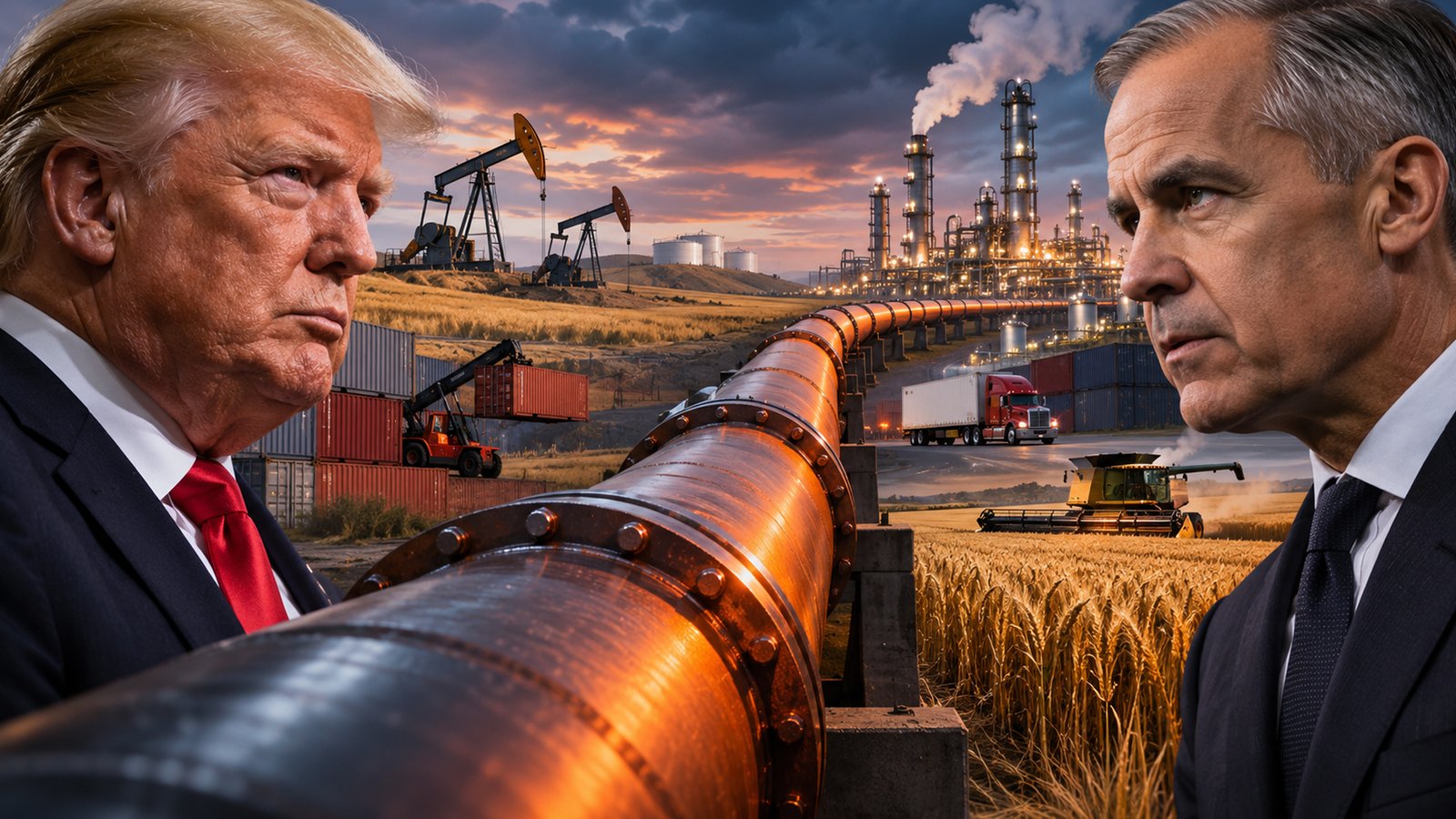
A possible thaw in the trade dispute between the United States and Canada has emerged after US President Donald Trump and Canadian Prime Minister Mark Carney held talks on a new agreement. Trump said Washington had a “concept” for a deal, while Carney described their conversation as constructive and said negotiating teams would work over the coming weeks to reach an outcome.
The comments have raised hopes after months of tension, with both countries imposing billions of dollars in tariffs on each other. But no final agreement has been announced, and key questions over tariffs, market access and energy cooperation remain unresolved.
Speaking in Dubuque, Iowa, on Sunday, Trump said he had spoken with Carney again on Saturday. He described the proposed deal as beneficial for American farmers and the wider US economy, and said the two sides were close to an understanding. He offered no detailed terms or signing date.
Carney said the conversation built on recent discussions about the broad outlines of a mutually beneficial trade deal. In a post on X, he said an agreement should create jobs, improve affordability for families and fully respect Canada’s languages, culture and sovereignty. He added that both countries’ teams would work in the coming weeks to deliver that outcome.
Trump also said the proposed arrangement could include reviving the Keystone XL oil pipeline. He claimed Canada would pay for its construction and said the route had largely been determined. Carney’s office did not immediately confirm that the project was part of the discussions.
Keystone XL was designed to carry up to 830,000 barrels of oil a day from Alberta’s oil sands to US storage and refining centres. Former President Joe Biden revoked a key permit in 2021, halting the project. Its revival would require further decisions and approvals, and the path forward remains unclear.
TC Energy, which developed Keystone XL, later separated its crude pipeline business into South Bow. The company is considering the Prairie Connector with US partner Bridger Pipeline. The proposed line would carry about 550,000 barrels a day from Alberta to Wyoming, using some infrastructure already installed in Canada. South Bow expects to decide in 2027 whether to proceed.
Energy trade is a major part of the relationship. Canada is the world’s fourth-largest oil exporter and sends more than 90 per cent of its crude oil exports to the United States. Any change to pipeline access, energy rules or cross-border tariffs could therefore have consequences for producers, refiners and consumers in both countries.
The dispute escalated in August after negotiations broke down. Canada rejected US demands that Carney said threatened its sovereignty, French-language protections and auto industry. Trump then imposed tariffs of up to 50 per cent on about $20 billion of Canadian goods. Ottawa retaliated with duties on American products, adding uncertainty for businesses reliant on cross-border supply chains.
The governments have since explored ways to ease restrictions, particularly on steel and automobiles. Some progress has been reported, but no comprehensive settlement has been announced. The latest conversation signals a push to advance negotiations, though the details of tariff relief and other concessions remain unsettled.
The dispute has become a political issue ahead of the November 3 US midterm elections. Tariffs have affected businesses in border states such as Michigan and Maine, where trade with Canada supports manufacturing, agriculture and jobs. Some Republican candidates have called for an end to the tariff conflict.
Trump has argued that the United States has lost money through its trade relationship with Canada. He suggested the deal could remove tariffs paid by American farmers on Canadian products, but did not identify the goods involved or explain how the change would work. It has raised costs and complicated planning for companies across integrated North American supply chains.
Carney, meanwhile, wants tariff relief for Canadian exporters without compromising the country’s economic interests or sovereignty. Ottawa is also seeking to reduce its dependence on the US market by strengthening trade ties with partners, including the European Union.
The latest remarks mark a more positive tone after talks collapsed in August. Still, optimism should not be mistaken for a completed deal. Existing tariffs and trade uncertainty remain until negotiators settle the terms and both governments formally announce an agreement.
The immediate task is to turn the broad concept described by Trump and Carney into a workable arrangement. The coming weeks will show whether renewed engagement can resolve the dispute or whether disagreements over tariffs, energy and Canada’s national interests will continue to obstruct progress.