The trade relationship between the United States and Canada has taken another sharp turn for the worse after negotiations between the two countries collapsed, prompting US President Donald Trump to threaten a fresh round of steep tariffs on Canadian vehicles, auto parts and steel. Canada, meanwhile, is preparing retaliatory measures, raising fears of a wider North American trade war.
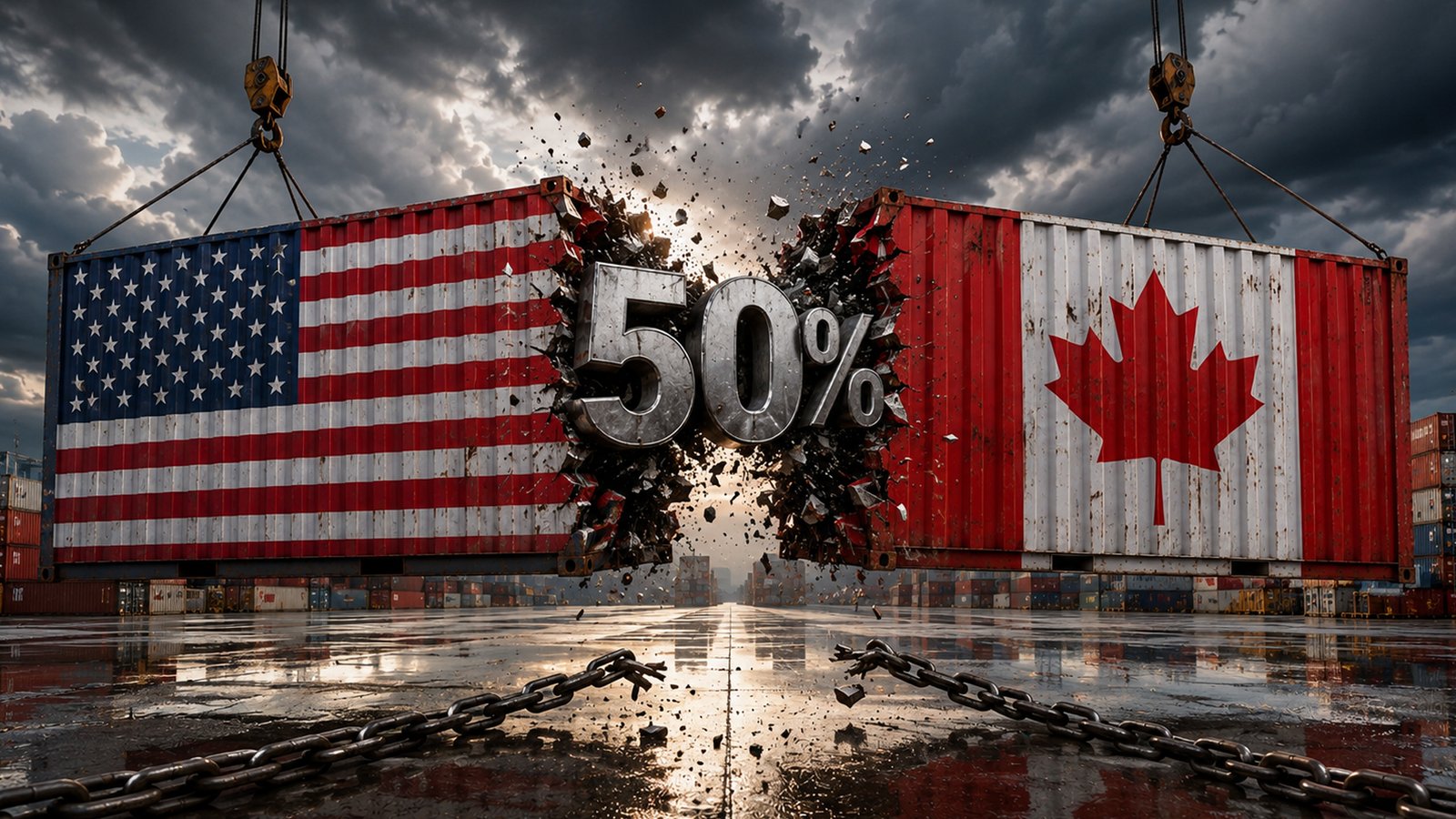
Trump said on Monday that tariffs on Canadian cars, trucks and automotive parts would be raised to 50% from January 1, 2027. He also said Canadian steel would face a 50% tariff. The announcement came shortly after trade talks between Washington and Ottawa failed to produce an agreement, leaving businesses on both sides of the border facing renewed uncertainty.
The latest move adds to tariffs already imposed by the United States on a wide range of Canadian products. Washington has introduced 50% duties on roughly $20 billion worth of Canadian imports, including products such as wine, hockey sticks, cement, honey, textiles, paper goods, electronics and other consumer items. Some major categories, including energy, potash and fish, have been exempted from the latest measures.
The escalation follows weeks of difficult negotiations. Canadian Prime Minister Mark Carney had been seeking a trade arrangement that would protect Canada’s access to its most important export market while preserving Ottawa’s ability to set its own economic policies. Canadian officials said some of the US demands made during the talks were unacceptable, particularly where they affected Canada’s trade policy and domestic interests.
The two countries have one of the world’s most closely integrated economic relationships. Their automotive industries, in particular, depend heavily on cross-border supply chains. Vehicles and components can cross the US-Canada border several times during the manufacturing process before a finished car reaches consumers.
That makes the proposed 50% auto tariff especially significant. Canada accounts for about 13% of US vehicle and auto-parts imports, and analysts have warned that a major tariff increase could disrupt production on both sides of the border. Canadian auto-parts companies have already come under pressure in financial markets following Trump’s announcement, reflecting concerns about future costs, exports and investment.
Trump has argued that Canada has treated US businesses unfairly and has accused Ottawa of taking advantage of the American market. He has also urged Canadian companies to shift production to the United States to avoid tariffs. His latest announcement reflects his broader “America First” trade policy, which seeks to encourage domestic manufacturing by making imported products more expensive.
Carney has taken a tougher position. The Canadian prime minister has said Ottawa will defend Canadian industries and workers and has pledged to respond to US tariffs on a dollar-for-dollar basis. Canada had already announced that retaliatory tariffs on US goods would take effect from September 8. The measures are expected to cover several US products and are intended to offset the economic impact of Washington’s tariffs.
Canadian officials are also expected to announce additional measures to support businesses and workers affected by the trade dispute. The country’s Finance Ministry said officials would outline new steps aimed at protecting Canadian workers and companies as the tariff confrontation intensifies.
The dispute has also taken on a political dimension. Carney has rejected the suggestion that Canada should simply accept US demands, arguing that Ottawa must protect its economic sovereignty. Ontario Premier Doug Ford has also backed a strong Canadian response and has pointed to the importance of Canada’s electricity and critical-mineral exports to the United States.
One sticking point in the failed negotiations involved Canada’s ability to pursue independent trade policies. Canadian officials were concerned that some US proposals could restrict Ottawa’s freedom to negotiate future trade arrangements with other countries. Issues surrounding Canada’s cultural and French-language protections also became part of the broader dispute.
The latest confrontation could also put further pressure on the future of the United States-Mexico-Canada Agreement, or USMCA, which provides the framework for much of North American trade. Businesses have relied on the agreement to maintain relatively predictable cross-border supply chains, particularly in sectors such as automobiles, agriculture and manufacturing. The failure of the latest talks has added fresh uncertainty over the long-term stability of that system.
The consequences could extend beyond the borders. Higher tariffs generally raise the cost of imported goods, with businesses often passing at least part of the additional expense on to customers. In the automotive sector, tariffs on cars and components could increase production costs, potentially pushing up vehicle prices in the US and Canada. Analysts have also warned that prolonged trade restrictions could encourage companies to redesign supply chains and reconsider investment decisions.
The Canadian dollar has also come under pressure as investors assess the economic consequences of the escalating dispute. Canadian export-oriented companies are particularly exposed because the United States remains by far Canada’s largest trading partner.
Despite the increasingly hostile rhetoric, a negotiated settlement has not been ruled out. The two economies remain deeply connected, making a prolonged trade war costly for both sides. Canadian officials have indicated that Ottawa remains willing to negotiate, but only on terms it considers fair.
This US-Canada trade war is moving in the opposite direction. With Washington preparing 50% tariffs on Canadian autos, auto parts and steel from 2027 and Ottawa preparing retaliatory action, businesses are once again being forced to plan around an increasingly unpredictable North American trade environment. The immediate focus will be on Canada’s new tariff measures, the response from Washington and whether the two governments can eventually return to the negotiating table.