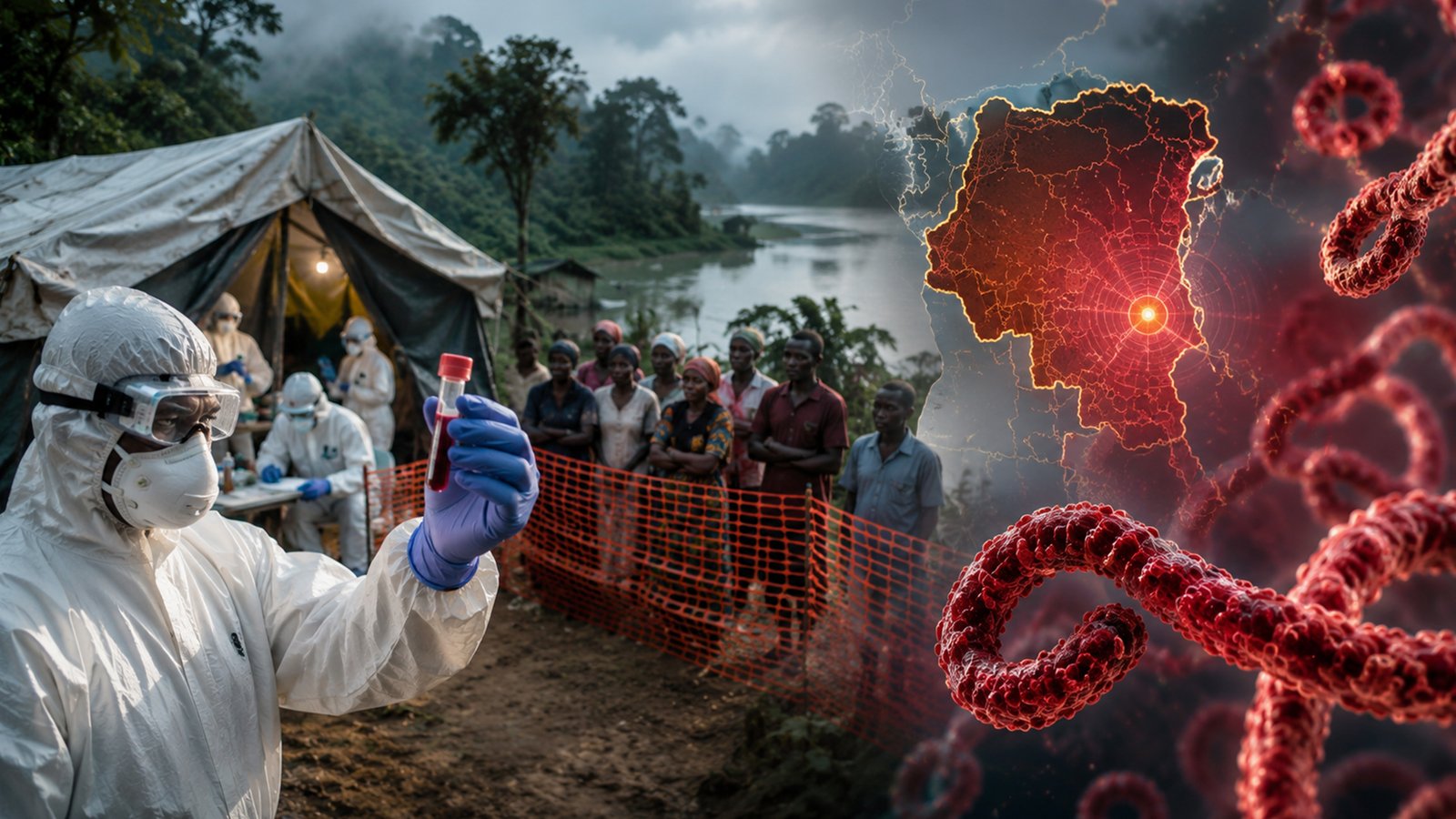
The Democratic Republic of Congo’s Ebola outbreak has crossed a grim milestone, with more than 2,000 confirmed deaths as the disease continues to spread at an unusually rapid pace.
Health authorities reported 4,381 confirmed Ebola cases and 2,011 deaths as of August 11, making the outbreak the fastest-growing Ebola epidemic recorded so far. The scale and speed of the crisis have raised concerns among global health agencies, particularly as many new infections are being detected outside established contact-tracing networks.
The outbreak was officially declared in May, but the World Health Organization has now said that the virus had been circulating for months before authorities recognised the scale of the problem. Investigations suggest transmission may have begun as early as January or February in Ituri province, northeastern Congo.
Early Ebola infections were not immediately identified because some patients were diagnosed with illnesses such as malaria or typhoid. By the time the unusual pattern of illness became clear, the virus had already spread through communities.
Genetic sequencing later helped health officials establish that the outbreak was older than initially believed. The discovery has highlighted how difficult it can be to detect Ebola quickly in remote areas where healthcare services are limited and several infectious diseases produce similar symptoms.
The outbreak is being caused by the Bundibugyo virus, a strain of Ebola for which there is currently no approved vaccine or specific treatment. This has made controlling transmission more difficult and increased reliance on early diagnosis, isolation, supportive medical care and contact tracing.
The speed of the outbreak has been particularly striking. Congo crossed 1,000 confirmed cases within about 40 days after response operations were activated. By August 11, the number had risen above 4,300. The death toll has also accelerated sharply, with the latest 1,000 deaths occurring in less than a month.
Health officials are facing several challenges beyond the virus itself. The affected region has suffered from armed conflict, population displacement and poor infrastructure. Some healthcare workers have also gone on strike over unpaid salaries, disrupting treatment and surveillance activities.
Insecurity makes it difficult for response teams to reach some communities. People moving because of conflict or in search of work can also carry the virus into areas where health authorities may not be prepared for new cases.
Another concern is that a large share of infections are being identified outside known contact chains. This suggests that transmission is occurring in the wider community rather than only among people already being monitored by health teams.
That makes traditional contact tracing much harder. Health authorities have therefore been looking at more active methods of finding cases, including community-based surveillance and door-to-door searches in affected areas.
The Ebola virus does not spread through the air like influenza or COVID-19. It is primarily transmitted through direct contact with the blood or other bodily fluids of an infected person, as well as contaminated materials. People can become infected while caring for sick relatives or handling the bodies of people who have died from the disease.
The symptoms can initially resemble other common illnesses. Fever, weakness, muscle pain, headache and sore throat may be followed by vomiting, diarrhoea, rash and, in severe cases, internal or external bleeding. This similarity with other diseases can make early recognition difficult, particularly in areas with limited diagnostic facilities.
The current outbreak has also disrupted routine healthcare. Fear of Ebola can discourage people from visiting hospitals and clinics, while health facilities themselves may struggle to provide services unrelated to the outbreak.
This creates a secondary health risk. Pregnant women, children and patients requiring treatment for other illnesses may avoid healthcare facilities because of concerns about infection.
The crisis has attracted international assistance, but health organisations say the response remains extremely challenging. The United States has increased its Ebola assistance to $512 million as the outbreak continues to grow.
The outbreak is also being monitored beyond Congo. Uganda has reported confirmed Bundibugyo virus cases linked to travel from affected areas in Congo, prompting increased surveillance and screening. International health agencies are watching neighbouring countries closely because of cross-border movement and trade.
Congo has experienced repeated Ebola outbreaks since the virus was first identified, but the current crisis is particularly concerning because of how quickly cases and deaths have increased. It is now the country’s 17th recorded Ebola outbreak and its deadliest since the major 2018-2020 epidemic.
The experience emphasises the importance of early detection. The longer Ebola circulates undetected, the more difficult and expensive it becomes to contain. Identifying unusual clusters of illness, improving laboratory testing and maintaining functioning local health services can make a major difference during an outbreak.
The latest figures underline the urgency. With more than 4,300 confirmed cases and over 2,000 deaths, Congo is facing an Ebola outbreak that has moved faster than any previous recorded epidemic. The priority for health authorities is now to find infections earlier, reach communities that remain outside surveillance networks and prevent the virus from spreading further across the region.