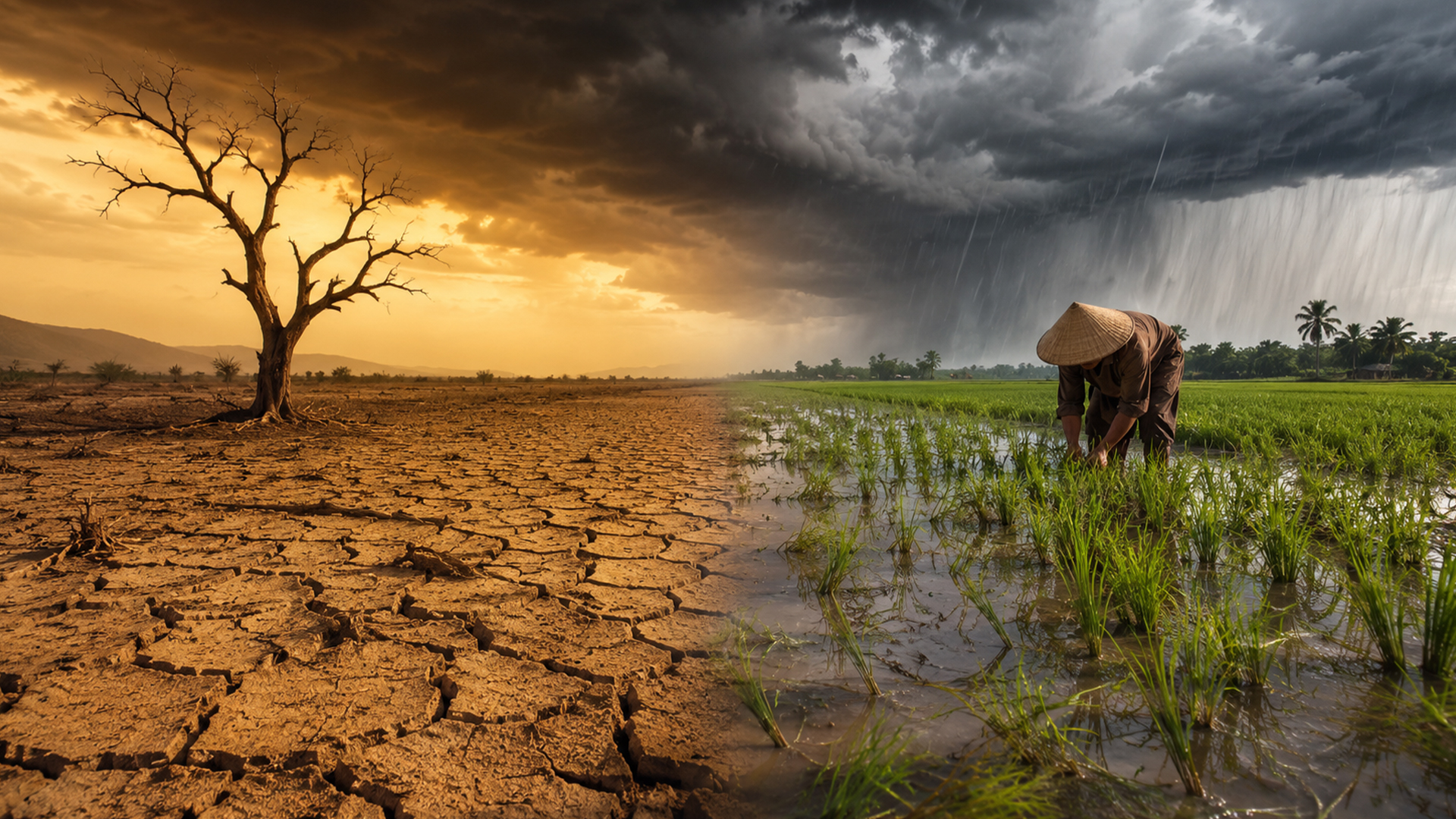
India’s monsoon season is facing growing uncertainty as weather agencies and climate experts warn that El Niño conditions could intensify and persist well into 2027, potentially affecting rainfall, agriculture and water availability across the country.
Recent forecasts indicate a strong likelihood of El Niño strengthening during the second half of 2026, with some models suggesting a 63% chance of it developing into a “super El Niño” by 2027. Such events are typically associated with weaker monsoon rains, higher temperatures and increased drought risks in India.
The concerns come as the southwest monsoon has made a subdued start in several parts of the country. The India Meteorological Department (IMD) has projected seasonal rainfall at around 90% of the long-period average, categorising it as below normal. The weather agency has also indicated an 84% probability of below-normal rainfall during the June-September monsoon season.
Meteorologists say El Niño develops when sea surface temperatures in the central and eastern Pacific Ocean become unusually warm, altering global weather patterns. For India, this often translates into reduced rainfall and hotter conditions during the critical kharif crop season. Climate research continues to track how changing ocean temperatures influence monsoons and extreme weather, with more such developments covered in our science news and discoveries section.
Agriculture remains a major concern. Lower rainfall could affect sowing, crop yields and rural incomes, while prolonged dry conditions may put pressure on reservoirs and groundwater resources. Experts also warn that higher temperatures linked to El Niño can increase the risk of heatwaves and food inflation.
However, scientists caution that El Niño does not automatically mean drought. Improved irrigation coverage, better water management and stronger crop buffers have made India more resilient than in previous decades. Even so, the evolving weather pattern will be closely monitored over the coming months.
The IMD has advised states and agricultural agencies to remain prepared for possible rainfall deficiencies and activate contingency plans where required. As farmers await steady rains, the progress of El Niño is expected to remain one of the most closely watched climate developments in the country.