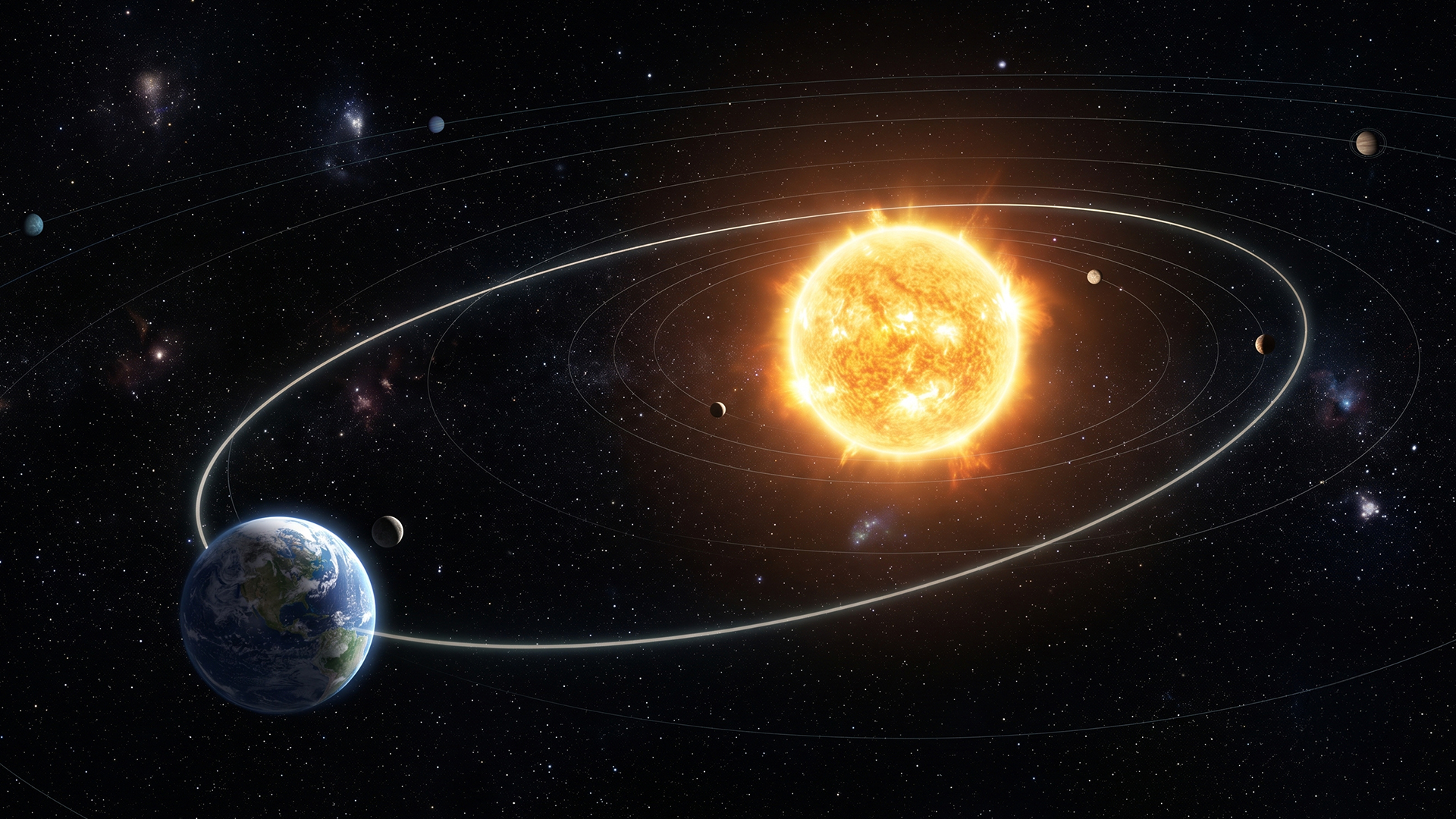
Earth reached aphelion, the farthest point in its orbit from the Sun, on July 3, but the event has done little to ease the intense summer heat gripping much of the Northern Hemisphere. The annual phenomenon has sparked questions about why temperatures remain high despite the planet being at its greatest distance from the Sun.
At aphelion, Earth is around 152.1 million kilometres from the Sun, roughly five million kilometres farther away than at perihelion, which occurs every January. Although the difference sounds significant, scientists say it has only a minimal effect on the amount of solar energy reaching Earth.
The main reason for the current heat is the planet’s 23.5-degree axial tilt. During June, July and August, the Northern Hemisphere tilts towards the Sun, receiving more direct sunlight and longer daylight hours. This increased exposure generates warmer temperatures and defines the summer season, regardless of Earth’s distance from the Sun.
In contrast, when Earth reaches perihelion in January, the Northern Hemisphere is tilted away from the Sun and experiences winter, while the Southern Hemisphere enjoys summer. This clearly demonstrates that the changing seasons are controlled by Earth’s tilt rather than its position in orbit. Earth’s journey around the Sun is one of many astronomical phenomena that help scientists explain how our planet’s movement through space affects conditions on Earth.
Scientists explain that the difference in sunlight received between perihelion and aphelion is only about 7%, far smaller than the seasonal changes caused by the angle of sunlight and the length of daylight.
Experts also say that the severe heatwaves being experienced across Europe, North America and parts of Asia are being intensified by human-driven climate change. Rising greenhouse gas emissions are trapping more heat in the atmosphere, making extreme temperatures more frequent, longer-lasting and more intense.
Meteorologists stress that aphelion is a normal astronomical event that occurs every year and should not be linked to unusual weather conditions. Instead, they say the continuing heat is a reminder of how Earth’s tilt shapes the seasons and how climate change is amplifying natural weather patterns.
Also Read: China missile test sparks fresh security concerns