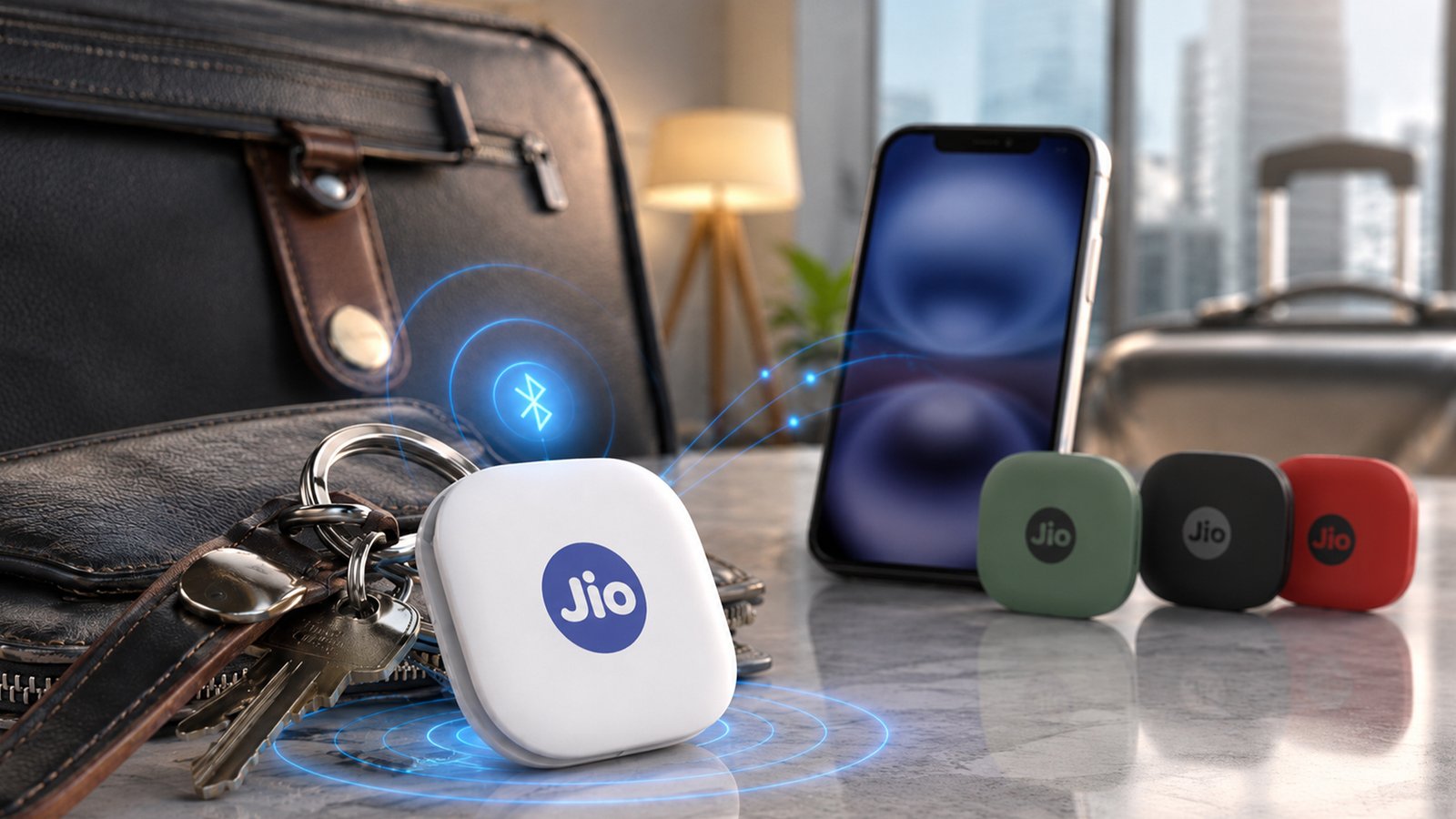
Reliance Jio has launched the JioTag 2 in India, giving users a more affordable way to keep track of everyday belongings such as keys, wallets, bags and luggage. Priced at ₹1,249, the new Bluetooth tracker brings one of the most useful upgrades to Jio’s tracking lineup: support for both Apple Find My and Google Find Hub.
The cross-platform support means users no longer have to choose a tracker based on whether they own an Android phone or an iPhone. The JioTag 2 can work with both ecosystems, making it a more flexible alternative to trackers designed around a single platform.
The launch also strengthens Jio’s position in India’s growing Bluetooth tracker market, where products such as Apple AirTag have become popular for locating misplaced belongings.
The JioTag 2 is priced at ₹1,249 in India. It is available in Black, Green and Red colour options and is currently being sold through Amazon India.
At this price, the JioTag 2 is positioned as a relatively accessible item tracker for consumers who want basic location-tracking capabilities without paying for a cellular-connected device or a recurring subscription.
Unlike a GPS tracker, the JioTag 2 does not need a SIM card or a separate mobile data plan. It relies on Bluetooth Low Energy and compatible device networks to help determine the location of a tagged item.
The biggest change on the JioTag 2 is its ability to work with both Apple Find My and Google Find Hub.
For Android users, the tracker can be located through Google’s Find Hub network. iPhone users, meanwhile, can use Apple’s Find My service. This makes the device particularly useful for households where family members use a mix of Android smartphones and iPhones.
The technology works differently from a conventional GPS tracker. When the JioTag 2 is within Bluetooth range, users can use their phone to locate the tag and activate its built-in speaker. When it is out of range, nearby compatible devices participating in the relevant network can help update its approximate location.
This community-based tracking approach is also what allows Bluetooth trackers to work beyond the immediate range of the owner’s smartphone.
Users can therefore attach the JioTag 2 to luggage before a journey, keep it inside a backpack or attach it to a set of keys. If an item is misplaced, its last known or network-updated location can help narrow down where it is.
The JioTag 2 comes with a built-in 120dB speaker designed to make nearby items easier to find. Once the tag is within Bluetooth range, users can trigger the sound through the supported tracking service and follow the alert to locate the item.
The tracker also supports Lost Mode. This can be useful when an item has gone beyond the user’s immediate Bluetooth range, allowing the supported community network to help update its location when compatible devices detect the tag.
Jio has given the device an IP64 rating for dust and water resistance. The tracker has a polycarbonate body and an integrated mounting hole, allowing it to be attached to keyrings, bags and other belongings. It measures 101 x 62 x 17mm and weighs around 30 grams.
The JioTag 2 uses a replaceable battery. Reports indicate that the battery can last for around one year, while an additional battery included with the device can extend total usage to up to two years before another replacement is required.
That replaceable-battery design also means users do not need to replace the entire tracker when the battery runs out.
The launch marks an important shift from Jio’s earlier tracking products. The original JioTag was introduced in 2023, while Jio later expanded its lineup with the JioTag Go for Android and JioTag Air for Apple users.
Those products were built around separate ecosystems. JioTag Go used Google’s Find Hub network, while JioTag Air supported Apple Find My. Jio’s own product information confirms that the two devices were designed for their respective platforms.
With JioTag 2, the company has brought both platforms together in a single tracker.
For consumers, that could be the most meaningful improvement. Someone who switches between Android and iPhone, or a family using different smartphone brands, can use the same type of tracker without buying separate models.
The JioTag 2 is clearly positioned as a budget-friendly rival to Apple’s AirTag. Its ₹1,249 price makes it an option for users looking for a lower-cost Bluetooth tracker while still getting access to major location-finding networks.
However, buyers should remember that the JioTag 2 is not a standalone GPS tracker. Its location updates depend on Bluetooth and the availability of participating devices around the tagged item. In places with fewer compatible devices, location updates may not be as frequent or immediate.
For everyday objects such as keys, wallets, backpacks and luggage, however, the combination of Bluetooth tracking, community-based location updates, a loud buzzer and cross-platform support could make the JioTag 2 a practical option.
With its ₹1,249 price, Apple Find My and Google Find Hub compatibility, replaceable battery and IP64-rated design, the JioTag 2 gives Indian consumers another choice in the increasingly competitive smart tracker market.