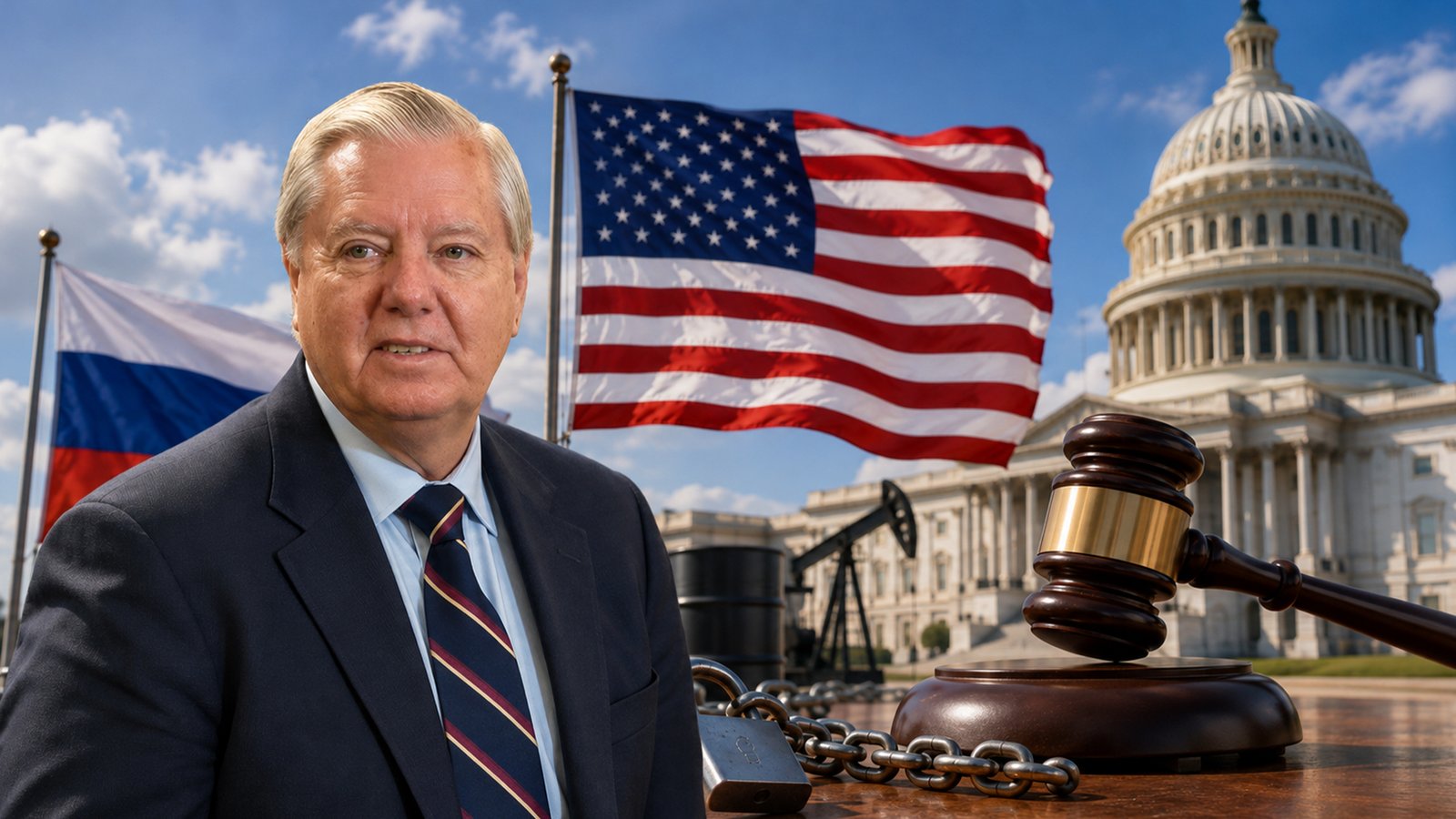
The US Senate has approved a sweeping Russia sanctions bill that could put India and China under fresh tariff pressure over their purchases of Russian oil and gas, adding another layer of uncertainty to global trade and India-US relations.
The bipartisan legislation, known as the Lindsey O. Graham Sanctioning Russia and Iran Act of 2026, was passed by an overwhelming 86-11 vote on Friday. It gives US President Donald Trump the authority to impose tariffs of up to 100 per cent on goods imported from the five biggest buyers of Russian oil and natural gas.
India and China are currently among the countries that could be affected, along with Azerbaijan, Hungary and Slovakia. However, the tariff is not automatic. The bill first has to clear the US House of Representatives and become law before the president can exercise the powers provided under it.
The House is currently away on its summer recess and is expected to take up the legislation when lawmakers return. Reports indicate that a House vote is unlikely before the end of August or early September, meaning there is no immediate 100 per cent tariff being imposed on Indian exports.
The legislation is aimed at cutting Russia’s energy revenues, which Washington says continue to support Moscow’s war effort in Ukraine. Russian oil and gas exports have remained an important source of revenue for the Kremlin despite years of Western sanctions.
The proposed measure takes a particularly tough approach towards countries that continue to buy Russian energy. Its supporters argue that major buyers should face economic consequences if they help sustain Russia’s revenues while the Ukraine war continues.
The bill also proposes direct sanctions against senior Russian officials, including President Vladimir Putin, as well as Russian political and military figures, oligarchs, financial institutions and energy projects. It further targets maritime networks and older or reflagged oil tankers that are allegedly used to evade Western sanctions.
For India, the development comes at a sensitive time. Russian crude has become an important component of India’s energy supply, particularly because discounted Russian oil has helped Indian refiners manage costs and maintain access to supplies during periods of volatility in global energy markets.
The prospect of US tariffs on Indian goods could therefore have implications beyond the oil trade. If Washington eventually imposes a steep tariff, Indian exporters could face higher costs and reduced competitiveness in the US market.
The potential impact would depend heavily on the final tariff rate, the products covered and how the Trump administration chooses to use the powers granted by Congress.
The Senate legislation also contains an exemption mechanism. Countries that import less than 15 per cent of Russia‘s natural gas exports and are taking steps to reduce their dependence could qualify for an exception under the measure.
The bill has its roots in a long-running bipartisan effort led by the late Republican Senator Lindsey Graham and Democratic Senator Richard Blumenthal. Graham, a prominent supporter of Ukraine, died on July 11. The legislation was subsequently renamed in his honour.
Graham had spent more than a year pushing for stronger sanctions against Russia and countries purchasing its energy. His supporters have described the Senate vote as a continuation of his campaign to put economic pressure on Moscow.
His sister, Darline Graham Nordone, who succeeded him in the Senate, welcomed the passage and said the measure would hit Putin’s finances. Blumenthal also argued that the legislation would send a strong message to Russia while supporting Ukraine.
Ukrainian President Volodymyr Zelenskyy welcomed the Senate vote, saying stronger US pressure and sanctions against Russia could help bring the war to an end. European Commission President Ursula von der Leyen also welcomed the move.
But the legislation has already encountered criticism within the US. Some Democratic lawmakers have warned that the bill gives President Trump unusually broad tariff powers. They argue that the president could use those powers as part of his wider trade policy rather than solely as a tool against Russia.
Representatives Gregory Meeks and Don Beyer said the tariff authority could be used too broadly and questioned whether it would actually achieve the stated objective of pressuring Moscow.
There are also concerns about the wider economic consequences. Higher tariffs on countries that purchase Russian energy could affect global trade flows and potentially complicate already-sensitive energy markets. Russia’s role as a major oil and gas supplier means any disruption could have consequences for prices and supply chains.
For India, the issue is especially significant because New Delhi has maintained that its energy purchases are guided by national interests and the need to secure affordable supplies for its large economy. Any increase in US tariffs would therefore add to the pressure surrounding India’s continued purchase of Russian crude.