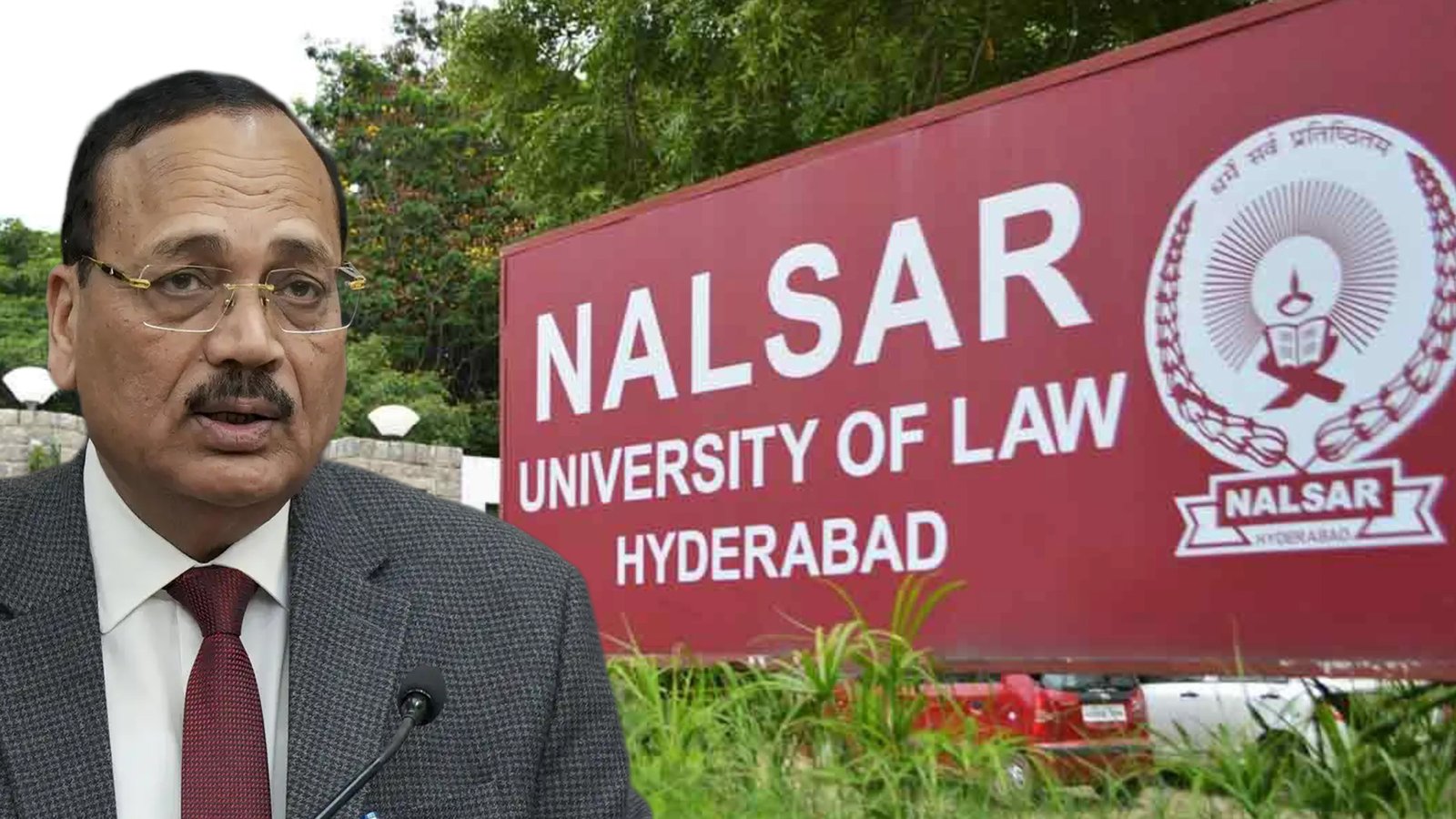
A section of students at the National Academy of Legal Studies and Research (NALSAR) in Hyderabad has opposed the reported decision to invite Chief Justice of India Surya Kant as the chief guest for the university’s upcoming convocation, saying the choice has raised concerns about constitutional values and judicial conduct.
Several student representations have been submitted to the university administration, asking it to reconsider the proposed invitation. The students have linked their concerns to remarks attributed to the Chief Justice during proceedings concerning allegations of police excesses against protesters in Delhi.
The students have stressed that their objection is not directed at the constitutional office of the Chief Justice of India. Instead, they have questioned whether the reported remarks during the court proceedings are consistent with the principles of civil liberties, freedom of expression and the right to peaceful protest that they have studied during their legal education.
The controversy is connected to a protest held at Jantar Mantar in New Delhi. Demonstrators had raised several demands and subsequently alleged that police personnel used excessive force while dealing with protesters. A legal challenge concerning the alleged police action was later brought before the Supreme Court.
During the proceedings, remarks attributed to CJI Surya Kant became a point of concern for the NALSAR students. They argued that allegations involving the treatment of protesters deserved adequate consideration and that the reported comments gave them reason to question the choice of the Chief Justice as the convocation speaker.
The students have said that a convocation at a law university is not merely a ceremonial event. It also represents the institution’s commitment to the Constitution, rule of law and access to justice. They therefore believe that the chief guest should represent values that graduating students are expected to uphold as future members of the legal profession.
The representations were submitted to senior officials of the university, including the vice-chancellor and registrar. Students from different batches are understood to have supported the objections, with several hundred students reportedly backing the representations.
The students have also sought an opportunity to discuss their concerns with the university administration. They have asked officials to engage with the graduating batch before making a final decision on the convocation guest.
The dispute has triggered a wider conversation within the campus about freedom of expression and the role of students in questioning decisions taken by academic institutions. Students involved in the objections have maintained that raising concerns about public institutions and constitutional authorities is part of democratic participation.
They have also emphasised that their position should not be interpreted as an attack on the judiciary. Their argument, they say, is centred on the importance of constitutional accountability and the responsibility of a law school to encourage critical engagement with institutions of power.
The allegations surrounding the Jantar Mantar protest remain part of a broader legal dispute. Claims of excessive police action have been raised by those involved, while the proceedings will determine the legal issues involved. The students’ objections are based on their understanding of the reported court proceedings and the remarks attributed to the Chief Justice.
The issue has particular significance at NALSAR because of the university’s focus on constitutional law and legal institutions. Students spend years studying fundamental rights, judicial review, separation of powers and the relationship between citizens and the state.
For many students, the controversy has therefore become an example of the very constitutional questions they encounter in the classroom. They argue that legal education should encourage students to question decisions respectfully while remaining committed to democratic and constitutional principles.
The reported invitation has also raised a broader question about the relationship between academic institutions and constitutional authorities. Universities regularly invite senior judges, public officials and other prominent figures to academic functions. Such invitations can carry symbolic importance, particularly at institutions dedicated to legal education.
NALSAR has not publicly indicated whether it will withdraw or reconsider the reported invitation. The university is also yet to finalise the date of the upcoming convocation, according to the information available.
The students have meanwhile continued to press for dialogue with the administration rather than treating the issue solely as a public disagreement. They want their concerns to be considered before the university finalises its plans.
The episode comes as debates around protests, police conduct, freedom of expression and civil liberties continue to attract attention across India. For law students, these issues have an added significance because they directly relate to the constitutional framework they will work with after graduation.