The Tamil Nadu Legislative Assembly on Monday unanimously passed a resolution making “Tamil Thai Vazhthu”, the State Song, mandatory as the first song at official programmes across the state.
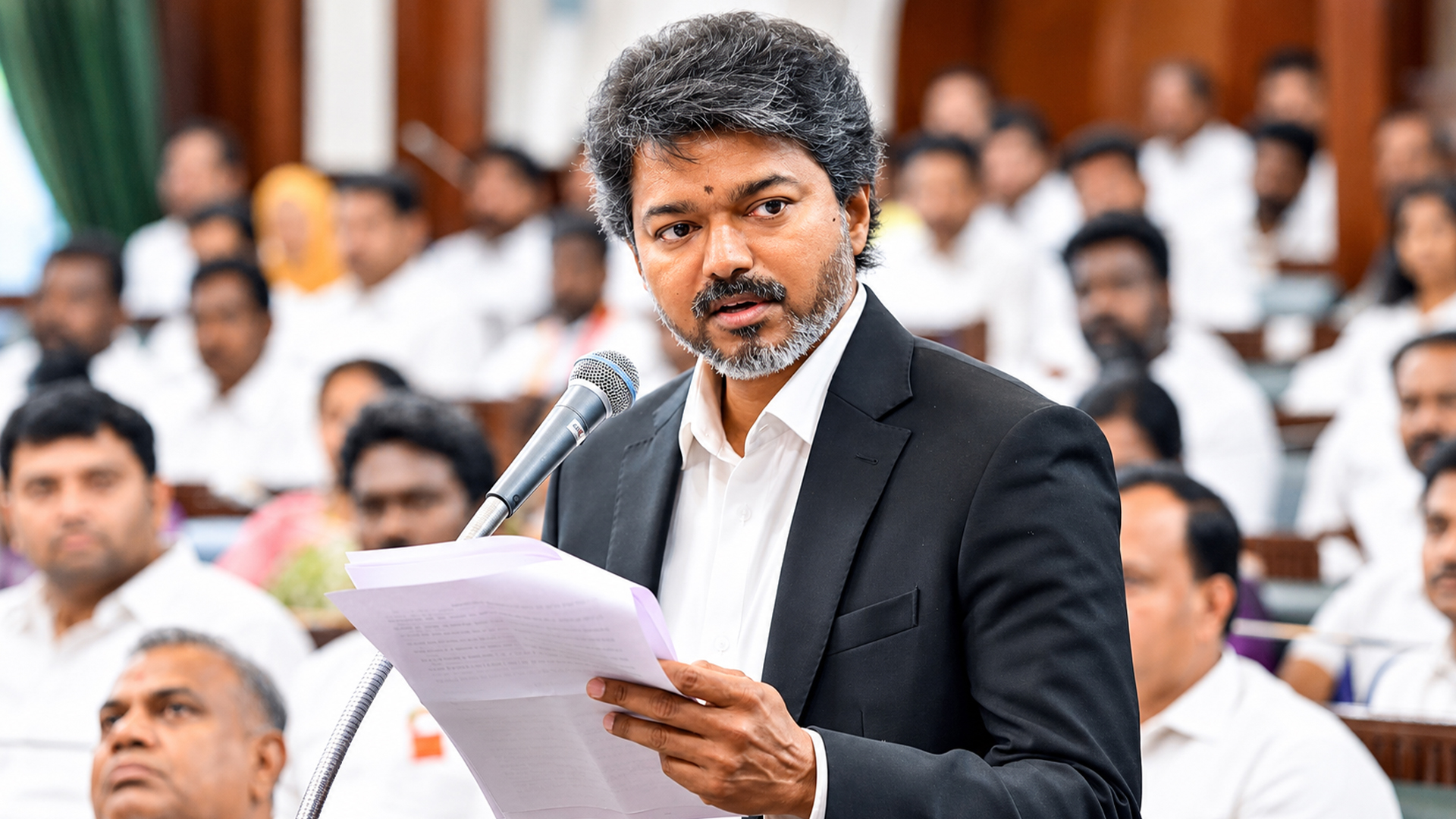
The resolution, moved by Chief Minister C Joseph Vijay, was adopted through a voice vote. It requires “Tamil Thai Vazhthu” to be sung before programmes conducted by educational institutions, universities, government offices, public sector undertakings and other public institutions in Tamil Nadu.
The move comes amid a growing debate over the protocol followed at official functions in the state, particularly after the State Song was placed after “Vande Mataram” and the National Anthem at a university convocation.
The Assembly resolution emphasised that “Tamil Thai Vazhthu” is not merely a ceremonial song but an expression of respect for the Tamil language and Tamil culture. It also linked the practice to Tamil Nadu’s linguistic and cultural identity and the constitutional recognition of linguistic and cultural rights.
“ Tamil Thai Vazhthu” is an invocation to Mother Tamil taken from the 1891 Tamil literary work Manonmaniam, written by poet and scholar Manonmaniam Sundaranar. The song has been closely associated with Tamil identity and has been used at government functions in the state for decades.
Tamil Nadu first introduced the practice of singing the State Song at government functions through a government order issued on November 23, 1970. The practice was subsequently extended to educational institutions, universities, public sector undertakings and other public institutions.
The State Song was formally accorded official recognition in 2021. The latest Assembly resolution seeks to reinforce its position in the ceremonial protocol followed across Tamil Nadu.
The issue gained political attention after the sequence of songs at the 33rd convocation of Manonmaniam Sundaranar University in Tirunelveli on July 28. At the event, “Vande Mataram” was followed by the National Anthem, while “Tamil Thai Vazhthu” was rendered later.
The sequence triggered criticism from political leaders and Tamil Nadu MPs, who argued that the State Song had traditionally been sung at the beginning of official functions. Several MPs subsequently urged the Governor to ensure that the established protocol was followed at universities and government events.
The controversy is also linked to a July 9 communication from the Union Ministry of Home Affairs concerning the singing of state songs at official events. The Tamil Nadu Assembly resolution asserts that the state’s established practice should continue, with “Tamil Thai Vazhthu” being sung first.
The issue has brought questions of language, cultural identity and official protocol into the political spotlight. Tamil Nadu has historically placed considerable importance on the Tamil language, and the State Song has become an important part of the state’s public ceremonies.
The resolution received support across party lines in the Assembly. Members from different political groups backed the move, with some also suggesting that a separate law should be enacted to give the requirement a stronger statutory foundation.
The resolution specifically covers a broad range of institutions. These include schools and colleges, universities, government departments, government offices, public sector undertakings and other public institutions. The intention is to establish a uniform protocol for official programmes across the state.
The National Anthem will continue to retain its position in official ceremonies. The Assembly’s decision is focused on ensuring that the Tamil Nadu State Song is rendered at the beginning of programmes rather than replacing the National Anthem or other nationally recognised songs.
The debate has also highlighted the distinction between a state song and the National Anthem. While the National Anthem represents the nation, “Tamil Thai Vazhthu” reflects Tamil Nadu’s linguistic and cultural identity and has a specific place in the state’s ceremonial traditions.
Chief Minister C Joseph Vijay has stressed the importance of protecting Tamil Nadu’s linguistic and cultural traditions. The resolution is part of the new Tamil Nadu government’s effort to reaffirm the state’s established position on the issue.
The controversy has unfolded against the backdrop of several recent official events where the order of ceremonial songs became a subject of political disagreement. The issue has involved the Tamil Nadu government, the Governor’s office and political parties, turning what was once largely a matter of protocol into a wider debate about state identity and federal relations.
For supporters of the resolution, restoring “Tamil Thai Vazhthu” to the first position is about preserving a longstanding tradition rather than creating a new practice. They point to the government orders and decades of usage as evidence that the State Song has traditionally opened official programmes in Tamil Nadu.
For others, the debate reflects broader tensions over the balance between national symbols and regional linguistic and cultural traditions. The Assembly resolution has now clearly placed Tamil Nadu’s preference on record.
With the resolution passed unanimously, government departments and public institutions are expected to follow the prescribed sequence for their programmes. The decision also gives the issue greater political weight as Tamil Nadu continues to debate questions of language, culture and state rights.
The Assembly’s move therefore goes beyond a change in ceremonial protocol. It reaffirms the symbolic importance of “Tamil Thai Vazhthu” in Tamil Nadu’s public life and seeks to ensure that the State Song remains the first musical tribute at official programmes across the state.