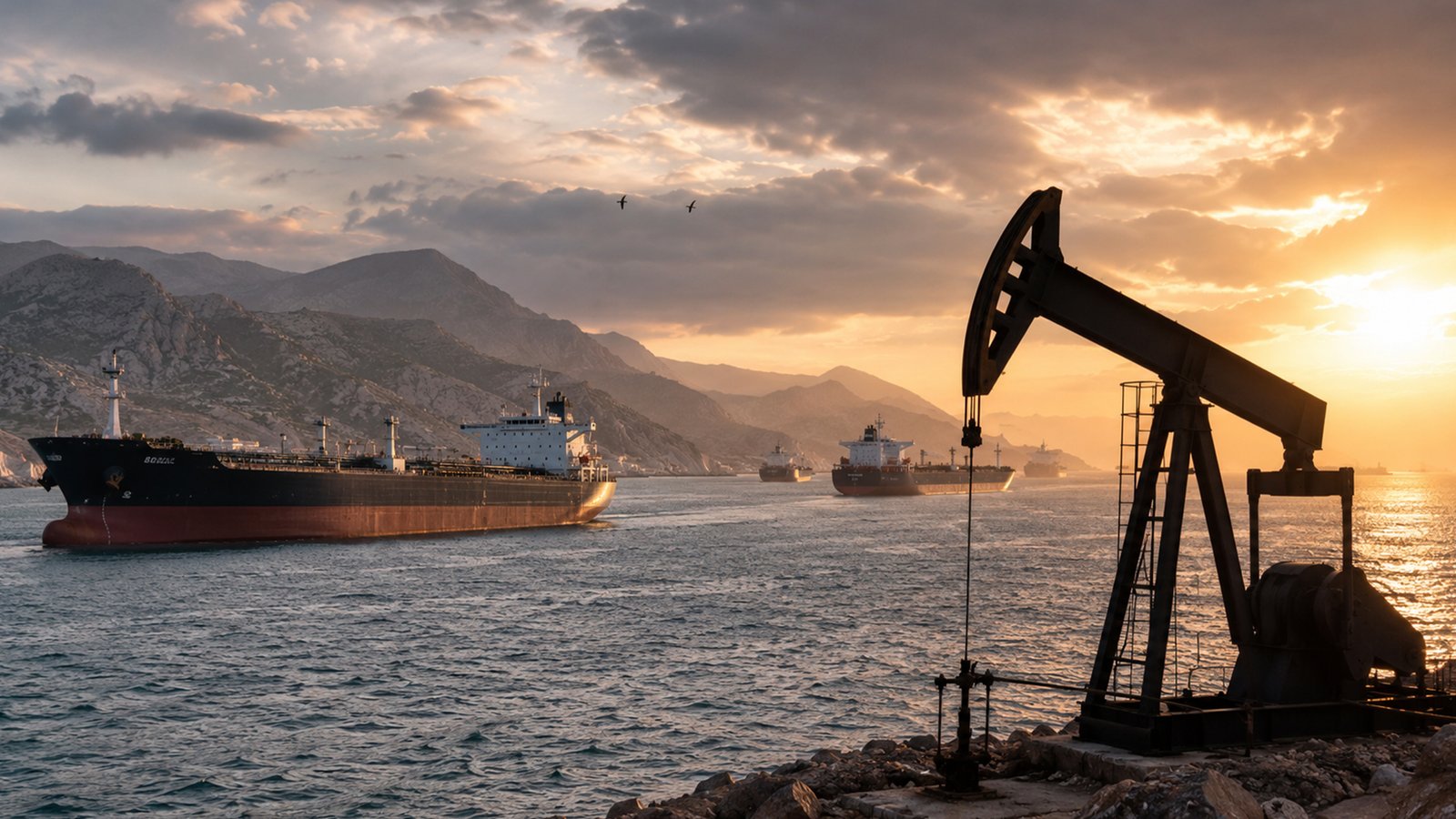
Oil prices rose on Monday as uncertainty over the reopening of the Strait of Hormuz returned to the market after Iran made clear that the strategic waterway would not fully reopen until the United States meets several of its demands.
The latest developments have weakened hopes of a quick return to normal shipping through the Strait of Hormuz, a crucial route for global energy supplies. The market had earlier expected an agreement involving Iran and Oman to help restore tanker traffic and ease concerns over oil supplies.
Brent crude futures climbed above $84 a barrel in early trading before giving up some gains. Later, Brent was around $83.54 a barrel, while US West Texas Intermediate (WTI) crude stood near $78.03. The movement reflected a market caught between hopes of a diplomatic breakthrough and renewed concerns about supply disruptions.
Oil prices had fallen sharply last week as traders became more optimistic about a possible reopening of the Strait of Hormuz. Both Brent and WTI declined by more than 7% over the week as expectations grew that Iran and Oman were close to an arrangement that could restore shipping through the waterway.
That optimism has now been tested by Iran’s latest position.
Tehran has said an agreement with Oman is in its final stages but has also insisted that the Strait will not fully reopen unless Washington meets additional conditions. Among the demands is compensation for US attacks on Iran.
Iranian Foreign Minister Abbas Araqchi has also said Tehran and Washington are not currently engaged in negotiations. He said Iran would not enter talks while Washington is considered to be violating an interim agreement reached in June.
The developments have put the Strait of Hormuz back at the centre of the global oil market.
The waterway is one of the world’s most important energy chokepoints. Before the current conflict, roughly one-fifth of global oil supplies passed through the Strait, making any prolonged disruption a major concern for importers, refiners and energy companies.
For oil traders, the uncertainty is creating a delicate balance. A successful diplomatic agreement and restoration of unrestricted shipping could push crude prices lower by removing the geopolitical risk premium. However, a breakdown in negotiations or additional attacks could quickly send prices higher.
The latest security developments have added to those concerns.
The Iran-aligned Houthis said they had attacked Saudi Aramco’s Jazan refinery on Sunday. The incident came amid wider regional tensions following the US-Israeli war with Iran. Saudi Arabia has also signed a new defence pact with Turkey and Pakistan as regional security concerns continue to grow.
There are also concerns over shipping safety in the Strait itself. The United Arab Emirates’ ADNOC said that 15 of its vessels had been attacked while travelling through the waterway since the conflict began. Such incidents have increased the risks faced by tanker operators and added to uncertainty over how quickly normal commercial traffic can return.
The oil market has already shown how quickly prices can respond to developments around Hormuz. When hopes of reopening increased last week, crude prices fell sharply. Fresh concerns about a prolonged closure or restricted shipping have now pushed prices higher again.
The direction of oil prices in the coming days will depend heavily on diplomatic developments between Iran, Oman and the US. Any agreement that guarantees safe and unrestricted passage could ease supply concerns and bring prices down. On the other hand, continued confrontation could keep crude prices elevated.
The situation is particularly important for countries that rely heavily on imported crude. Higher international oil prices can increase the cost of fuel imports and put pressure on inflation, trade balances and currencies. For consumers, a prolonged rise in crude prices could eventually translate into higher prices for petrol, diesel and other energy-intensive goods, depending on domestic pricing policies.
Airlines, transport companies and manufacturers are also sensitive to changes in crude prices because fuel and energy costs form an important part of their operating expenses.
The broader global economy is therefore watching the Strait of Hormuz closely. Even if oil production remains available elsewhere, difficulties in moving crude through the world’s major shipping routes can create shortages in particular markets and push up freight and insurance costs.
Analysts say the market is likely to remain highly sensitive to every development surrounding the waterway. The immediate question is whether the Iran-Oman discussions can produce an arrangement that allows shipping to resume safely and consistently.
For now, however, Iran’s conditions have made that outcome less certain.
The latest oil price movement highlights the fragile nature of the current market. Traders had begun pricing in the possibility of a rapid improvement in the Middle East supply situation, only to see those expectations challenged by Tehran’s demands.
With the Strait of Hormuz still at the heart of the dispute, global oil markets are likely to remain volatile. A breakthrough could bring prices down quickly, while renewed attacks, failed negotiations or further restrictions on tanker traffic could push the geopolitical premium higher.
For consumers and economies around the world, the uncertainty means one thing: the next move in oil prices may depend as much on diplomacy and security as on supply and demand.