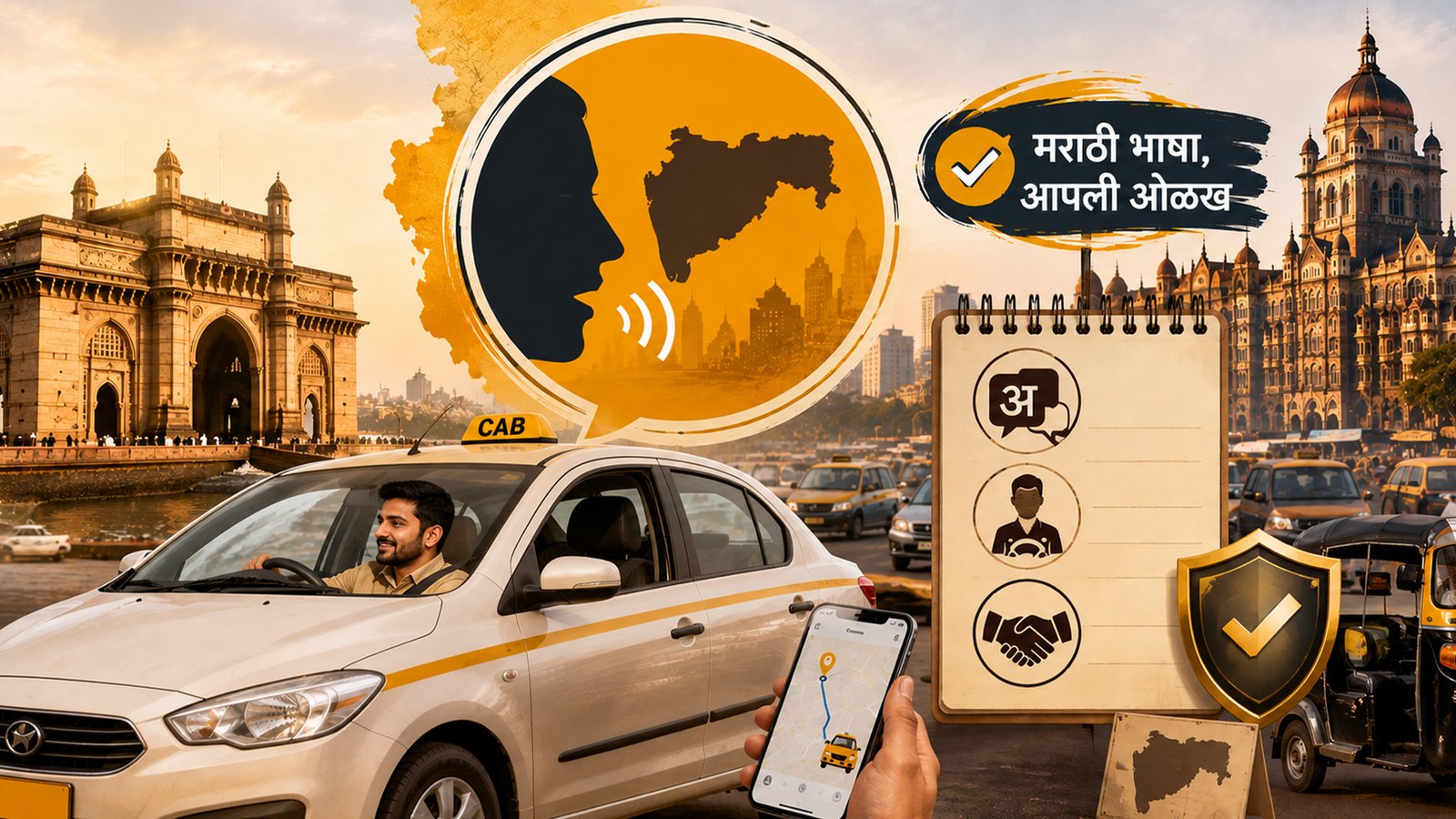
The Maharashtra government has made knowledge of Marathi mandatory for drivers working with app-based cab aggregators, including Ola, Uber and Rapido, as well as drivers of traditional taxis and autorickshaws. The requirement is expected to come into effect from August 15, with Transport Minister Pratap Sarnaik making it clear that app-based cab drivers will not receive any exemption from the rule.
The government says drivers must have a working knowledge of Marathi, with the focus on basic communication rather than advanced language skills. Drivers are expected to be able to understand passengers, respond to routine questions and communicate during a journey. The rule is part of amendments to the Maharashtra Motor Vehicles Rules and is aimed at ensuring that passenger vehicle drivers can communicate effectively with commuters in the state.
The decision is significant for Maharashtra’s growing app-based cab industry, where thousands of drivers from different parts of the country work through ride-hailing platforms. While drivers already need to meet requirements related to driving licences, vehicle permits and other transport regulations, Marathi proficiency will now become another condition for continuing to operate passenger vehicles.
Sarnaik has said drivers have already been given sufficient time to learn basic Marathi and that the August 15 deadline will not be extended. The Transport Department has been conducting language training programmes for drivers who do not speak Marathi, with the government seeking to help them meet the requirement before enforcement begins.
According to the state government, more than one lakh non-Marathi-speaking drivers enrolled in Marathi language classes during the training period. More than 1,100 private teachers were reportedly involved in the programme, while Marathi language organisations and literary groups also supported the initiative. The government has said more than ₹1 crore was spent on the training exercise.
The training has been designed around practical communication rather than formal academic learning. Drivers are not required to become fluent in Marathi or demonstrate knowledge of Marathi literature. Instead, the emphasis is on developing enough conversational ability to interact with passengers and handle common situations while driving.
The consequences of failing to meet the requirement could be significant for drivers who depend on cab services for their income. Under the proposed rules, a driver who does not demonstrate the required Marathi proficiency may initially be given time to improve their language skills. If the driver continues to remain non-compliant, the authorisation associated with the driving licence could be suspended for a specified period.
Continued failure to meet the requirement could eventually lead to cancellation of the authorisation. However, drivers are expected to be given an opportunity to explain their position before stronger action is taken. The language requirement may also become relevant when permits are renewed, putting additional pressure on drivers to comply with the rule.
The Maharashtra government has defended the decision as a measure aimed at improving communication between drivers and passengers. Officials argue that people providing public transport services should be able to understand the local language, particularly in situations involving directions, fares, complaints, emergencies or other issues that may arise during a journey.
The policy also reflects the state’s broader attempt to bring app-based transport services under tighter regulatory oversight. Cab aggregators such as Ola, Uber and Rapido have become an important part of urban transportation in cities including Mumbai, Pune and Nagpur. The government has increasingly sought to ensure that drivers working through digital platforms comply with the same basic requirements that apply to conventional commercial passenger vehicles.
The new rule is unlikely to change the process of booking a cab through an app. Customers will not be required to speak Marathi or use the language while booking a vehicle. Instead, the requirement is directed at drivers and is intended to ensure that they can communicate with passengers in the local language when necessary.
The rule could nevertheless have a noticeable impact on drivers who have moved to Maharashtra from other states and have limited knowledge of Marathi. For these drivers, the availability of training and the manner in which the Transport Department carries out enforcement will be crucial.
The government has maintained that its objective is not to penalise drivers simply because they are non-Marathi speakers. Officials have pointed to the training programmes as evidence that drivers were given an opportunity to learn the language before enforcement. The possibility of licence or permit-related action, however, means that compliance is now a serious concern for those who have not completed the required training.
The August 15 deadline will therefore mark an important stage in Maharashtra’s transport policy. Once the rule is enforced, the Transport Department will have to balance the government’s language requirement with the practical concerns of thousands of commercial drivers whose livelihoods depend on passenger transport.