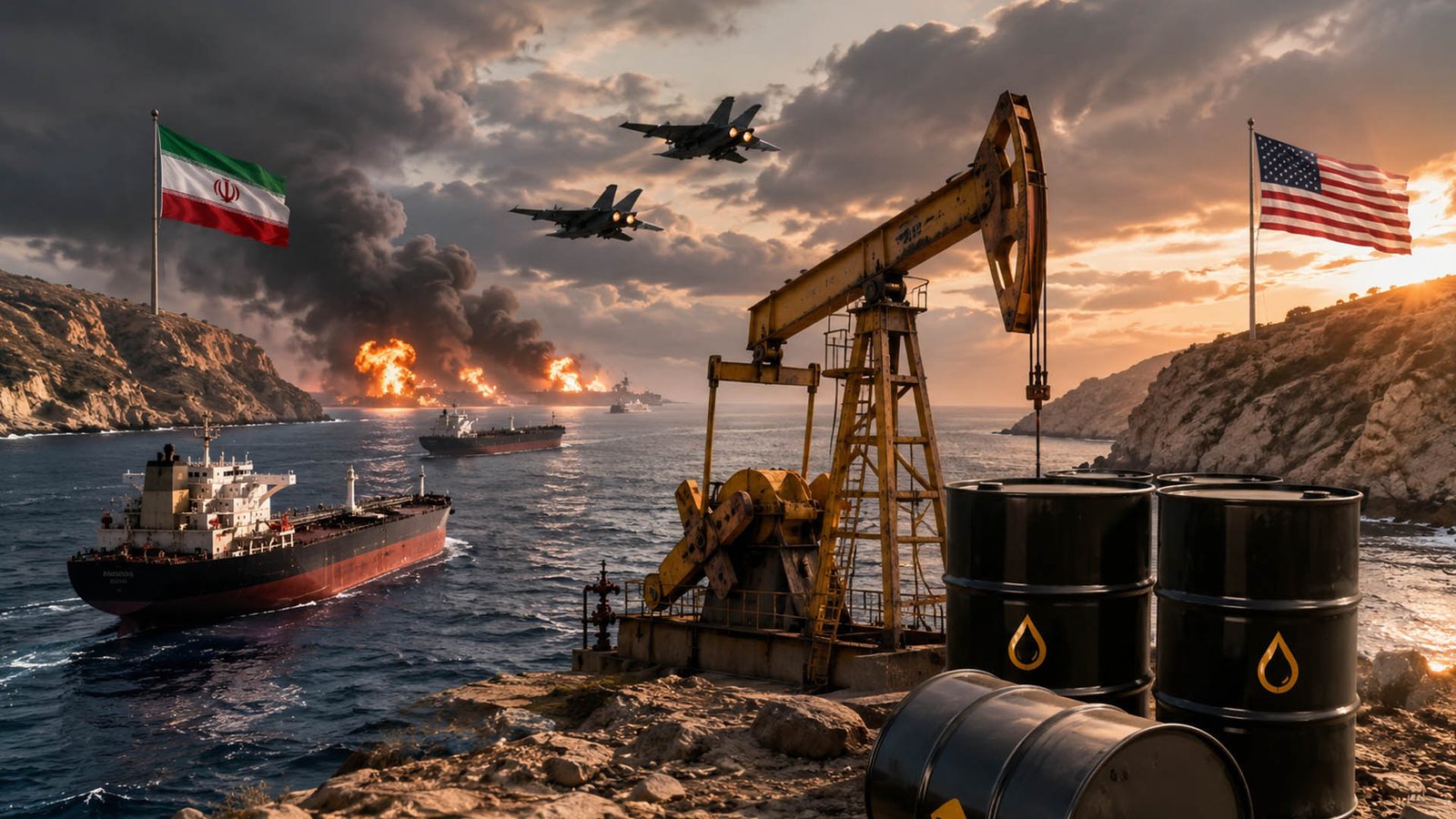
Oil prices climbed sharply on Monday, with Brent crude moving back above $90 a barrel after fresh military action between the United States and Iran renewed concerns over crude supplies and shipping through the Strait of Hormuz.
Brent crude futures rose more than 2% to around $90 a barrel, while US West Texas Intermediate crude moved above $85. The gains followed a US strike on two Iranian rocket launchers on Larak Island in the Strait of Hormuz on Sunday.
The attack marked the first known direct US military action against Iran since late July and ended several weeks of relative calm. Iran responded with reported attacks on US military bases in Jordan, raising concerns that the confrontation could widen.
The location of the latest attack is particularly important for oil markets. Larak Island sits in the Strait of Hormuz, a narrow but crucial shipping route connecting the Persian Gulf with the Gulf of Oman.
Roughly one-fifth of global oil supplies normally move through the waterway. Any prolonged disruption could therefore affect crude availability, shipping costs and fuel prices across major economies.
Shipping activity through the strait has already slowed as vessel operators become more cautious about the security risks. Reports of a tanker being struck by a projectile while travelling through the waterway have added to concerns over commercial shipping.
The immediate rise in crude prices reflects the risk of a supply disruption rather than an actual shortage. Oil continues to flow through the Gulf, with exports recovering to around 15-16 million barrels a day, although volumes remain below pre-conflict levels.
That distinction is important for the market. If shipping through Hormuz continues and Gulf exports remain stable, the latest price surge could lose momentum. A prolonged closure or repeated attacks on tankers and energy infrastructure, however, could trigger a much larger supply shock.
Markets are also watching developments around Iran’s oil infrastructure. Any damage to major export facilities could further restrict Iranian crude shipments and add to supply concerns.
The renewed tensions come after a period of considerable volatility in the global oil market. Brent had surged to much higher levels earlier in the year as the conflict intensified before retreating when diplomatic efforts reduced fears of a prolonged supply disruption. The latest military escalation has now brought the geopolitical risk premium back into crude prices.
For businesses, a sustained oil rally could have significant consequences. Higher crude prices raise the cost of petrol, diesel, aviation turbine fuel and other petroleum products. Airlines, logistics companies, manufacturers and transport operators could see their operating expenses rise if prices remain elevated.
India is particularly exposed to such movements because it imports a large share of its crude oil requirements. A prolonged increase in international oil prices could raise the country’s import bill and put pressure on the rupee.
Higher fuel and transportation costs could also feed into inflation. This would make the oil market an important factor for businesses as well as policymakers, particularly if crude prices remain above $90 for an extended period.
Indian refiners are likely to monitor Gulf shipments closely. Any disruption in the Strait of Hormuz could force refiners to source crude from alternative markets, potentially increasing freight and procurement costs.
The impact could extend beyond fuel. Higher transportation costs can raise the price of goods across supply chains, while more expensive aviation fuel can increase airline operating costs and airfares.
The United States is also considering further economic measures against Iran. Additional sanctions could affect Iranian oil exports and complicate the supply outlook further.
The crucial question for traders now is whether the latest confrontation remains contained or develops into a wider conflict.
If tensions ease and shipping activity returns to normal, some of the recent gains in crude could reverse. But further attacks on commercial vessels, attempts to restrict the Strait of Hormuz or damage to major oil facilities could push prices substantially higher.
The market is balancing two opposing forces: continued oil flows and the possibility of a much larger disruption.
The latest price jump highlights how quickly geopolitical developments can affect energy markets. With Brent back above $90, traders will be closely watching developments around Iran, the United States and the Strait of Hormuz.
The immediate concern is not simply the current price of crude, but whether the latest escalation turns into a prolonged threat to one of the world’s most important oil supply routes.