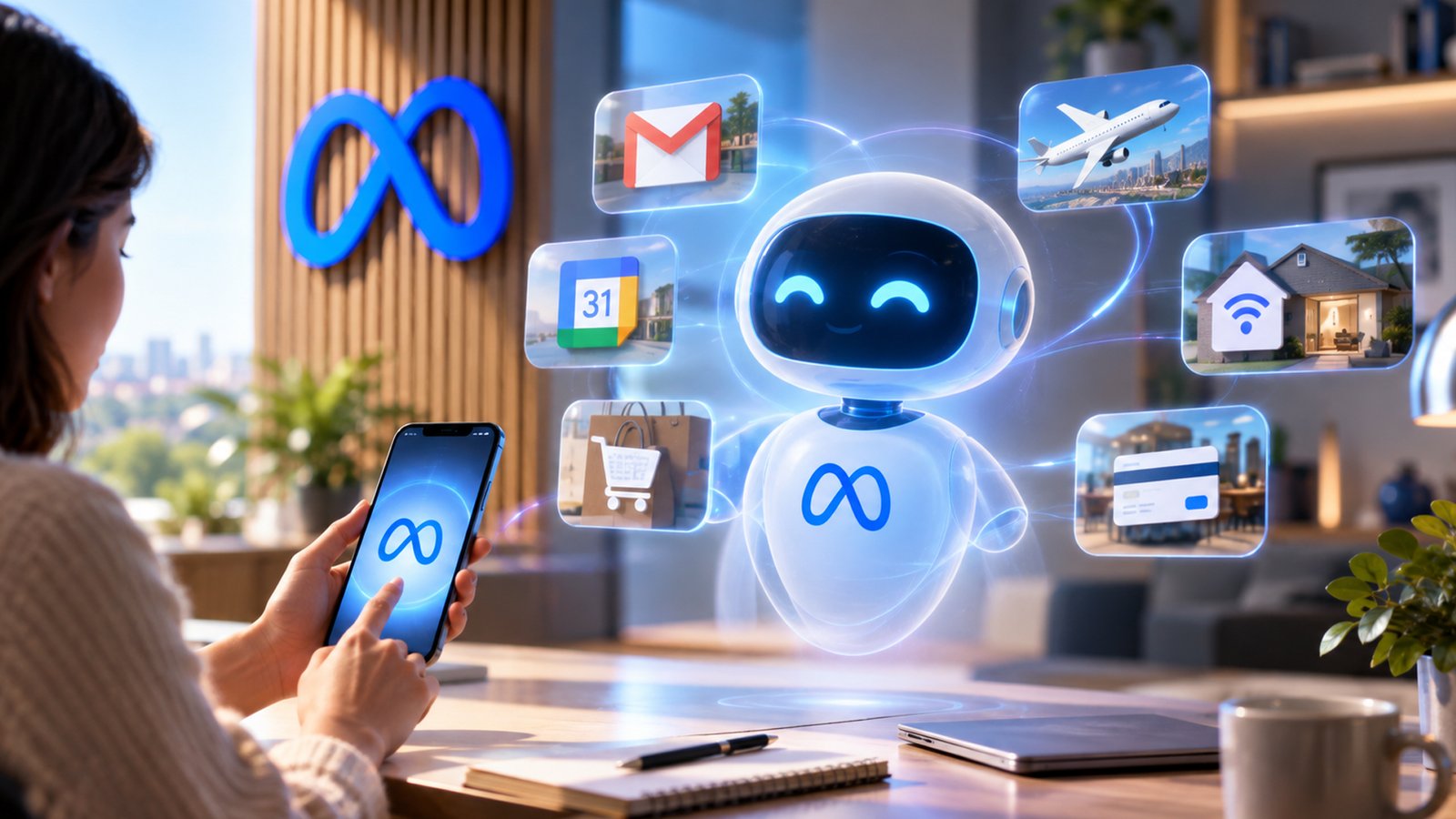
Meta has launched Muse, a new personal artificial intelligence agent designed to do more than answer questions. The company wants Muse to act as a digital assistant that can complete tasks for users, including sending emails, organising plans, shopping online and making payments.
The launch is part of Meta’s larger push into AI agents, a technology that is changing how people interact with artificial intelligence. Instead of simply giving users information, these systems are designed to understand an instruction, make decisions and take several steps to complete a task.
Muse is being introduced initially in the United States. Meta plans to expand its availability and add more features as the technology develops.
The biggest difference between Muse and a traditional AI chatbot is its ability to interact with other applications. A user can give the agent a task and allow it to work across connected services rather than having to perform every step manually.
Someone planning a trip, for example, could ask Muse to help organise the journey. The agent can work with information from different services and help manage parts of the process. It can also assist with shopping, email, calendars and other routine digital activities.
Muse is designed to handle tasks such as sending emails, filling out forms, managing projects and listing items for sale. It can also help users make purchases and complete payments when they give the necessary permission.
That ability to take action is at the heart of the agentic AI trend. Regular chatbots mainly respond to prompts. AI agents are being developed to take instructions and carry out tasks with less step-by-step guidance from the user.
Meta sees this as an important part of the future of personal technology. Instead of opening several apps to complete a task, users could increasingly rely on an AI assistant to coordinate the process.
The technology also has access to information that can make it more useful. Depending on the permissions provided, Muse can work with services connected to areas such as email, calendars, shopping, travel, finance, health and smart-home devices.
That convenience also creates a major challenge: trust.
An AI that can read messages or organise a calendar is one thing. An AI that can buy something or send an email on a person’s behalf carries greater responsibility. A mistake could have real consequences.
Meta has therefore put significant attention on security and user controls. The company says people can decide which services Muse is allowed to access. Users are also expected to remain in control of important actions.
Payments are particularly sensitive. Meta says users must approve transactions rather than allowing Muse to spend money freely on their behalf.
The company has also designed the system to operate in a protected virtual environment. This is intended to keep the agent’s activity separate from the user’s main device and reduce potential security risks.
Meta has been developing its AI products as part of a much broader strategy. Chief Executive Mark Zuckerberg has repeatedly spoken about building highly capable personal AI systems that can become useful companions in everyday life.
Muse fits into that vision by moving Meta’s AI from conversation towards action.
The company already has a major advantage in reaching consumers through platforms such as Facebook, Instagram and WhatsApp. These services are used by billions of people, giving Meta several channels through which it can introduce new AI features.
WhatsApp could be particularly important because people already use the platform for personal conversations, business communication and everyday coordination. An AI agent integrated into such services could allow users to manage tasks without constantly switching between different applications.
Meta is also developing AI experiences for its smart glasses, suggesting that its long-term plans extend beyond smartphones and computers. An AI assistant that can be accessed through wearable devices could eventually help users perform tasks while they are moving around.
However, the success of Muse will depend heavily on how reliably it performs.
People may be happy to let an AI recommend a product or draft an email. They may be much more cautious about allowing it to make a purchase, send an important message or change a booking without checking the details.
This makes accuracy and safety just as important as convenience.
Meta’s move also comes at a time when major technology companies are competing to build the next generation of AI assistants. The industry is gradually moving from systems that generate text and images towards tools that can interact with websites, software and other digital services.
That shift could eventually change the way people use the internet. Instead of visiting different websites, filling out forms and comparing options themselves, users could increasingly tell an AI agent what they want and let it handle much of the work.
There are still limits to how far that vision can go. AI agents can make mistakes, misunderstand instructions or struggle with complicated situations. Giving them access to personal information also creates privacy and cybersecurity concerns.
Meta will therefore have to convince users that Muse can be both useful and dependable.
The launch is nevertheless an important step in the company’s artificial intelligence strategy. Meta is moving beyond AI that simply talks with users and experimenting with technology that can take action on their behalf.
If Muse proves reliable, the idea could become a major part of everyday digital life. Booking travel, managing emails, shopping, handling schedules and completing routine online tasks could gradually become activities that people delegate to AI.
Meta’s latest move shows the direction in which consumer AI is heading: from answering questions to understanding what users want and getting the work done.