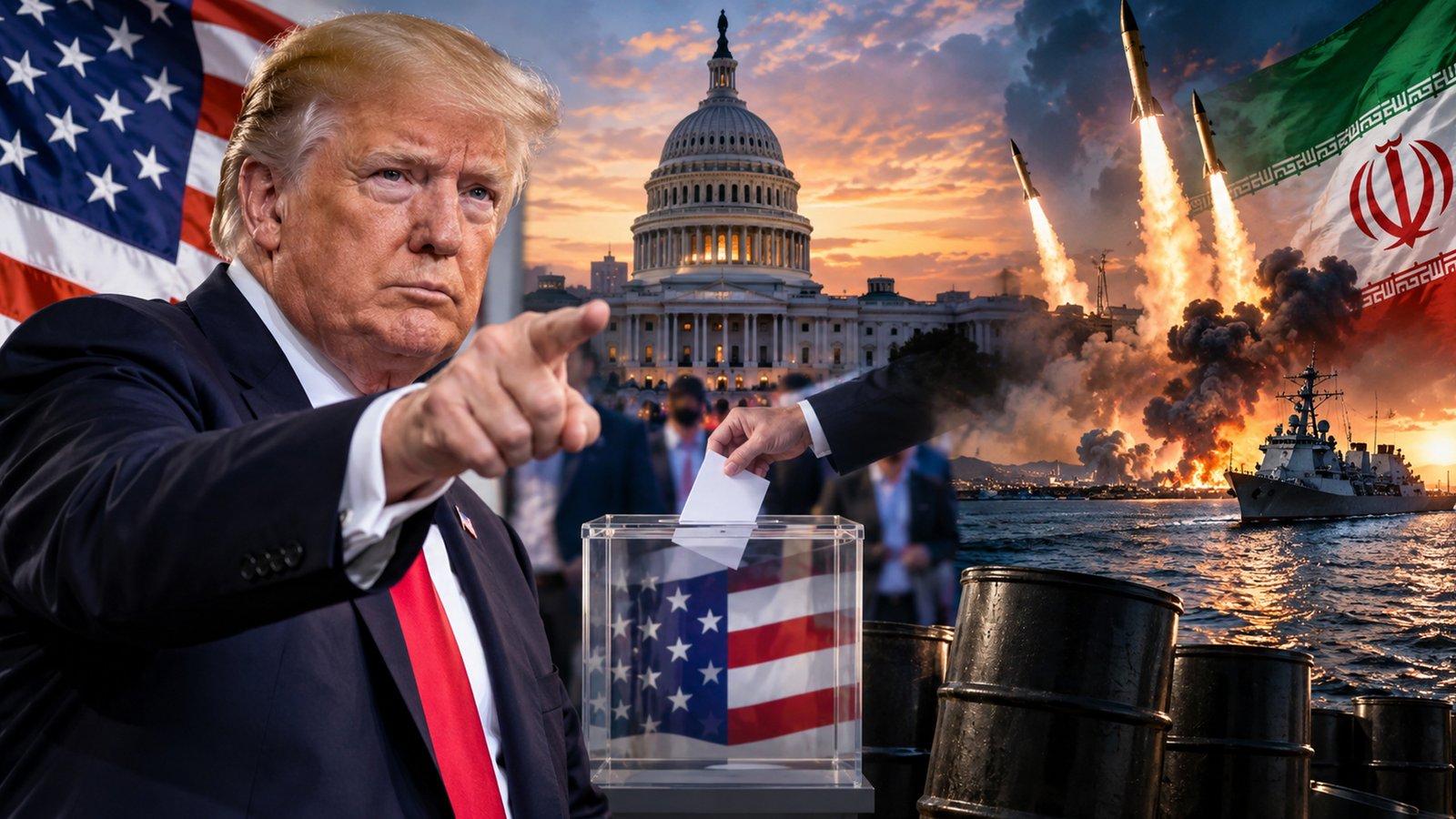
US President Donald Trump has said the war with Iran will end “immediately after” the US midterm elections in November, offering a fresh timeline for a conflict that has now entered its seventh month.
Trump made the statement on September 9 as fighting continued to raise concerns over regional security, global energy supplies and commercial shipping. He accused Tehran of trying to influence the US election but said Iran would not be able to withstand continued American economic pressure.
The US midterm elections are scheduled for November 3 and will determine control of Congress. The vote is also expected to be an important test of public sentiment towards Trump, whose administration is facing growing political pressure over the war and its impact on living costs.
Trump said negotiations with Iran remained possible but were not currently the preferred option. He did not explain what would lead to an end to the fighting or what conditions Washington would seek before agreeing to a settlement.
The comments came as tensions around the Strait of Hormuz intensified. Iran said it had attacked 10 vessels near the strategic waterway after US forces destroyed five Iranian oil tankers. The latest escalation has increased concerns over the safety of commercial ships travelling through the region.
The Strait of Hormuz is a critical route for global energy supplies. Any prolonged disruption can affect the movement of crude oil and other fuels, quickly pushing up prices in international markets.
Brent crude moved above $100 a barrel after the latest escalation, reaching its highest level since July. Oil prices remained above the $100 mark on Thursday, reflecting concerns that the conflict could further disrupt supplies and shipping through the Gulf.
Higher crude prices could have a wider economic impact. Fuel, transportation and manufacturing costs can rise when oil becomes more expensive, while countries that depend heavily on imported energy may face larger import bills and stronger inflationary pressure.
The development is particularly significant for the United States ahead of the midterm elections. Higher petrol and diesel prices can directly affect household budgets, while rising transportation and energy costs can increase expenses for businesses.
Public opinion is another challenge for the Trump administration. Support for the Iran war has weakened as the conflict has continued, with concerns growing over its economic cost and the possibility of further escalation.
Trump has defended the military campaign by arguing that pressure on Iran is necessary to prevent the country from developing a nuclear weapon. His administration has combined military action, sanctions and economic pressure in an attempt to weaken Tehran.
His prediction of an end to the war immediately after the elections, however, is not matched by the broader uncertainty surrounding the conflict. Some senior officials have reportedly warned that Iran could continue resisting US pressure and that the fighting may last much longer than Trump expects.
The possibility of a prolonged conflict is already influencing global markets. Oil traders are closely watching developments around the Strait of Hormuz, while shipping companies are assessing the risks of moving vessels through the Gulf and Gulf of Oman.
The crisis is also creating wider concerns for Asian economies, many of which rely heavily on energy supplies from the Middle East. A sustained rise in crude prices could increase inflation, weaken currencies and raise transportation and production costs across the region.
The impact could extend to central banks as well. If energy prices remain elevated for an extended period, inflation could become harder to control, potentially complicating decisions on interest rates.
The conflict has also taken on a wider regional dimension, with attacks and counterattacks involving other countries and armed groups adding to concerns about the security of energy infrastructure and shipping routes.
Trump’s November timeline therefore comes at a particularly uncertain moment. The election could become a major political turning point, but there is no guarantee that the conflict will end simply because voting is over.
Any lasting settlement will depend on developments on the battlefield, the impact of US sanctions, Iran’s military response and whether Washington and Tehran eventually return to serious negotiations.
The coming weeks are likely to remain focused on the Strait of Hormuz, oil supplies and the possibility of further military escalation. Markets will also watch closely for any signs that either side is willing to shift towards diplomacy.
Trump has given the world a potential date for the end of the Iran war. Whether the conflict actually reaches that point will depend on events on the ground rather than the US political calendar.