The Bharatiya Janata Party (BJP) has emerged as the largest party in Rajasthan’s urban local body elections, winning 4,179 wards against the Congress’s 3,613. The results give the ruling BJP a clear numerical advantage across the state, but the outcome is far from a complete sweep, with independents emerging as an important force in several cities.
The elections covered 309 urban local bodies, including municipal corporations, municipal councils and municipalities. Voting was held in two phases on September 9 and 11, with more than 1.44 crore voters eligible to cast their ballots. The results are being watched closely as the first major statewide urban electoral test for the Bhajan Lal Sharma-led BJP government since it came to power in Rajasthan.
The BJP secured clear majorities in four of the state’s 10 municipal corporations — Jaipur, Bhilwara, Kota and Udaipur. In Jaipur, the BJP crossed the majority mark in the 150-member municipal corporation with 78 seats. In Udaipur, the party won 53 of the 80 wards, while Congress secured 23.
The Congress, however, managed important victories of its own. It won control of the municipal corporations in Ajmer and Pali, while Bikaner also emerged as a significant success for the opposition. In Ajmer’s 80 wards, Congress won 37 seats, compared with 32 for the BJP and 11 for independents. Pali also went Congress’s way, with the party winning 29 of 65 wards against the BJP’s 21.
The results from Bharatpur were particularly striking. Independents won 36 of the 65 wards, leaving the BJP with 20 and Congress with just seven. Bharatpur is Chief Minister Bhajan Lal Sharma’s home turf, making the result a notable setback for the ruling party.
Independents won 2,273 wards across Rajasthan, according to the latest figures. Their performance has complicated the picture in several urban bodies where neither BJP nor Congress has secured enough seats to govern comfortably. In such places, independent councillors could become kingmakers during the process of forming municipal boards.
The close nature of the contest is also visible in the overall vote share. The BJP secured around 35.18% of the votes, while Congress received 34.24%, leaving only a 0.94 percentage-point difference between the two parties. The narrow gap shows that the BJP’s larger ward tally does not necessarily translate into overwhelming support across urban Rajasthan.
The difference between vote share and seats is partly explained by the nature of municipal elections. Results are decided ward by ward, and relatively small margins can determine individual seats. Local candidates, community equations, turnout, delimitation and independent candidates can therefore have a major impact on the final tally.
Prime Minister Narendra Modi welcomed the BJP’s performance and thanked Rajasthan voters and party workers. He described the result as a “victory of truth” over the “echo of falsehood”, presenting the civic poll outcome as an endorsement of the party’s work and its development agenda.
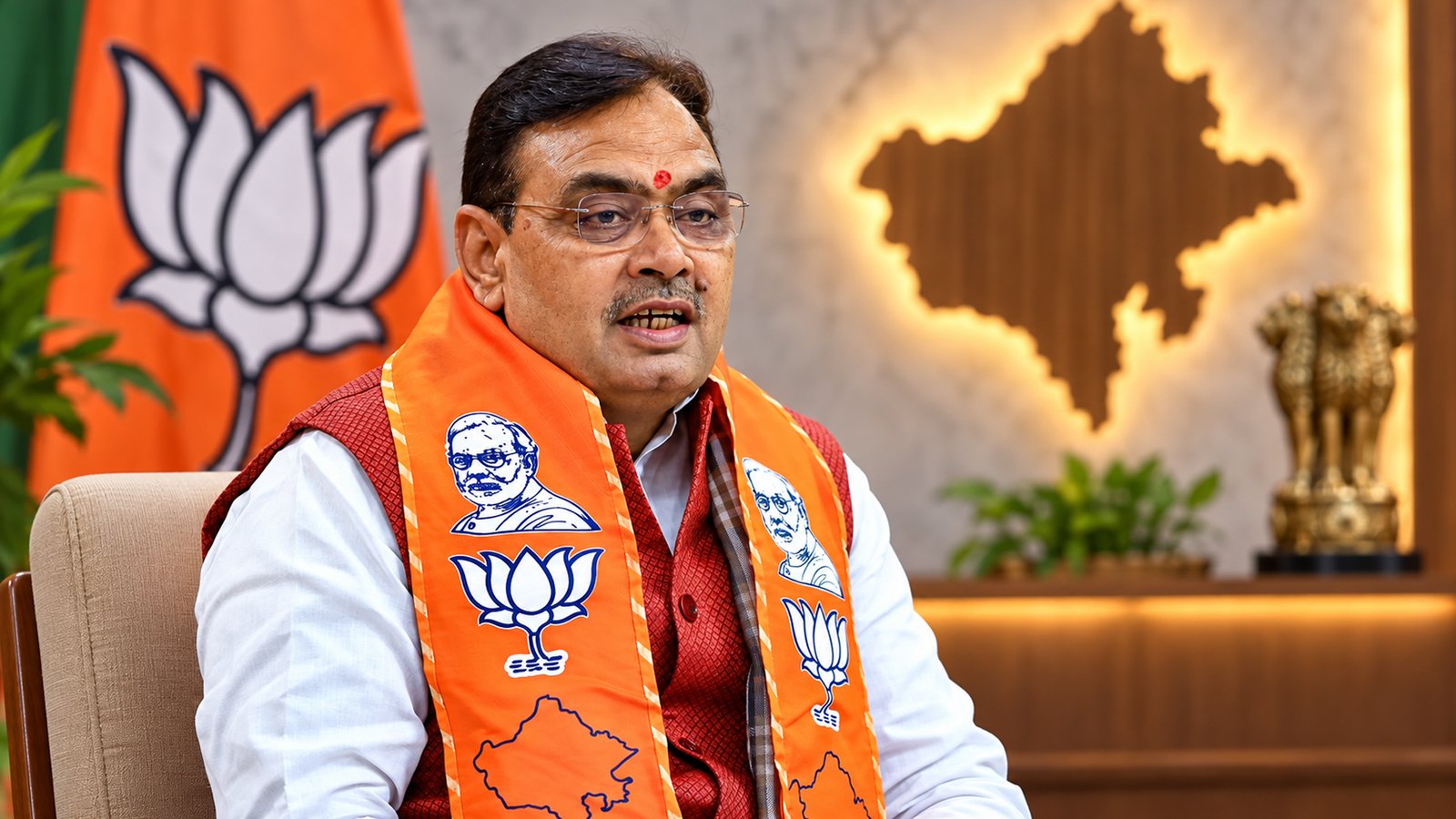
The BJP leadership in Rajasthan also celebrated the results as a boost for the government. Chief Minister Bhajan Lal Sharma and state BJP president Madan Rathore were among those who welcomed the party’s performance.
The outcome nevertheless exposes several areas of concern for the BJP. Congress won in Jhalawar, a region associated with former chief minister Vasundhara Raje, while the Aam Aadmi Party made its debut in the state by securing control of a municipal body in Baran. Pali and Ajmer also went against the BJP despite the party’s organisational presence in these areas.
Kota delivered a stronger result for the ruling party. The BJP won 55 of the 100 wards, while Congress secured 40. However, voting-related technical problems have meant that the result is not completely settled. Repolling is scheduled in three Kota wards and one Suket booth on September 16.
The Rajasthan State Election Commission has also ordered repolling at 10 polling stations across Jaipur, Jodhpur, Kota and Suket after EVM-related problems affected the counting process. The affected votes were significant because they exceeded the winning margins in the concerned wards.
Congress has sought to put the BJP’s victory in perspective. State Congress president Govind Singh Dotasra has questioned the recent delimitation exercise and argued that changes in ward boundaries affected the party’s performance. Congress has also pointed to the less-than-one-percentage-point difference in vote share as evidence that the contest was much closer than the ward tally suggests.
The results are important beyond municipal politics. The Rajasthan civic poll results provide both major parties with an indication of their organisational strength in urban areas ahead of the 2028 Assembly elections. The BJP can draw confidence from its strong performance in major cities and its position as the largest party.
Congress, meanwhile, has reasons to remain hopeful despite finishing behind. Its victories in Ajmer, Pali, Bikaner and other areas show that the party can still challenge the BJP in urban Rajasthan. The strong showing by independents also means the final political picture will depend on local alliances rather than simply the BJP-Congress tally.
The next major step will be the election of mayors and chairpersons. These elections are scheduled for September 21, followed by elections for deputy mayors, deputy chairpersons and vice-presidents on September 22. The role of independent councillors could prove crucial in bodies where neither major party has a clear majority.