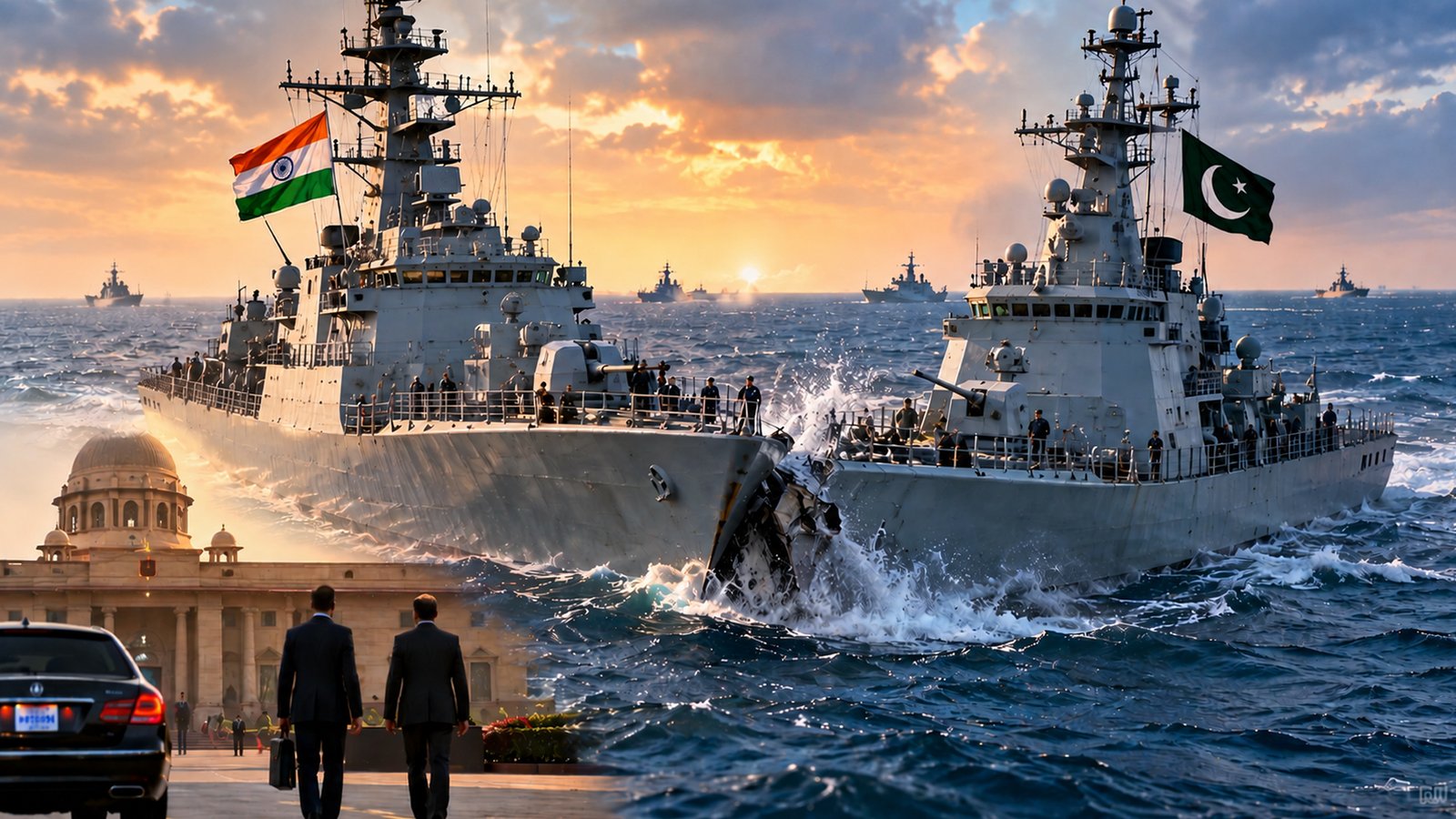
India has lodged a strong diplomatic protest with Pakistan after a Pakistani naval vessel collided with an Indian Navy warship in the northern Arabian Sea, in an incident that took place in international waters on September 15.
The Ministry of External Affairs (MEA) summoned Pakistan’s Chargé d’Affaires in New Delhi on Wednesday and raised concerns over what it described as the “unacceptable and unprofessional” conduct of Pakistani naval units. India said the incident did not cause any major damage.
According to Indian officials, the Pakistani naval vessel approached an Indian frontline warship at high speed while the Indian vessel was carrying out a routine surveillance mission. The Pakistani ship reportedly came close to the Indian warship and manoeuvred in what India described as an unsafe manner, resulting in the collision.
The Pakistani vessel has been identified by sources as PNS Hunain, a Yarmook-class offshore patrol vessel of the Pakistan Navy. The incident reportedly occurred around 220 km east of the Oman coast in the North Arabian Sea.
Details about the Indian warship involved have not been officially disclosed. Reports said the Indian vessel was carrying out routine surveillance when PNS Hunain came close at high speed. The Indian ship was able to continue its mission after the incident, while the Pakistani vessel was reported to have suffered damage. No deaths or injuries have been reported.
The diplomatic response followed quickly. India asked Pakistan to ensure that its military units exercise due care at sea and comply with existing bilateral agreements to prevent similar incidents in the future. The Indian Charge d’Affaires in Islamabad has also been instructed to raise the matter with Pakistan’s Foreign Ministry.
New Delhi has also linked the incident to the 1991 Agreement between India and Pakistan on Advance Notice on Military Exercises, Manoeuvres and Troops Movements. The MEA said the conduct of the Pakistani naval vessel was in direct contravention of Article 10 of the agreement.
The agreement was designed to promote transparency and reduce the risk of misunderstandings during military activities. Its relevance has come into focus again because the collision involved naval units operating in international waters.
The incident comes at a sensitive time in India-Pakistan relations, with military and diplomatic tensions between the two neighbours remaining high. The Arabian Sea is also strategically important because of its proximity to major shipping routes connecting the Indian subcontinent with the Gulf and wider Middle East.
Indian officials have characterised the collision as a maritime safety issue and stressed the need for military units to follow established protocols. There has been no indication from New Delhi that the incident involved an exchange of fire or a deliberate military confrontation.
Pakistan had not publicly issued a detailed response to the Indian protest at the time of the latest reports. As a result, the circumstances from the Pakistani side, including its account of the vessel’s manoeuvres, remain unclear.
The identification of PNS Hunain has added more detail to the incident. The vessel is a Yarmook-class corvette built by Damen Shipyards in Romania and forms part of Pakistan’s naval fleet. The class is designed for patrol, surveillance and maritime security duties.
The collision itself appears to have been limited in physical impact, with reports indicating no major damage to the Indian vessel and no casualties. The larger concern in New Delhi is the manner in which the two naval units came into close proximity.
Naval encounters between Indian and Pakistani forces are particularly sensitive because both countries maintain significant military deployments in the Arabian Sea. Even an accidental collision can create diplomatic complications when warships from the two countries operate in the same maritime region.
India’s decision to summon Pakistan’s diplomatic representative signals that New Delhi wants the incident formally addressed through diplomatic channels. The MEA has called for greater caution and adherence to agreements intended to prevent such incidents.
The episode also puts renewed attention on maritime communication and safety protocols between the two countries. While the collision has not resulted in casualties or major damage, its timing and the involvement of frontline naval units make it a closely watched development.
The immediate focus will now be on diplomatic exchanges and clarification of what happened at sea. Both sides’ handling of the incident could determine whether it remains a contained maritime mishap or becomes another source of tension in already sensitive India-Pakistan ties.