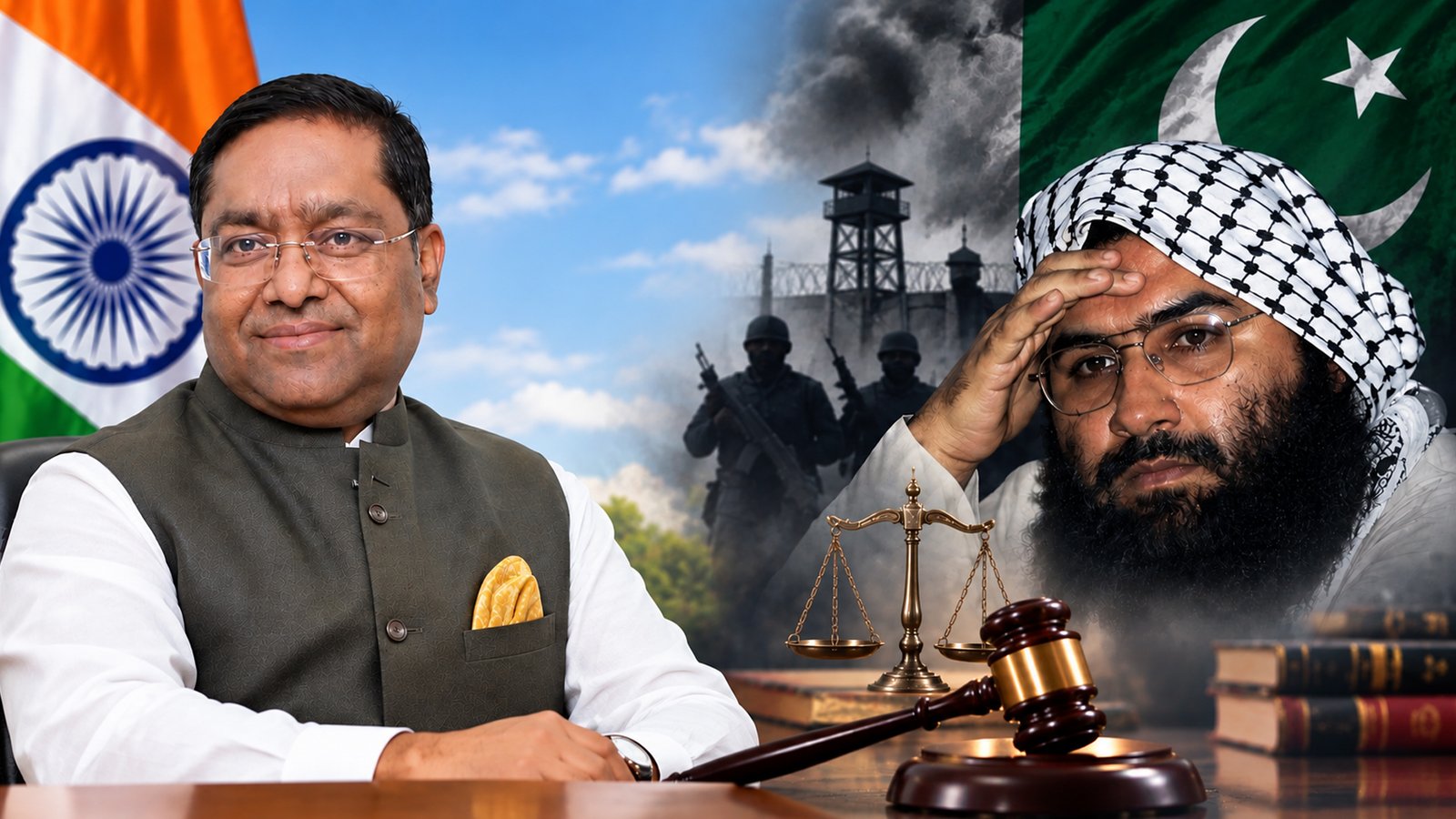
India has dismissed Pakistan’s latest announcement regarding a Rs 70 lakh reward for information leading to the arrest or conviction of Jaish-e-Mohammed chief Masood Azhar, calling it a “gimmick” and urging Islamabad to take concrete action against terrorism.
The response came from Ministry of External Affairs spokesperson Randhir Jaiswal on September 15, after Pakistan reiterated the reward for information on Azhar. The Jaish-e-Mohammed founder remains listed in Pakistan’s Federal Investigation Agency (FIA) Red Book of most-wanted terrorists.
Pakistan’s FIA listing offers a reward of up to PKR 7 million, or Rs 70 lakh, for information leading directly to Azhar’s apprehension or conviction. Reports about the reward have drawn attention because the development comes weeks before the Financial Action Task Force (FATF) is scheduled to hold its next plenary meeting in Paris from October 26 to 30.
Responding to questions about the announcement, Jaiswal said India had seen similar announcements in the past. He said Pakistan should take concrete steps against terrorism rather than issue what he described as “phoney announcements”. His comments represent the Indian government’s position on the matter.
Azhar is among the most prominent names associated with Jaish-e-Mohammed, a Pakistan-based militant organisation designated as a terrorist group by several countries and international bodies. The United Nations Security Council designated Azhar as a global terrorist in May 2019.
Indian authorities have linked Azhar and Jaish-e-Mohammed to several major terror cases. These include the 2001 Parliament attack, the 2016 Pathankot airbase attack and the 2019 Pulwama bombing. India has also repeatedly sought action against Azhar and other individuals accused in terror cases.
Azhar’s whereabouts have remained disputed. Pakistani authorities have said in recent years that he left Pakistan and moved to Afghanistan. India has maintained that Pakistan should take action against him, while Afghanistan’s Taliban government has rejected claims that Azhar is present in the country.
The latest development has therefore renewed questions about Pakistan’s handling of individuals designated or wanted in terrorism-related cases. The FIA continues to include Azhar in its Red Book, with his entry appearing in the agency’s 2026 edition.
The timing has also brought the FATF into focus. The Financial Action Task Force is an international body that works against money laundering and terrorist financing. Its assessments examine how countries identify and address risks linked to illicit finance, including whether authorities effectively implement measures against terrorist financing.
Pakistan was placed on the FATF grey list, or increased-monitoring list, in 2018. It remained under enhanced monitoring until 2022, when the organisation removed the country after Pakistan completed commitments under two action plans. Those plans included measures aimed at strengthening its anti-money laundering and counter-terrorist financing systems.
The issue remains relevant because the FATF framework also focuses on effective implementation rather than simply the existence of laws or official announcements. Pakistan’s efforts against terrorist financing and sanctioned individuals are therefore likely to remain under international scrutiny as the next review approaches.
India has previously argued that Pakistan needs to demonstrate measurable action against terrorist organisations and their leadership. New Delhi has particularly focused on groups such as Jaish-e-Mohammed and Lashkar-e-Taiba, both of which have been the subject of international counter-terrorism measures.
Pakistan, meanwhile, has continued to list Azhar as wanted through its federal investigation system. The FIA Red Book identifies him as the head of Jaish-e-Mohammed and records several terrorism-related cases registered against him under Pakistan’s Anti-Terrorism Act.
The development comes against a broader backdrop of strained India-Pakistan relations. The two countries have long accused each other over security and terrorism-related issues, with terrorism remaining one of the most contentious subjects in bilateral relations.
Azhar’s name has also featured prominently in the history of India-Pakistan security tensions. He was released by India in December 1999, along with two other militants, in exchange for passengers held during the hijacking of Indian Airlines flight IC-814 from Kathmandu to Kandahar.
The 2019 UN designation marked a significant international development in the case. Azhar had been proposed for designation several times before 2019, but the move faced a procedural block at the UN Security Council until China withdrew its objection.
The latest bounty announcement is unlikely to settle the larger questions surrounding Azhar’s whereabouts or Pakistan’s approach to terrorism-related cases. India has made clear that it wants action beyond official announcements, while Pakistan continues to maintain Azhar’s name on its most-wanted list.
With the FATF plenary scheduled for October, Pakistan’s counter-terrorism and terror-financing measures will remain under international attention. The dispute over Masood Azhar has once again placed those efforts at the centre of the India-Pakistan security debate.