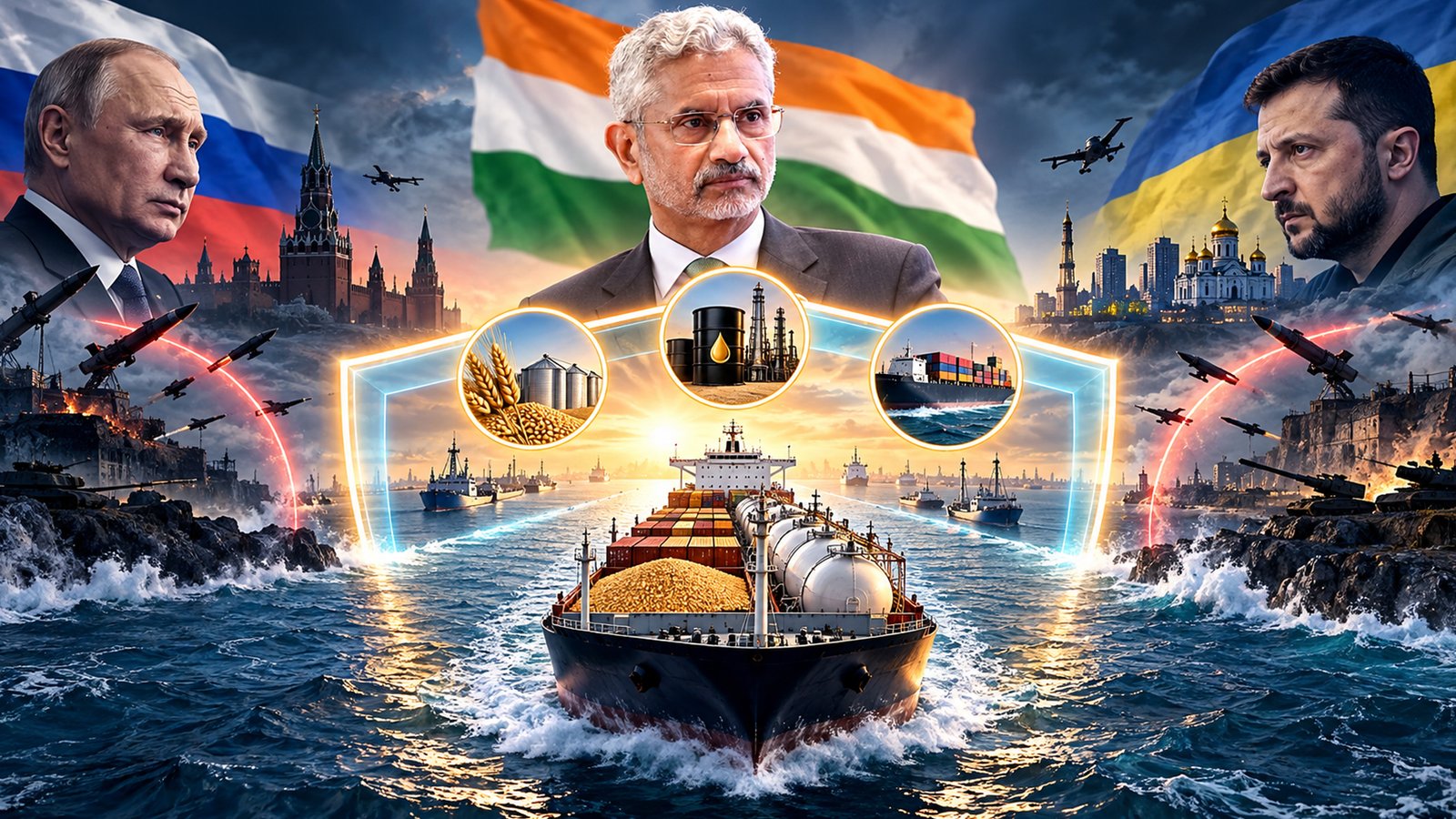
India has stepped up its diplomatic efforts to help end the Russia-Ukraine war by proposing a three-part truce focused on energy infrastructure, Black Sea shipping and the movement of vital commodities.
The proposal seeks to address some of the immediate risks created by the conflict without waiting for a comprehensive peace agreement. It calls for an end to attacks on energy facilities and other critical infrastructure, continued movement of grain and energy through Black Sea ports, and a halt to attacks on commercial vessels operating in the strategic waterway.
The initiative marks a more active phase in India’s approach to the conflict. New Delhi has consistently argued that the Russia-Ukraine war cannot be resolved on the battlefield and that dialogue and diplomacy remain the only sustainable path to peace. The latest proposal, however, goes beyond a broad call for negotiations by identifying specific areas where Russia and Ukraine could potentially agree to limited non-attack arrangements.
External Affairs Minister S. Jaishankar has confirmed that India is now in discussions with both Moscow and Kyiv on the safety of shipping, grain and energy exports and possible non-attack arrangements. He said India had moved beyond simply advocating peace and was becoming more involved in efforts to end the conflict.
The three-part framework was conveyed to the Ukrainian leadership during Jaishankar’s September 3 visit to Kyiv, where he met Ukrainian Foreign Minister Andrii Sybiha and President Volodymyr Zelenskyy. The visit was Jaishankar’s first standalone trip to Ukraine as India’s external affairs minister.
The first part of India’s proposal focuses on energy facilities and critical infrastructure. Russia and Ukraine have repeatedly targeted infrastructure during the conflict, causing disruptions to electricity, fuel supplies and other essential services.
An agreement to stop attacks on such facilities could provide immediate relief to civilians while creating space for wider negotiations. Energy infrastructure has become particularly important as both sides prepare for another winter of war and Ukraine faces continuing pressure on its power network.
The second part deals with the movement of grain and energy through Black Sea ports. The region is crucial to international commodity markets, with disruption affecting food supplies, energy shipments and freight costs far beyond the immediate conflict zone.
India has a direct interest in keeping these routes open. Black Sea ports account for a significant share of Russian energy flows to India, while threats to merchant vessels have disrupted shipments and pushed up freight costs, particularly for Russian crude exports from ports such as Novorossiysk.
The grain trade also has wider implications for food security. Ukraine and Russia remain important suppliers to global agricultural markets, and prolonged disruption can affect prices and availability in countries that depend on imports.
The third element of India’s proposal seeks to stop attacks on commercial shipping in the Black Sea. The issue has gained urgency after merchant vessels came under attack and Indian sailors were among those killed in recent incidents.
Protecting commercial vessels would allow ships carrying energy, grain and other essential commodities to move more safely. It would also reduce the risk faced by shipping companies, crews and insurers operating in the region.
The proposal has drawn attention in Kyiv. Ukrainian officials have described India’s formulation as broad and comprehensive, placing it among the most substantial diplomatic initiatives currently being discussed. Ukraine has indicated openness to arrangements covering energy and maritime security, although the response from Russia will be crucial to determining whether the idea can move forward.
India’s approach also comes as several countries are exploring separate pathways towards a ceasefire. Proposals involving the United States, Turkey and Egypt have focused on different aspects of the conflict. India’s plan attempts to bring infrastructure protection, commodity flows and commercial shipping under a single framework.
The timing is significant because the fighting shows no sign of easing. Russia launched a major wave of missile and drone attacks across Ukraine on October 7, with energy infrastructure among the targets identified by Ukrainian authorities. Russia said its strikes targeted military-industrial facilities and other strategic sites.
That continuing escalation highlights the difficulty of negotiating even limited ceasefires. An agreement covering energy or shipping would require both sides to accept monitoring mechanisms, define protected infrastructure and establish confidence that the arrangements would be respected.
India’s diplomatic position is also shaped by its relationships with both Moscow and Kyiv. New Delhi has maintained close ties with Russia while strengthening its engagement with Ukraine and Western countries. That gives India a distinctive position, although it also means any mediation effort will require careful balancing.
PM Modi has repeatedly called for dialogue and an end to hostilities during his interactions with Russian President Vladimir Putin. Putin has recently acknowledged PM Modi’s peace efforts and described his ideas as constructive.
The economic stakes extend beyond Russia and Ukraine. Any disruption to Black Sea shipping can influence global crude prices, freight rates, insurance costs, fertiliser supplies and food prices. Greater stability could therefore benefit countries across the Global South, including India.
New Delhi’s immediate objective appears more practical than ambitious: reduce the risks created by the war, protect civilian and commercial infrastructure and keep essential supplies moving.
A limited agreement on energy facilities and Black Sea shipping would not end the Russia-Ukraine war. It could, however, create a small but important area of cooperation between the two sides and demonstrate that diplomacy can produce tangible results even while the larger political disagreements remain unresolved.
India’s three-part truce proposal therefore represents an attempt to turn its long-standing message of dialogue into a more concrete diplomatic process, with energy security, food supplies and maritime trade at its centre.