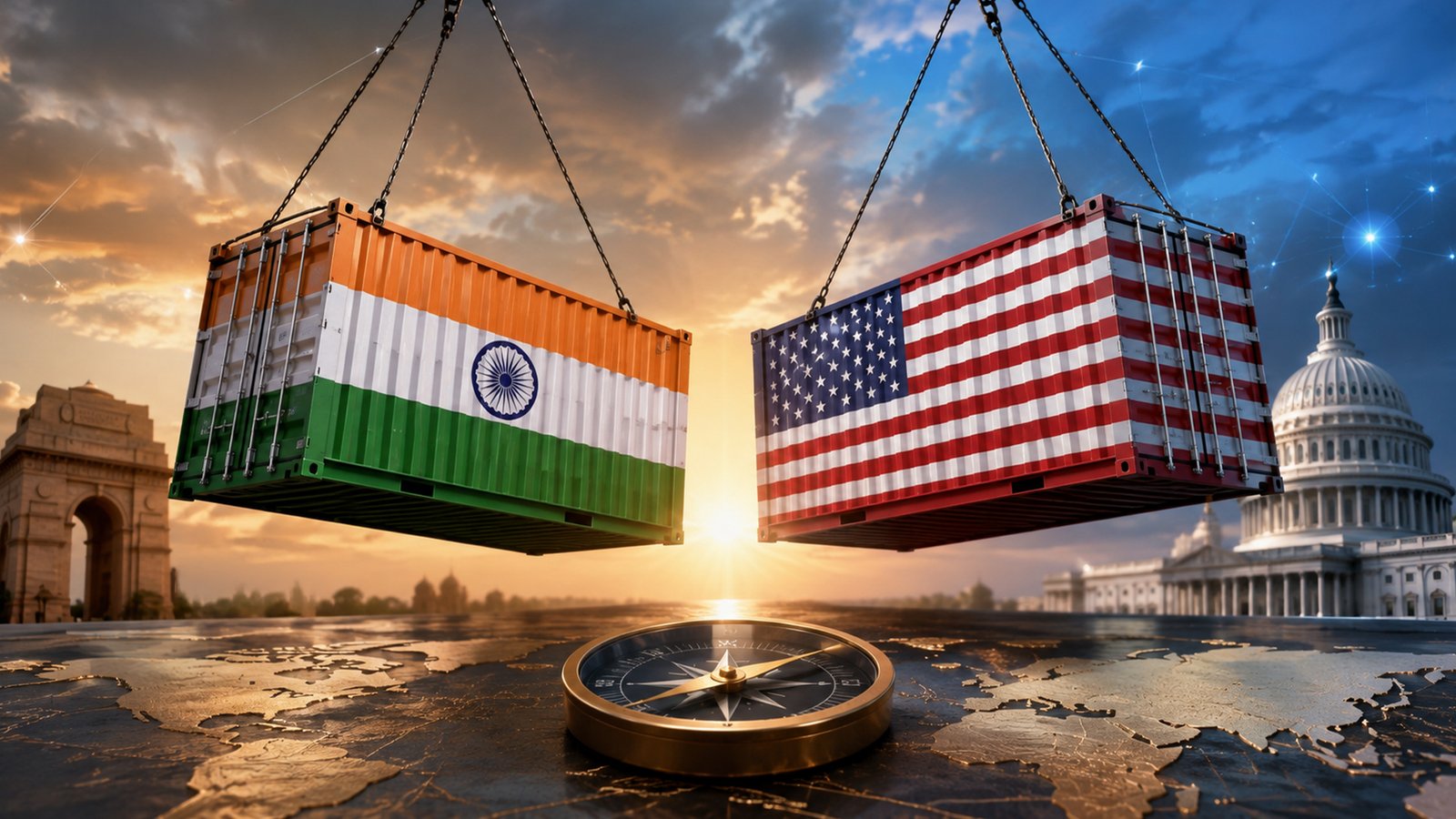
India and the United States have held what government officials described as reassuring discussions amid Washington’s proposed legislation that could allow tariffs of up to 100% on countries buying Russian oil. New Delhi remains concerned about the possible impact of the measure, but officials said engagement with Washington is continuing at multiple levels as both sides work to advance their bilateral trade agreement.
The proposed US legislation has emerged as a fresh challenge in India-US trade relations, particularly because India has remained a major buyer of discounted Russian crude. The US Senate last week passed the Lindsey O. Graham Sanctioning Russia and Iran Act of 2026 by an 86-11 vote. The legislation would give US President Donald Trump the authority to impose tariffs of up to 100% on imports from countries that purchase Russian energy. It still needs to clear the US House of Representatives before it can become law.
A senior Indian government official said the proposed measure was a concern, but added that talks with Washington had so far been reassuring. India has been closely monitoring the legislation while remaining in regular contact with US authorities.
Commerce Secretary Rajesh Agrawal also said India and the US remain in regular contact over the proposed bilateral trade agreement (BTA). Both countries remain committed to the framework agreement reached in February, although changes in the US tariff landscape have led to further discussions.
The latest tariff threat comes at a sensitive point in the negotiations. Washington has already imposed a 10% duty on Indian goods linked to labour-related concerns, while the proposed Russian oil measure could create another layer of pressure on Indian exporters if implemented.
India’s exposure to the issue is largely linked to its growing dependence on Russian crude. Russia has become India’s largest source of oil imports, with its share exceeding 50% of total crude imports in recent months. Indian refiners have increased purchases of Russian oil because of its competitive pricing and the need to maintain stable supplies amid disruptions elsewhere.
The prospect of a 100% US tariff therefore presents a difficult choice for New Delhi. A sharp reduction in Russian oil purchases could increase India’s crude import costs, particularly if alternative supplies are more expensive. Continuing purchases, meanwhile, could expose Indian exports to punitive US trade measures if the legislation is enacted and the President decides to use the tariff authority.
The proposed bill, however, does not automatically impose a 100% tariff. If enacted, it would provide the US President with discretionary authority to impose tariffs on countries purchasing Russian energy. This distinction has given India some room to assess the legislation and continue diplomatic engagement before making any changes to its energy strategy.
The legislation also faces another hurdle in the US House. Although the Senate approved the measure with strong bipartisan support, questions remain over its passage in the House and the extent to which the Trump administration would use the tariff powers if Congress approves them.
India has consistently maintained that its Russian oil imports are driven by energy security, market conditions and the need to provide affordable fuel to consumers. New Delhi has also argued that it purchases energy from multiple sources and that its sourcing decisions are based on national requirements rather than political considerations.
The issue has become more important as Indian refiners have continued to buy substantial quantities of Russian crude. Imports reached around 2.6 million barrels per day in June, accounting for more than half of India’s crude imports, according to industry estimates cited by the Times of India. July imports also remained strong.
Any disruption to this flow could have wider economic consequences for India’s energy security, inflation and fuel prices. Russian crude has helped Indian refiners secure relatively competitive supplies, while the global oil market remains vulnerable to geopolitical disruptions. Replacing large Russian volumes at short notice could put upward pressure on crude prices.
At the same time, analysts have pointed out that India has options if Washington eventually imposes punitive measures. The country can diversify crude purchases from suppliers in the Middle East, the United States and other producing regions. Such a shift, however, could come with higher costs depending on global oil prices and freight conditions.
The issue also carries diplomatic significance. India and the US have been seeking to deepen their economic relationship, while negotiations over the trade agreement have continued despite differences over tariffs and market access. US officials have recently stressed the strength of ties between Trump and Prime Minister Narendra Modi and expressed confidence that the dispute over Russian oil can be resolved through negotiations.