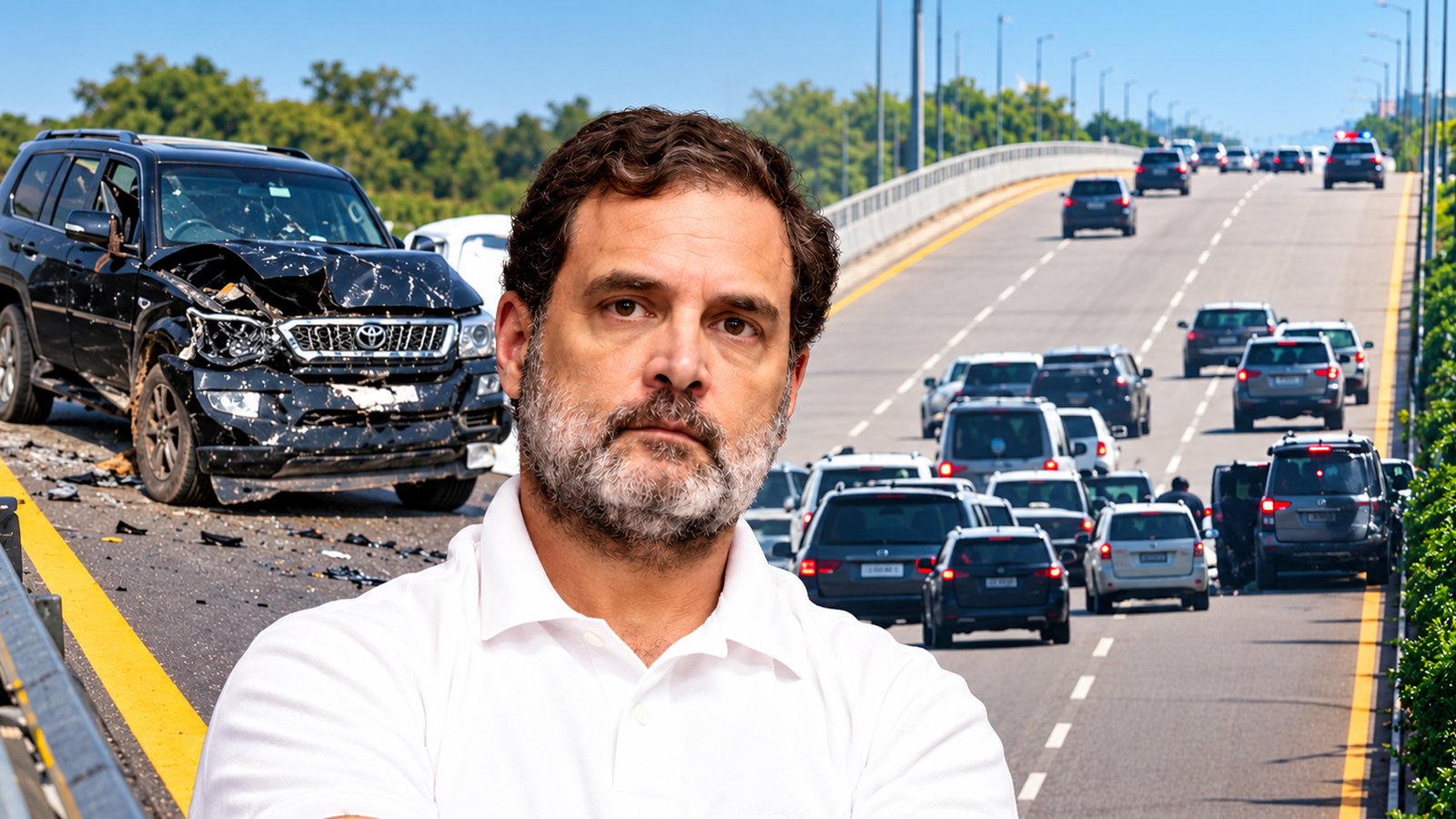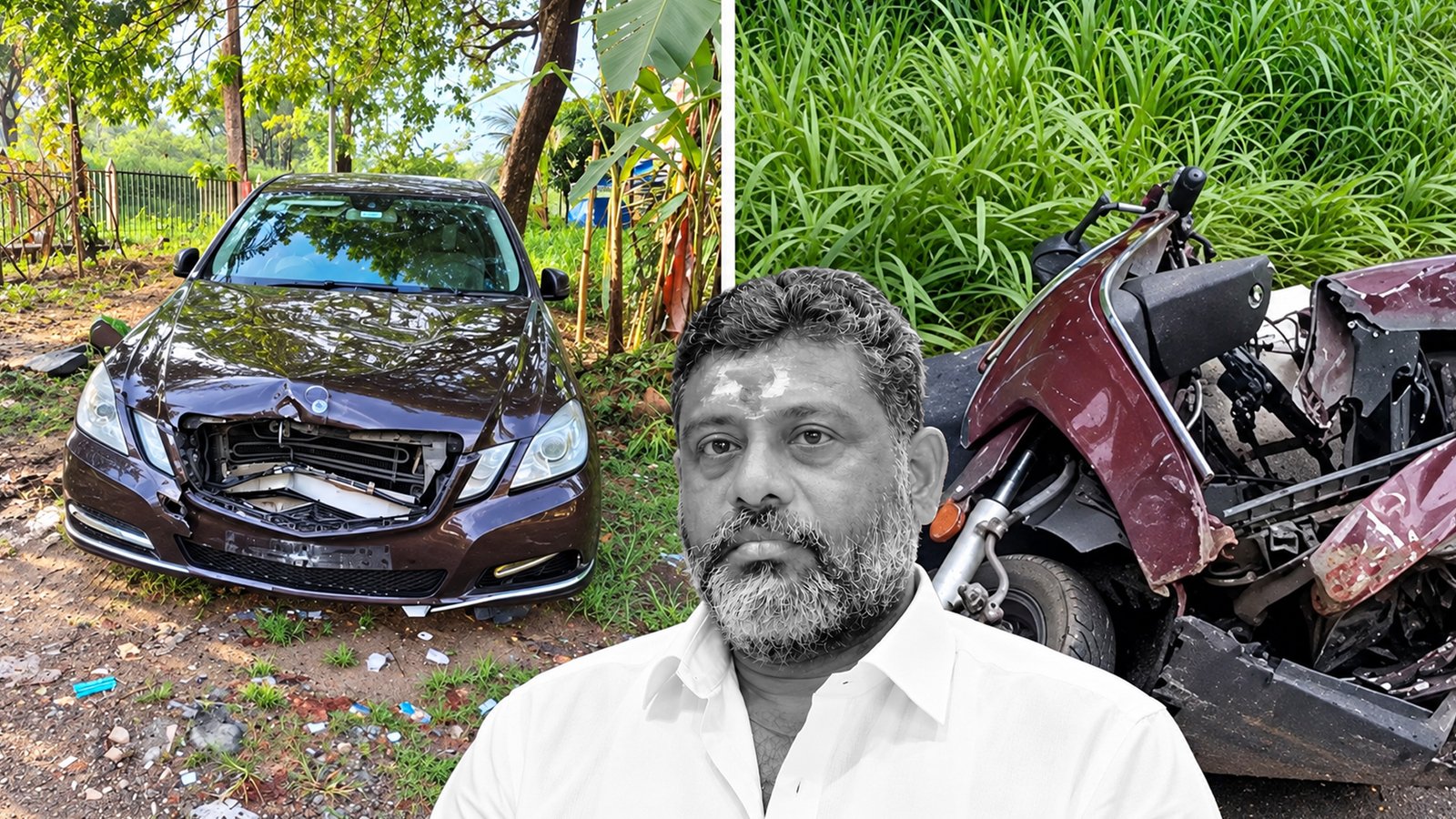
A fatal road accident in Cheranalloor, Kochi, has taken a significant turn after investigators reportedly recovered mobile-phone footage showing a Mercedes-Benz travelling at around 104 kilometres per hour shortly before it hit a scooter. The collision killed 55-year-old Jayabalakrishnan, who was returning home after closing his roadside food stall in the early hours of Sunday, October 25. The case has drawn attention to digital evidence, underage driving and the legal responsibility of vehicle owners.
Police said the car was allegedly driven by a 17-year-old boy, the son of an additional district judge. The Mercedes-Benz was registered in his father’s name. The accident occurred at around 2.20 am on Container Road in the Cheranalloor area, near Kochi. Jayabalakrishnan was riding his scooter when the car reportedly struck it from behind. He died following the collision.
Investigators have recovered footage from the teenager’s mobile phone that reportedly captures the car being driven at high speed before the crash. Media reports have put the speed at approximately 104 kmph. Police are examining the footage as part of the investigation, alongside other evidence, including witness accounts and any available CCTV recordings. The video could help investigators establish the vehicle’s speed and movements, although the full circumstances of the collision remain subject to investigation. Police have not established every detail before impact; the footage’s evidentiary value will depend on independent verification by investigators later.
The footage raises questions about mobile-phone use while driving. Recording behind the wheel can distract a driver from traffic and road conditions. Police reports suggest the teenager may have been filming his driving. Investigators must establish the recording’s context and its relevance to the moments before the collision. Digital material needs to be assessed alongside physical evidence and witness statements.
Police initially registered a case under Sections 281 and 106(1) of the Bharatiya Nyaya Sanhita, relating to rash driving and causing death by negligence. The teenager was released on station bail, prompting protests by Jayabalakrishnan’s family and local residents. Police later took him into custody again and added Section 105 of the BNS, concerning culpable homicide not amounting to murder. He was produced before the Ernakulam Juvenile Justice Board, which granted him bail on Monday, October 26, citing the absence of previous criminal antecedents, according to reports.
The Kerala High Court also permitted the police to register a case against the teenager’s father after authorities sought approval to proceed against the judicial officer. Police have booked him under Section 199A of the Motor Vehicles Act, which provides for action against a guardian or vehicle owner in certain cases involving offences committed by a minor. The father is the registered owner of the Mercedes-Benz. The legal process will determine the extent of any responsibility; the registration of a case does not itself establish guilt.
The police response has come under scrutiny after the teenager’s initial release on station bail. The victim’s family protested outside the Cheranalloor police station, demanding stronger action and questioning whether the case was being handled fairly. Senior officers said the investigation was proceeding under required legal procedures. Reports said police were considering further steps concerning bail. The Juvenile Justice Board’s decision remains separate from the investigation into the crash.
The case highlights how digital evidence is becoming increasingly important in road accident investigations. Mobile videos can preserve details about speed, driving behaviour and the sequence of events. CCTV footage may help map a vehicle’s route, while forensic examination can establish when and how files were created or altered. Investigators must also maintain the integrity of digital evidence, document how it was collected and ensure it can be examined reliably in court. The presence of a video alone does not answer every legal question, but it can provide an important lead.
The incident has renewed concerns about minors driving without a valid licence and the access they may have to powerful vehicles. Indian law restricts driving by people below the prescribed age and includes provisions addressing vehicle owners and guardians when minors commit specified offences. Authorities will have to establish how the teenager obtained the car, what happened before the crash and whether any further offences or liabilities apply.
Jayabalakrishnan’s family is seeking accountability as investigators pursue the case. The inquiry will examine phone footage, witness accounts, vehicle details and applicable law. Technology may help reconstruct the moments before the collision, but conclusions must come from evidence and the judicial process. The case is also a reminder that filming high-speed driving for social media can endanger other road users.