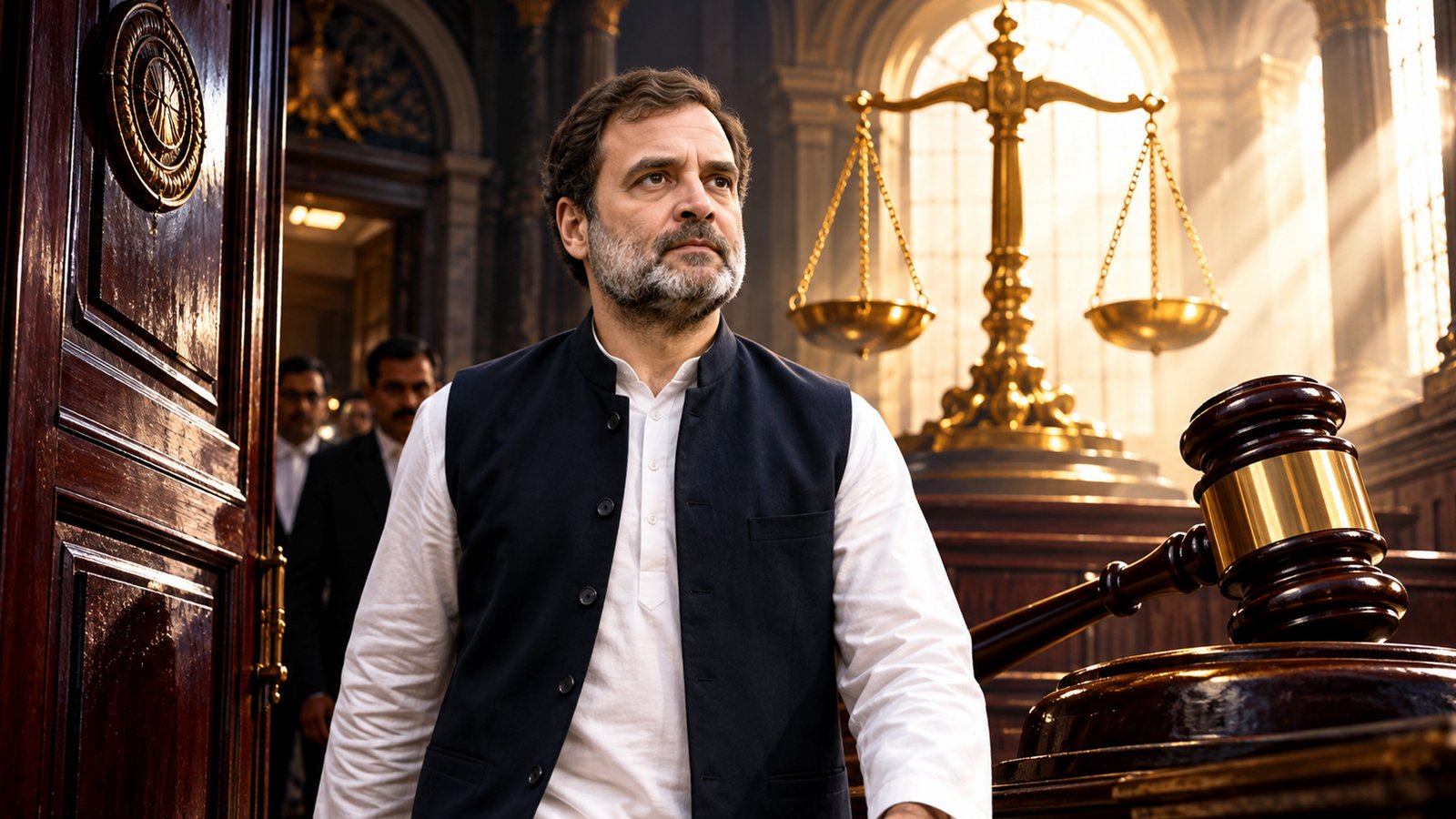
Congress leader and Lok Sabha Leader of Opposition Rahul Gandhi was acquitted on Monday, October 26, by a special MP/MLA court in Sultanpur, Uttar Pradesh, in a criminal defamation case linked to remarks he made about Amit Shah in 2018. Gandhi appeared in person as Additional Chief Judicial Magistrate Shubham Verma delivered the verdict. The court held that the remarks at the centre of the complaint were not defamatory in nature, according to reports.
The case began after comments Gandhi made during the 2018 Karnataka Assembly election campaign. At a press conference in Bengaluru, he referred to Shah, who was then the Bharatiya Janata Party’s national president, while discussing the Sohrabuddin encounter case. Shah had been discharged by a special Central Bureau of Investigation court in that case in 2014. Gandhi’s comments prompted a complaint from local BJP leader Vijay Mishra, a former chairman of the Sultanpur District Cooperative Bank.
Mishra filed the criminal defamation complaint on August 4, 2018, alleging that Gandhi’s remarks were objectionable and harmed Shah’s reputation, as well as that of BJP workers. The complaint invoked Sections 499 and 500 of the Indian Penal Code, which dealt with criminal defamation and its punishment. The allegations were contested by Gandhi, who maintained during the proceedings that his comments had been presented out of context.
Gandhi appeared before the Sultanpur court in 2023 and secured bail. The matter remained pending as the court considered the complaint and arguments from both sides.
An unusual technical element emerged during the proceedings when the complainant sought to have Gandhi’s voice sample compared with a recording of the remarks made in Bengaluru. Such comparisons can involve forensic audio analysis, which examines features of a voice recording to assess whether samples may come from the same speaker. The trial court rejected the request. The complainant challenged that decision, but the sessions court dismissed the revision petition, and the Allahabad High Court also rejected a challenge to the earlier orders.
The voice-sample issue highlights how digital recordings and forensic methods can become part of legal disputes, particularly when the exact wording or attribution of a statement is contested. Audio evidence may require experts to assess recording quality, background noise, editing, and other factors that can affect reliability. However, a technical comparison does not by itself decide whether a statement is defamatory. That question depends on the law, the context in which the words were spoken, and the court’s assessment of the evidence. In this case, reports said the court found the remarks were not defamatory.
The ruling brings a long-running complaint over Gandhi’s 2018 comments to a close at the trial-court level. It should be distinguished from other defamation proceedings involving the Congress leader, which concern different remarks and separate legal questions. The acquittal in Sultanpur applies to this specific complaint and should not be interpreted as a ruling on unrelated cases.
Gandhi travelled to Sultanpur to attend the hearing, and reports said some vehicles in his convoy collided on the Purvanchal Expressway while he was on the way. The incident occurred at around 10.15 am, according to reports, after a vehicle at the front of the convoy reportedly braked suddenly. Initial accounts differed on whether anyone was injured, and the precise cause of the collision was not immediately clear.
The court’s finding that the comments were not defamatory resolved the question before it in his favour.
Voice analysis can help establish whether a recording is consistent with a person’s speech, but it cannot independently determine intent, reputation-related harm, or the legal meaning of a statement. Those issues require judicial interpretation of the full context and applicable law. The rejected voice-sample request was one part of the procedural history, rather than the stated basis of the acquittal.
The outcome is a significant legal development for Gandhi, but its scope is specific. It clears him of the allegations in the Sultanpur complaint arising from the 2018 remarks about Shah. Any further legal steps, if pursued, would depend on the applicable procedure and decisions by the parties. For now, the court’s ruling marks the conclusion of this case, following years of hearings and challenges over the complaint and related evidence.
The acquittal also underlines the importance of distinguishing political criticism from legally actionable defamation. While public figures can pursue legal remedies when they believe their reputation has been harmed, courts must assess the words used, their context and the evidence presented before reaching a conclusion. As political debates increasingly circulate through online clips, social media posts and digital recordings, the Sultanpur case serves as a reminder that technology can help establish what was said, but the legal significance of those words ultimately rests with the judiciary.