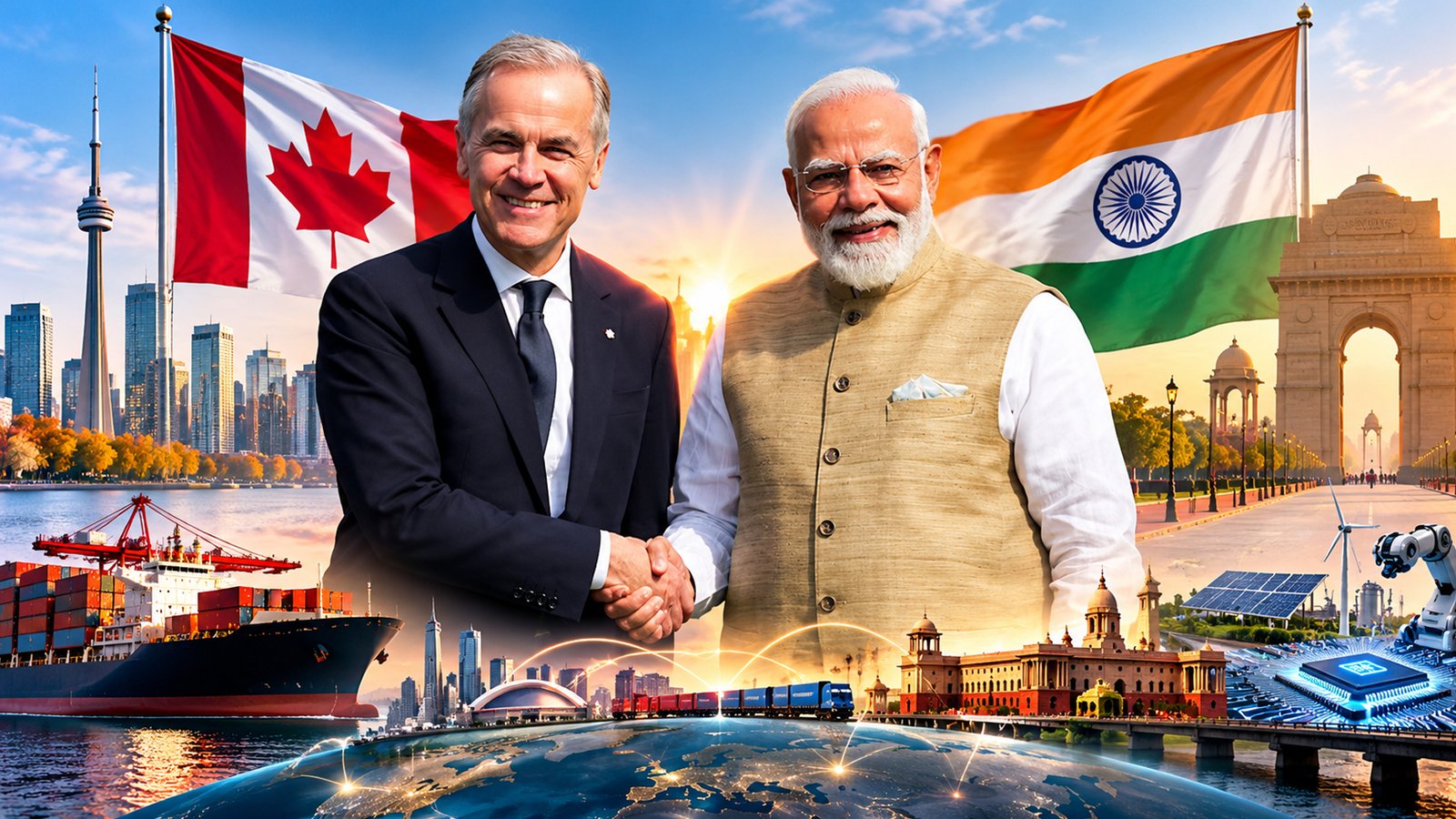
Prime Minister Narendra Modi and Canadian Prime Minister Mark Carney have agreed to strengthen bilateral ties, with trade, energy, technology and security emerging as key priorities for cooperation. The two leaders held a telephone conversation on October 13, reaffirming their commitment to building a stronger strategic partnership and translating recent diplomatic progress into tangible results.
The conversation comes as India and Canada work to rebuild and expand their relationship after a period of strained ties. Both governments have stepped up engagement in recent months, seeking new opportunities for economic cooperation, investment and collaboration in areas of mutual interest.
PM Modi described the conversation as warm and productive, saying both countries would build on the positive momentum in their relationship. He highlighted trade, energy, technology, security and people-to-people ties as key areas where the two nations could work towards concrete outcomes.
The Canadian government also confirmed that the leaders had discussed expanding bilateral cooperation and reaffirmed their commitment to concluding negotiations on a Comprehensive Economic Partnership Agreement (CEPA) at the earliest opportunity.
The proposed trade agreement is expected to provide a framework for expanding commercial ties and creating fresh opportunities for businesses in both countries.
Trade agreement remains a key priority
The CEPA negotiations are central to efforts to increase India-Canada trade. Both countries have expressed their ambition to double bilateral trade by 2030, creating a stronger economic partnership between two economies with complementary strengths.
A comprehensive trade agreement could improve market access, encourage investment and support businesses seeking to expand across borders. It could also provide greater clarity for companies operating in sectors such as manufacturing, agriculture, technology and services.
The leaders’ latest conversation follows a series of high-level engagements aimed at restoring momentum in bilateral relations. Canadian International Trade Minister Maninder Sidhu is leading a trade mission to India, while Canadian Foreign Affairs Minister Anita Anand is also visiting New Delhi to advance discussions on shared priorities.
The engagements are expected to help identify commercial opportunities and strengthen connections between businesses, investors and policymakers.
For India, stronger trade ties with Canada could support export growth, investment and access to important resources. Canada, meanwhile, is seeking to diversify its international trade relationships and build stronger economic links across the Indo-Pacific region.
Energy cooperation gains importance
Energy is another major area of potential cooperation. India requires reliable and diversified energy supplies to support its growing economy, while Canada has substantial resources and expertise across conventional energy, liquefied natural gas, nuclear fuel and clean energy.
Both countries have been working to expand cooperation across the energy value chain, including uranium supplies, liquefied petroleum gas, liquefied natural gas and renewable energy.
A long-term uranium supply agreement worth approximately $2.6 billion between Canadian company Cameco and India’s Department of Atomic Energy is among the significant developments in their energy partnership. The agreement is intended to support India’s civil nuclear power generation and strengthen energy security.
The countries are also exploring opportunities in critical minerals, which are essential for electric vehicles, batteries, renewable energy technologies and advanced manufacturing.
Closer cooperation could help diversify supply chains while creating investment opportunities for companies in both markets.
Technology and security on the agenda
Technology and innovation are increasingly important to the India-Canada relationship. Potential areas of cooperation include artificial intelligence, digital infrastructure, semiconductor manufacturing, cybersecurity and scientific research.
Both countries have an interest in developing reliable technology ecosystems, strengthening research partnerships and encouraging innovation-driven businesses. Collaboration could also help companies access new markets, expertise and investment.
Security cooperation has also gained attention as the two governments seek to strengthen engagement between their respective institutions. The latest conversation follows a bilateral security dialogue held in India the previous week as part of ongoing engagement at the national security adviser level.
The leaders also discussed geopolitical instability in the Indo-Pacific and the importance of reliable international partnerships in areas such as energy and agriculture. These discussions reflect the wider economic and strategic significance of cooperation between the two countries.
PM Modi’s December visit to Canada
The two leaders agreed to remain in close contact ahead of PM Modi’s scheduled visit to Canada in December 2026. The visit is expected to provide another opportunity to advance discussions on trade, investment and strategic cooperation.
The timing is significant as both governments seek to convert renewed diplomatic engagement into measurable economic outcomes. Progress on the CEPA negotiations, stronger energy partnerships and expanded technology cooperation could shape the next phase of bilateral relations.
For businesses, a more stable and predictable relationship could create opportunities in sectors ranging from information technology and advanced manufacturing to energy and agriculture. Greater cooperation could also support investment flows and strengthen commercial links between the two countries.
The relationship has faced challenges in recent years, making sustained diplomatic engagement important to rebuilding confidence. While the latest conversation signals a willingness to move forward, the pace of progress will depend on negotiations, implementation and continued cooperation across government and industry.
With PM Modi’s December visit approaching, India and Canada are seeking to turn renewed diplomatic momentum into practical gains. The focus will now be on advancing the trade agreement, strengthening energy security and delivering results across technology, investment and other shared priorities.