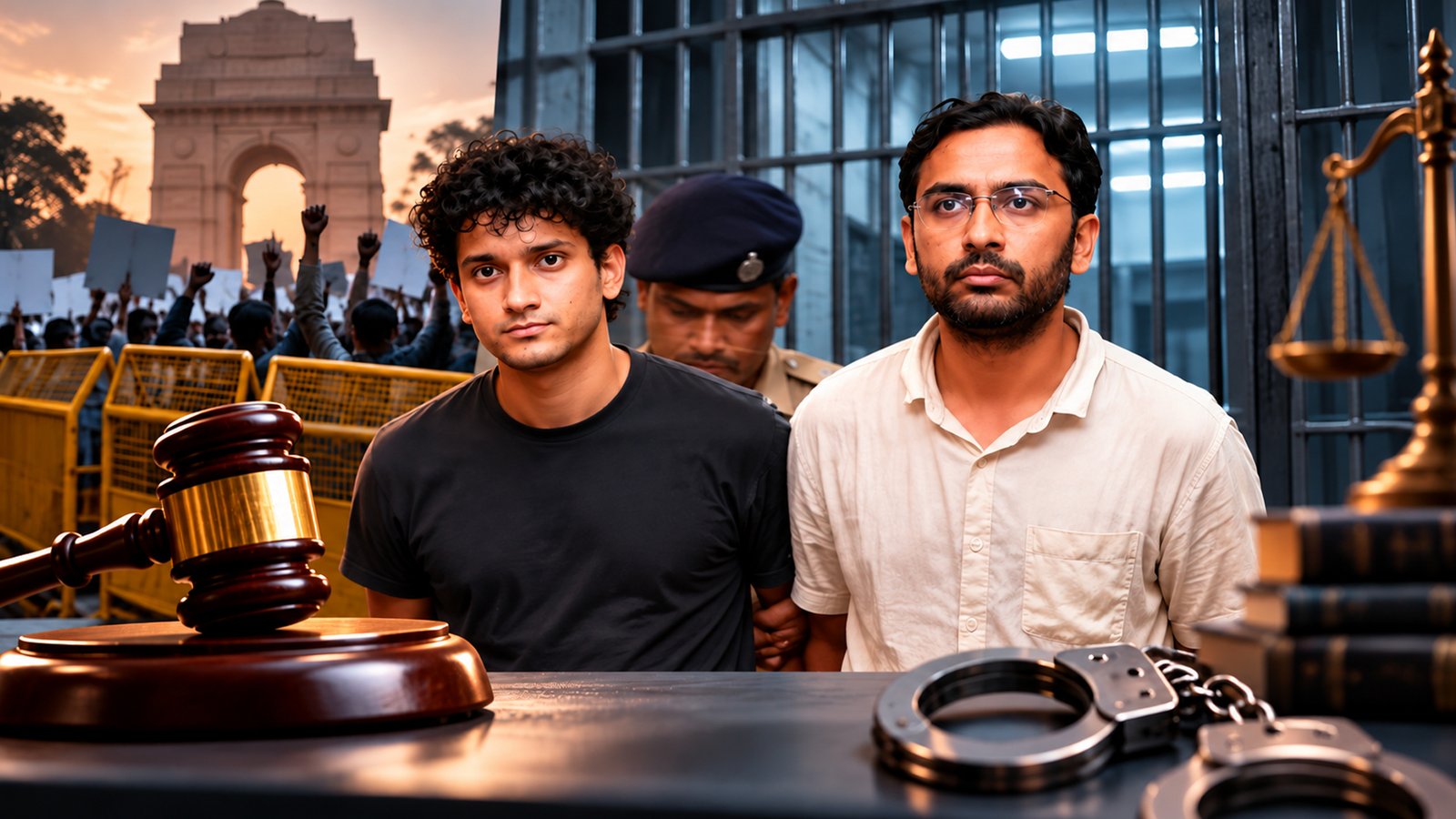
Two leaders of the Cockroach Janta Party (CJP), Saurav Das and Ashutosh Ranka, were sent to five days of judicial custody on Wednesday, October 14, following their detention over a protest at Delhi’s Jantar Mantar. The leaders were accused of entering the area without authorisation and violating conditions imposed during earlier legal proceedings.
Their associate, Ajinkya Shinde, was released after being directed to maintain peace and good behaviour for six months. The developments come amid continuing protests against Chief Election Commissioner Gyanesh Kumar, with demonstrators demanding his resignation over alleged irregularities in the revision of electoral rolls.
The three CJP leaders were detained by Delhi Police on Tuesday after allegedly crossing security barricades and entering the Jantar Mantar area, which had been removed from the list of authorised protest locations. They reportedly raised slogans demanding Kumar’s resignation and displayed the national flag during the demonstration.
The leaders were produced before a Special Executive Magistrate at Mandir Marg in Delhi on Wednesday morning. Following the proceedings, Das and Ranka were remanded to five days of judicial custody and lodged in Tihar Jail.
Police cited alleged criminal trespass, violation of prohibitory orders, breach of peace bonds and obstruction of a public servant in the discharge of official duties as grounds for the action. Authorities also raised concerns about repeated violations of legal conditions by members of the group.
The case follows earlier detentions of CJP members during demonstrations in the capital. The latest action has intensified the dispute between the youth-led political group and the authorities over access to designated protest sites and the right to demonstrate.
Jantar Mantar protest and legal action
Jantar Mantar has traditionally been an important location for political demonstrations and public campaigns in Delhi. However, authorities recently removed it from the list of designated protest sites, redirecting demonstrations to other locations, including Ramlila Maidan.
Police alleged that the CJP leaders entered the restricted area without permission and breached the terms of their earlier release. Their detention was subsequently followed by the judicial custody order.
CJP’s legal team raised concerns about the circumstances surrounding the arrests. The party’s representatives alleged that the leaders were not given adequate access to their lawyers during the initial detention and questioned the manner in which they were transported. These allegations have added to the controversy surrounding the police action.
CJP founder Abhijeet Dipke criticised the decision to remand Das and Ranka to custody and indicated that the party would challenge the action. The group has maintained that its campaign against the Election Commission will continue.
Why is CJP demanding the CEC’s resignation?
The protests centre on the Special Intensive Revision (SIR) of electoral rolls and allegations that the process could lead to the removal of eligible voters. Demonstrators have questioned the transparency of the exercise and demanded accountability from Chief Election Commissioner Gyanesh Kumar.
Critics have alleged that revisions to voter lists could disproportionately affect vulnerable communities and influence electoral outcomes. The Election Commission has defended the process, maintaining that voters whose names are removed can seek re-registration through the prescribed procedures.
The Bharatiya Janata Party (BJP) has also rejected allegations that electoral processes are being manipulated to benefit the ruling party. The controversy has nevertheless become a major point of confrontation between opposition groups, youth activists and the authorities.
The protests have expanded beyond CJP, with opposition parties and student organisations also raising concerns about the electoral roll revision exercise. Congress leader Rahul Gandhi and other opposition representatives have joined calls for greater accountability from the Election Commission.
Political tensions continue in Delhi
The latest arrests come against the backdrop of a wider protest movement that has brought heightened security measures to the national capital. Police have restricted access to certain areas during demonstrations and detained protesters in several incidents linked to the campaign.
The dispute has raised broader questions about the balance between maintaining public order and protecting the right to peaceful assembly. Authorities have cited security concerns and alleged violations of restrictions, while protesters have argued that their demands deserve a public hearing.
Despite the detention of two prominent leaders CJP has reiterated its intention to continue pressing for Gyanesh Kumar’s resignation and greater scrutiny of the electoral roll revision process.
The immediate focus remains on the legal proceedings against Das and Ranka, along with the conditions imposed on Shinde following his release. The wider political dispute over electoral transparency and the use of designated protest sites is also expected to continue as demonstrations and calls for accountability persist.