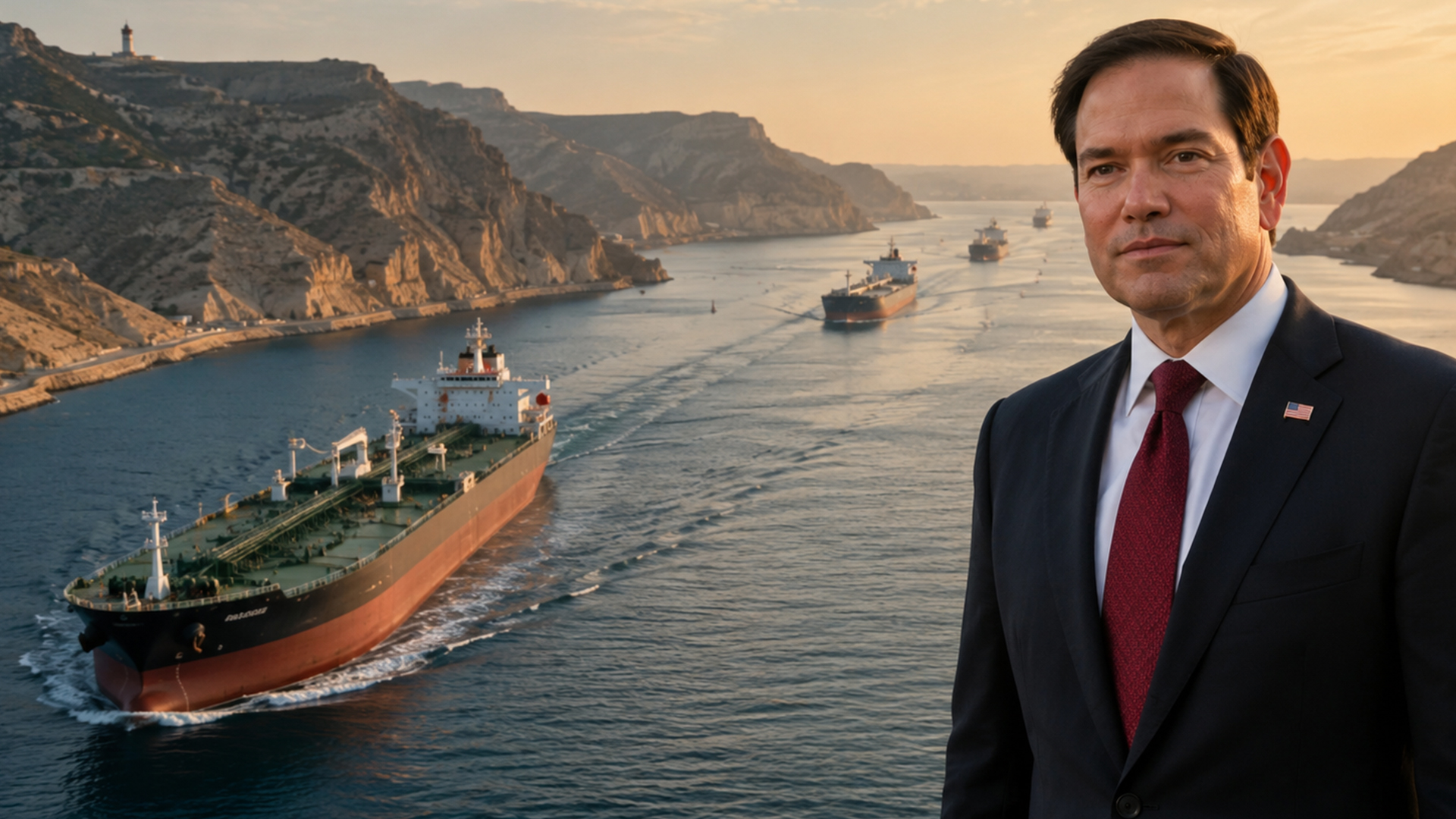
US Secretary of State Marco Rubio has firmly rejected any proposal that would allow Iran to charge tolls or fees on ships passing through the Strait of Hormuz, saying the vital maritime route must remain open and accessible to all nations under international law.
Speaking during a visit to the Gulf region, Rubio said no country has the right to impose charges on vessels using an international waterway. His remarks came amid ongoing negotiations between the United States and Iran following a preliminary agreement aimed at reducing tensions and restoring stability in the region.
The Strait of Hormuz is one of the world’s most strategically important shipping routes, serving as a key gateway for global oil and gas exports. Nearly one-fifth of the world’s seaborne oil trade passes through the narrow corridor, making any restrictions or additional costs a concern for energy-importing countries and global markets.
Rubio’s comments followed reports that Iran and Oman were discussing future arrangements for managing navigation and security in the strait. While some proposals reportedly mentioned costs linked to shipping services, Washington has made it clear that it will not support any system that resembles a transit fee or toll for vessels crossing the waterway.
“It is an international waterway,” Rubio said, stressing that freedom of navigation must be protected. He added that countries in the region also recognise the importance of keeping the route open for global commerce.
The issue has gained attention as the US and Iran continue talks during a 60-day negotiation period focused on broader concerns, including sanctions relief, regional security and nuclear-related matters. While both sides have reported progress in reducing tensions, disagreements remain on several key issues.
Also Read: Iran rejects missile limits despite ongoing US talks