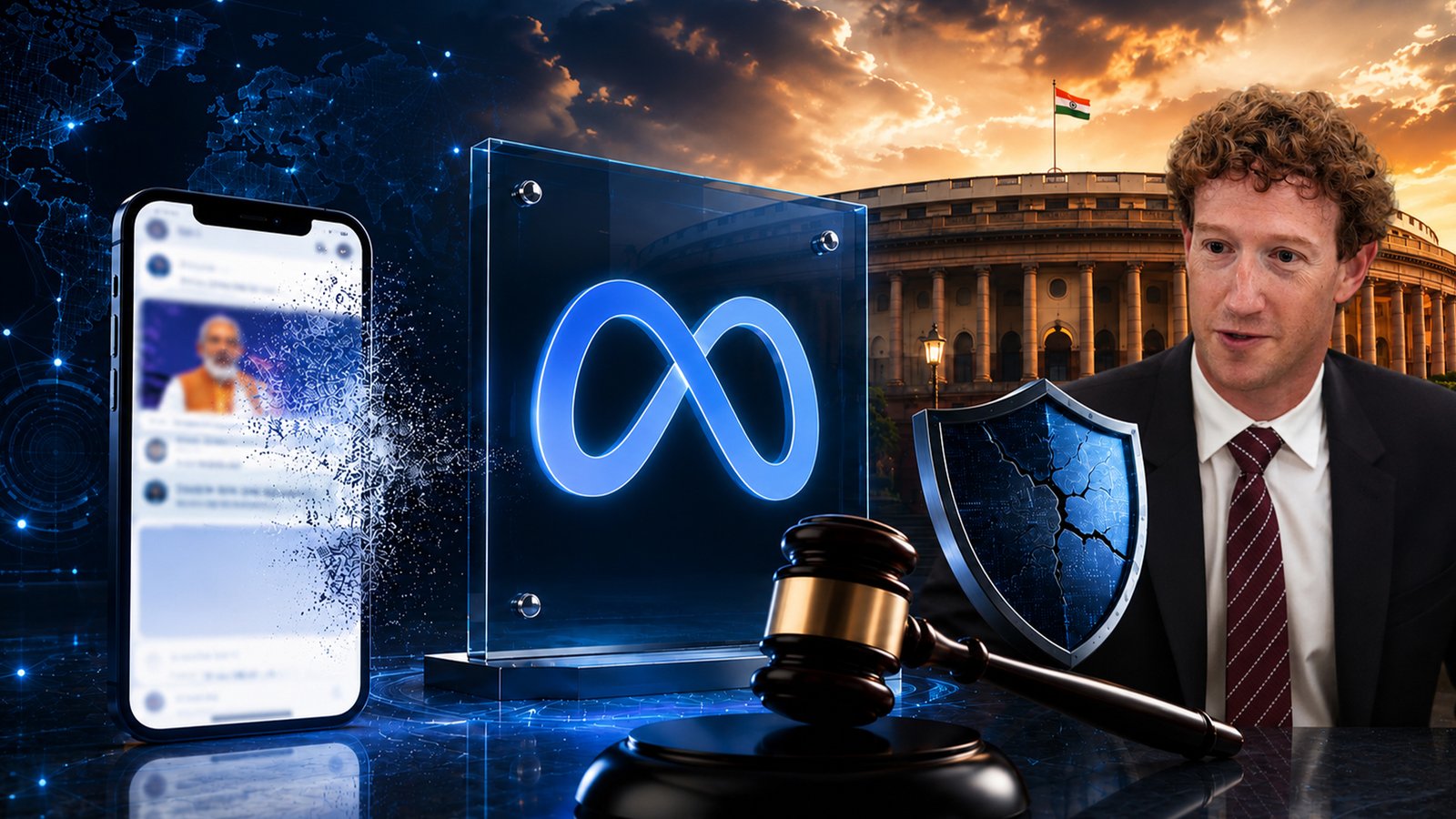
Meta CEO Mark Zuckerberg has been given three days to apologise over the temporary removal of a video posted by Prime Minister Narendra Modi on Facebook, after a parliamentary panel stepped up pressure on the social media giant.
The Parliamentary Standing Committee on Communications and Information Technology, headed by BJP MP Nishikant Dubey, sought an unconditional apology from Zuckerberg on Wednesday. The panel also warned that Meta could face action if it fails to respond within the deadline.
The dispute began last month when a video posted by PM Modi on his official Facebook account was briefly unavailable to users in India. Meta later said the content had been removed “in error” and restored it, blaming a technical problem.
The video, posted on July 23, featured Modi addressing young people amid protests and anger over examination paper leaks. In the message, the Prime Minister spoke about the government’s plans for tougher action against those involved in examination malpractice, including stricter laws and fast-track courts.
The temporary removal quickly drew political attention because the video was posted from the Prime Minister’s verified account. At the time, some Facebook users in India reportedly saw a message saying the content was unavailable because of a legal request.
Meta subsequently clarified that there had been no deliberate decision to remove the video. A company spokesperson said the content had been taken down by mistake and had since been restored. The company also apologised for the incident.
The explanation, however, did not end the matter.
The Ministry of Electronics and Information Technology (MeitY) summoned Meta officials and sought an explanation for how the video could disappear from an official government account. Officials said the technical-error explanation did not fully address their concerns and stressed the need for stronger systems to prevent such incidents.
The issue then moved to Parliament, where lawmakers questioned Meta representatives about the company’s content moderation systems and its handling of content involving public figures.
During the latest meeting, the parliamentary committee took a tougher position. Dubey said Meta’s handling of the Prime Minister’s video was serious enough to warrant an apology from Zuckerberg himself.
The panel has also raised the possibility of removing Meta’s “safe harbour” protection if the company does not comply with its demand. Under Section 79 of India’s Information Technology Act, intermediaries can receive protection from being held legally responsible for third-party content on their platforms, subject to certain conditions.
Losing that protection could have significant implications for Meta’s operations in India because it could increase the company’s legal exposure over content hosted on its platforms.
The committee’s warning has therefore turned what initially appeared to be a technical mistake into a wider debate about social media regulation, platform accountability and the responsibilities of large technology companies operating in India.
Meta has not indicated that it intentionally targeted Modi’s video. Its earlier position was that the content was removed accidentally and restored once the error was identified. The company has already apologised over the incident, but the parliamentary panel is now seeking a fresh and more direct apology from Zuckerberg.
The controversy also comes at a time when the Indian government is closely examining how major digital platforms manage political content, misinformation and public-order issues. Meta, along with other major technology companies, has faced increasing scrutiny from Indian authorities over content moderation and compliance with local laws.
The parliamentary committee recently engaged with representatives of several major platforms, including Meta, Google, X and Snapchat, on issues linked to privacy, public order and digital governance.
For Meta, India is an important market, with hundreds of millions of people using Facebook, Instagram and WhatsApp. Any major regulatory confrontation could therefore have wider consequences for the company’s business and its relationship with Indian authorities.
For the government, the incident has become a question of accountability. Officials argue that content posted from an official account of the Prime Minister should not be made unavailable without a clear and reliable reason.
The three-day deadline now puts the spotlight on Zuckerberg and Meta. It remains to be seen whether the company will issue the apology sought by the parliamentary panel or challenge the committee’s position.
The outcome could also shape the broader conversation around how global technology companies operate and respond to government scrutiny in India’s rapidly expanding digital space.