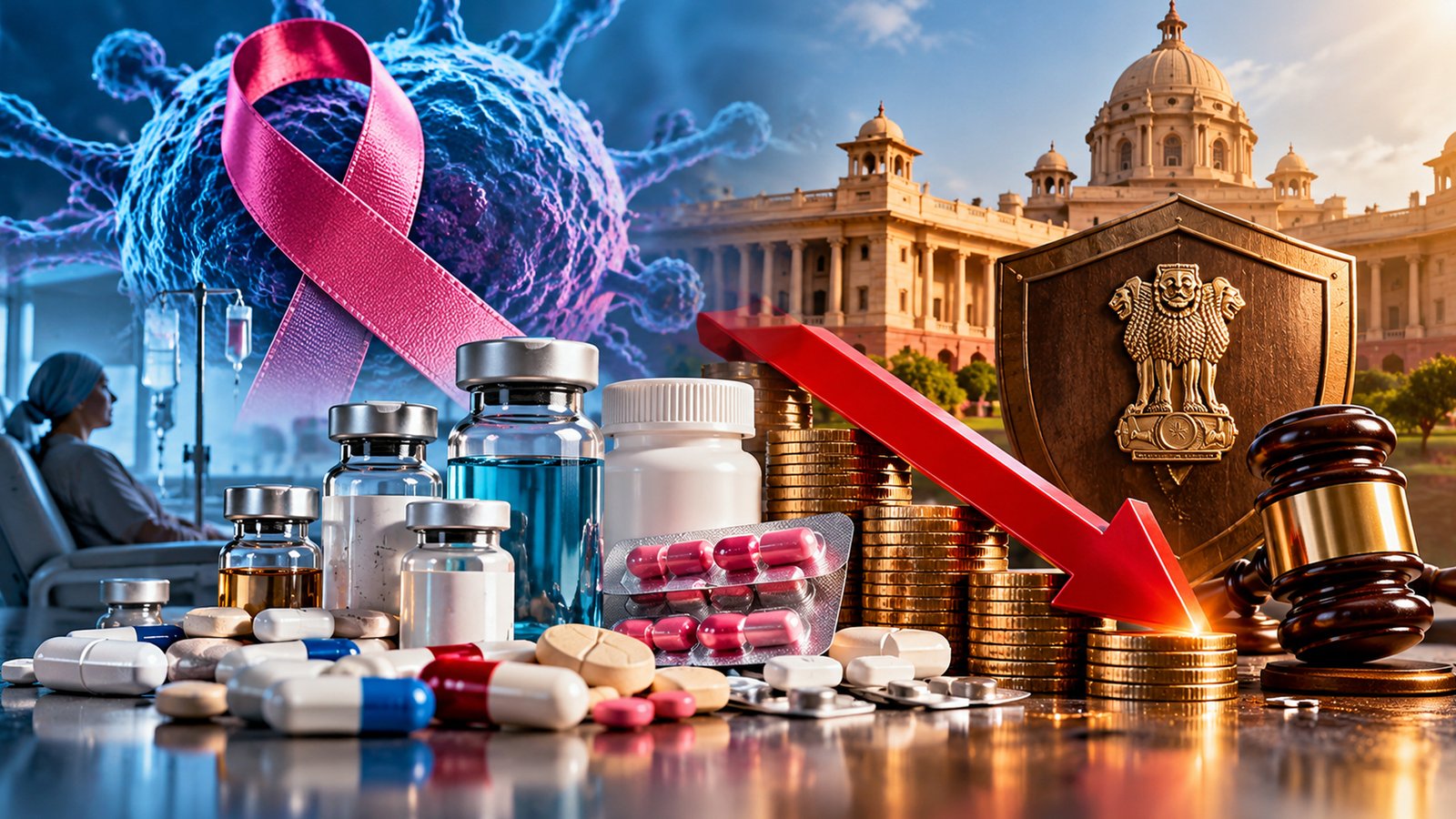
Cancer treatment in India could become more affordable from November 9, as the central government has capped trade margins on 137 anti-cancer medicines at 30%. The move is expected to reduce the prices of selected medicines by 20% to 70%, offering financial relief to patients and families facing high treatment costs.
The National Pharmaceutical Pricing Authority (NPPA), which regulates medicine prices in India, announced the decision to limit trade margins on the selected drugs. The government estimates that the measure could help patients save around ₹2,500 crore annually.
Cancer treatment often involves expensive medicines, repeated prescriptions and prolonged medical care. For many families, the cost of drugs adds to hospital bills, diagnostic tests and other expenses. The latest decision aims to make selected cancer medicines more accessible by limiting the mark-ups added as they move through the supply chain.
The price reduction will vary depending on the medicine and its existing pricing structure. The expected cut of up to 70% does not apply uniformly to all 137 drugs.
The new rules cover non-scheduled anti-cancer medicines, including several specialised treatments used for different types of cancer. The list includes pembrolizumab, ribociclib, abemaciclib, atezolizumab, bevacizumab, daratumumab and enzalutamide.
These medicines are used in treatments for cancers including breast, prostate, ovarian, cervical and colorectal cancer. Some are immunotherapy drugs that help the body’s immune system fight cancer, while others work through targeted treatment approaches.
The medicines were identified following recommendations from an expert committee under the Directorate General of Health Services. The committee included medical specialists, oncologists and government representatives.
Under the new pricing mechanism, the trade margin will be restricted to 30% of the maximum retail price, excluding Goods and Services Tax (GST). The cap applies at the first point of sale to a stockist or distributor. Where manufacturers supply medicines directly to hospitals, the hospital will be treated as the relevant stockist or distributor for the calculation.
The government introduced the measure after an assessment found that non-scheduled cancer medicines carried average trade mark-ups of around 170%, with some reportedly reaching 700%. Such mark-ups can significantly increase the price patients pay, making essential treatment harder to afford.
By limiting these margins, the government hopes to reduce excessive mark-ups while ensuring that manufacturers and distributors continue supplying the medicines.
The latest decision builds on an earlier initiative introduced in 2019, when trade margins were rationalised for 42 anti-cancer drugs. According to government figures, that exercise led to price reductions of up to 90% across 526 brands of non-scheduled cancer medicines and generated estimated annual savings of around ₹984 crore.
The expansion to 137 medicines is intended to extend similar relief to more patients, including those who require specialised cancer treatments.
Manufacturers have been directed to submit revised price details to the NPPA within seven days of the notification. They must also publish updated price lists on their websites and share them with hospitals, pharmacies and other retailers.
From November 9, retailers and hospitals will be required to charge the revised prices and display updated price lists. Authorities have also asked manufacturers to maintain production and supply levels to prevent shortages after the changes take effect.
State drug controllers will monitor compliance among manufacturers, distributors, retailers and hospitals. Companies charging more than the permitted price may be required to deposit the excess amount with interest.
Patients and caregivers can check updated medicine prices through the NPPA website and the Pharma Sahi Daam app. They should confirm the prescribed medicine’s exact formulation and strength with their oncologist or pharmacist before comparing prices.
The price cap will not automatically reduce every part of a cancer patient’s medical bill. Consultation fees, diagnostic tests, hospital stays and other treatment expenses remain separate costs. The actual savings will depend on the medicines prescribed and the extent of the price revision.
The government expects the new rules to make selected cancer drugs more affordable without disrupting supplies. For patients and their families, the changes could ease some of the financial pressure associated with treatment. The real benefit, however, will depend on whether the revised prices reach patients consistently and hospitals and pharmacies follow the new rules.