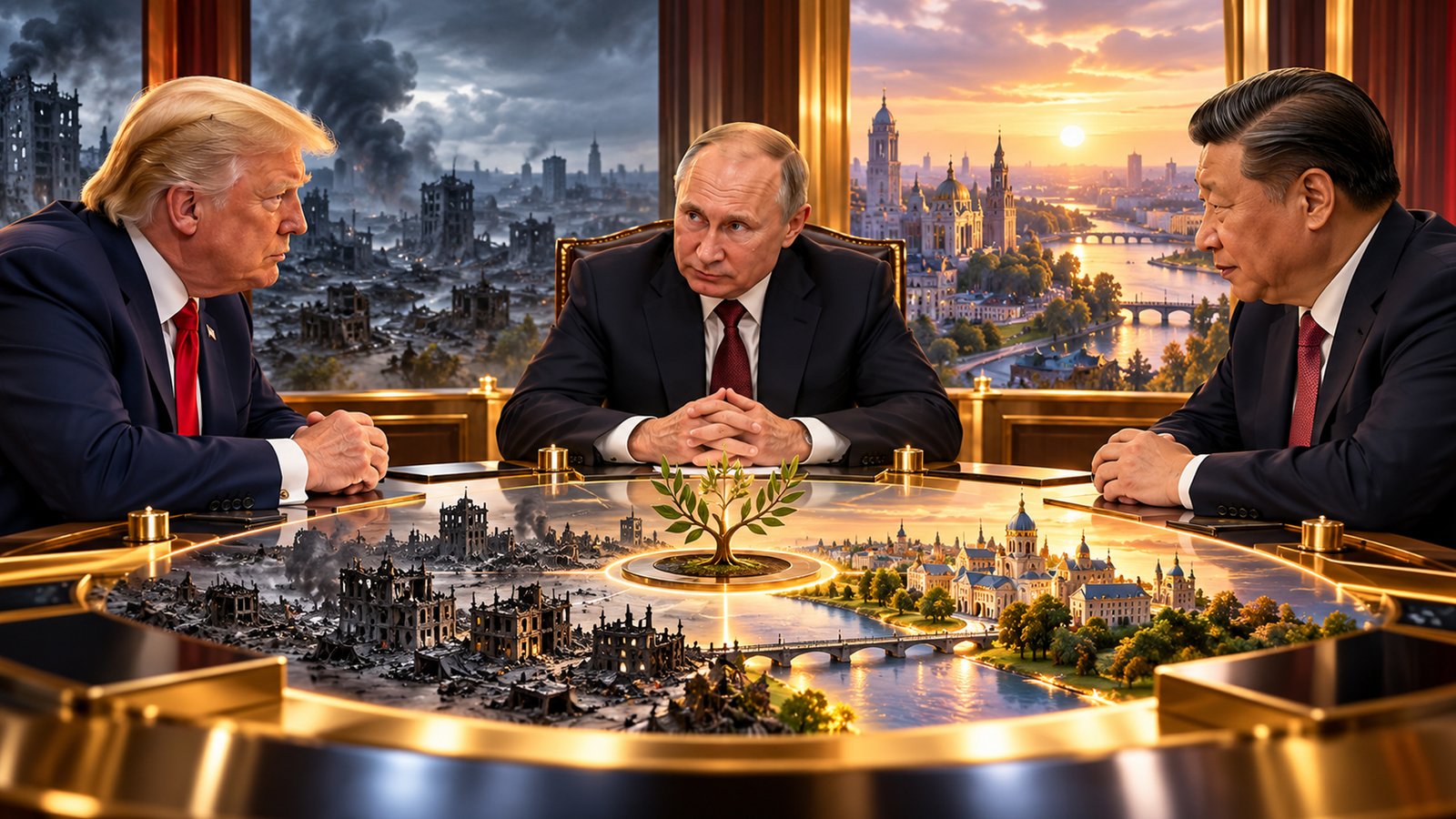
Russian President Vladimir Putin has proposed a meeting with US President Donald Trump and Chinese President Xi Jinping to discuss a possible end to the war in Ukraine. The proposed three-way summit could take place in China next month, but it has raised concerns about whether Ukraine itself would have a seat at the negotiating table.
According to people familiar with the discussions, Putin wants negotiations to produce a settlement favourable to Russia. No final agreement on the summit has been announced, and Trump has not formally committed to attending.
The meeting could be held on the sidelines of the Asia-Pacific Economic Cooperation (APEC) summit scheduled for November 18 and 19 in Shenzhen, China. The Kremlin has reportedly discussed the idea through diplomatic channels, while Beijing has indicated it would not object if Trump agrees to participate.
The proposal is significant because it would bring together the leaders of three major powers to discuss a conflict that has reshaped European security and strained relations between Russia and the West. However, the possibility of holding talks without Ukrainian President Volodymyr Zelenskyy has raised questions about whether an agreement reached by outside powers could secure lasting peace.
Ukraine has repeatedly maintained that decisions about its territory, sovereignty and security cannot be made without its participation. Any negotiations that leave Kyiv out could face strong resistance from the Ukrainian government and its European partners.
The proposal reportedly emerged during a telephone conversation between Putin and Trump on October 9. The call also formed part of discussions surrounding a deal that would allow Russian diesel exports to reach the US market. Washington has sought to use diplomatic and economic measures to encourage Moscow to engage in peace negotiations.
Trump has defended his approach, saying he does not want to take steps that could push Russia away from the negotiating table. In a social media post on Sunday, he said he was working to negotiate peace between Russia and Ukraine and claimed progress was being made, including in hostage negotiations. He did not provide details of any agreement on the proposed three-way summit.
The US administration’s recent decisions involving Russia have nevertheless drawn criticism. Washington has eased certain sanctions and restrictions connected to Russian trade, including measures linked to diesel supplies. The moves have fuelled concern in Kyiv that Moscow could receive economic benefits without making meaningful concessions to end the war.
Ukrainian officials have also questioned whether pressure is being applied equally to both sides. Russia’s continued attacks on Ukrainian cities and energy infrastructure have reinforced fears that diplomatic engagement could proceed while the fighting continues.
US Secretary of State Marco Rubio said on October 19 that Russia and Ukraine should focus on ending the four-year conflict. He acknowledged the possibility of high-level talks involving Trump, Putin and Xi, while warning about the risks of escalation and the wider consequences of the war.
China’s role could prove important if the proposed summit moves forward. Beijing maintains close political and economic ties with Moscow but has also sought to present itself as a supporter of dialogue and a possible diplomatic player in international conflicts. Hosting the APEC meeting would give Xi an opportunity to engage with both Washington and Moscow.
However, a summit involving only the three leaders would face a basic challenge: Russia, the US and China cannot independently settle the questions at the heart of the Ukraine war. Issues such as occupied territory, security guarantees, military arrangements and Ukraine’s future relationship with Western institutions would require direct involvement from Kyiv.
The proposal also comes amid continuing disagreement over the conditions for a ceasefire. Moscow has sought terms that address its security demands and territorial claims, while Ukraine has resisted any settlement that would legitimise the loss of its territory or leave it vulnerable to another attack.
For now, the summit remains a proposal rather than a confirmed diplomatic event. Its timing, agenda and participants have yet to be finalised. Whether Trump accepts the invitation, and whether Ukraine is included in any negotiations that follow, will be crucial to determining whether the initiative can make progress.
The diplomatic effort could open another channel for dialogue among major powers. But without a process that includes Ukraine and addresses its security concerns, a meeting in China may struggle to turn political discussions into a durable end to the war.