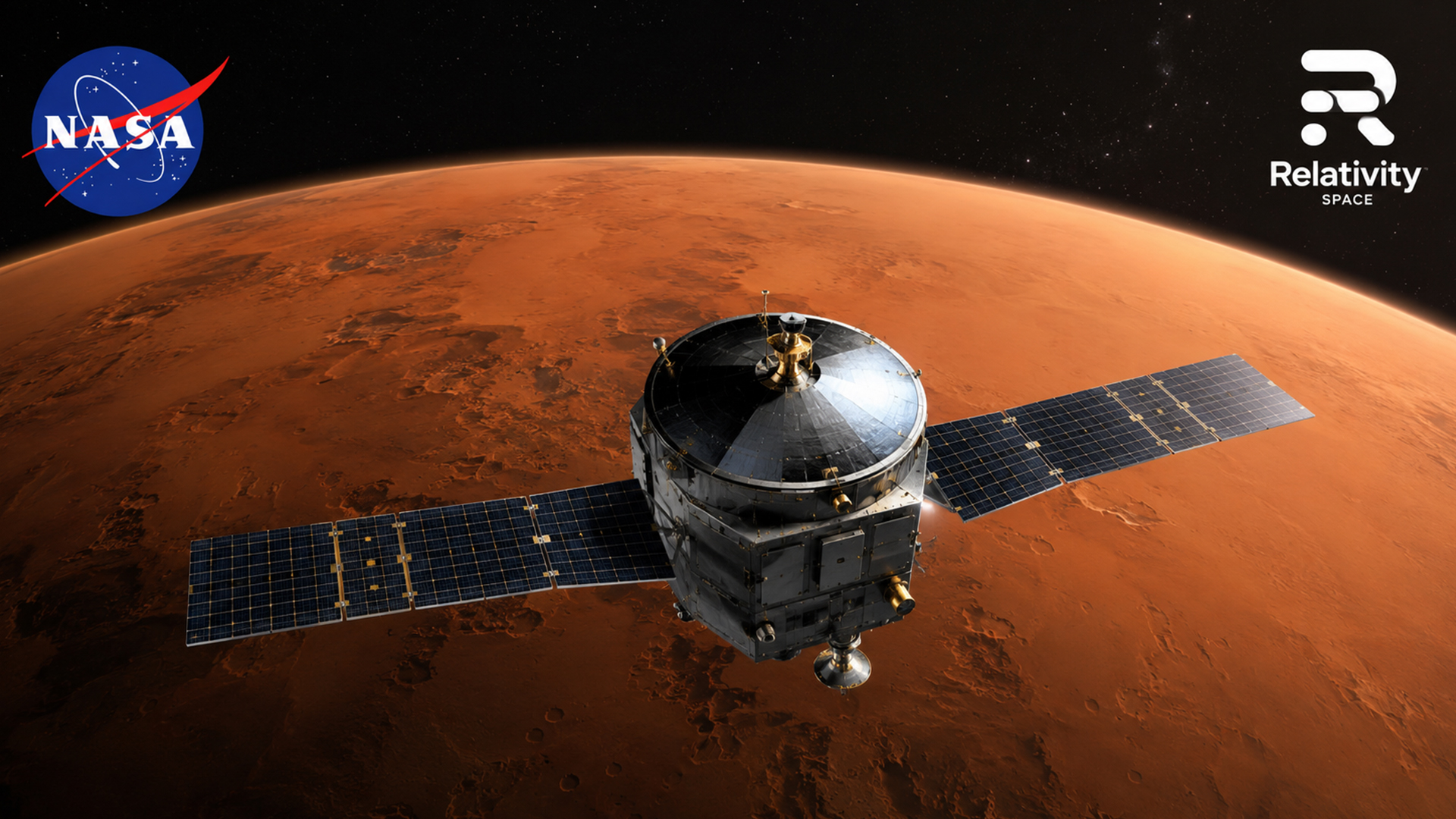
NASA has announced a new public-private partnership aimed at advancing the exploration of Mars, selecting aerospace company Relativity Space for a privately funded mission that could open a new chapter in planetary science.
Under the agreement, Relativity Space will develop and launch a Mars science mission at its own expense, while NASA will contribute scientific expertise, technical support and mission planning assistance. The initiative marks a significant shift in how deep-space exploration projects are being pursued, with greater involvement from commercial partners.
The mission is expected to carry scientific instruments designed to gather valuable data about the Martian environment, helping researchers better understand the planet’s geology, climate and potential for supporting life in the distant past. Specific details about the payload and launch timeline are expected to be announced in the coming months.
NASA officials said the partnership reflects the agency’s broader strategy of leveraging private-sector innovation to expand scientific exploration while reducing costs. By working with commercial companies, NASA hopes to increase the frequency of missions and accelerate the pace of discovery across the solar system.
For Relativity Space, the selection represents a major milestone. The California-based company has gained attention for its advanced manufacturing techniques and ambitions in space transportation. A successful Mars mission would significantly strengthen its position among a growing group of private space firms pursuing interplanetary exploration.
Scientists believe Mars remains one of the most important targets for research because of its similarities to Earth and evidence suggesting it once had conditions capable of supporting liquid water. Data collected from future missions could help answer fundamental questions about the planet’s history and its potential habitability.
NASA officials emphasised that scientific goals remain at the centre of the project. The agency expects the partnership to generate new insights while demonstrating how commercial innovation can contribute to ambitious research objectives.