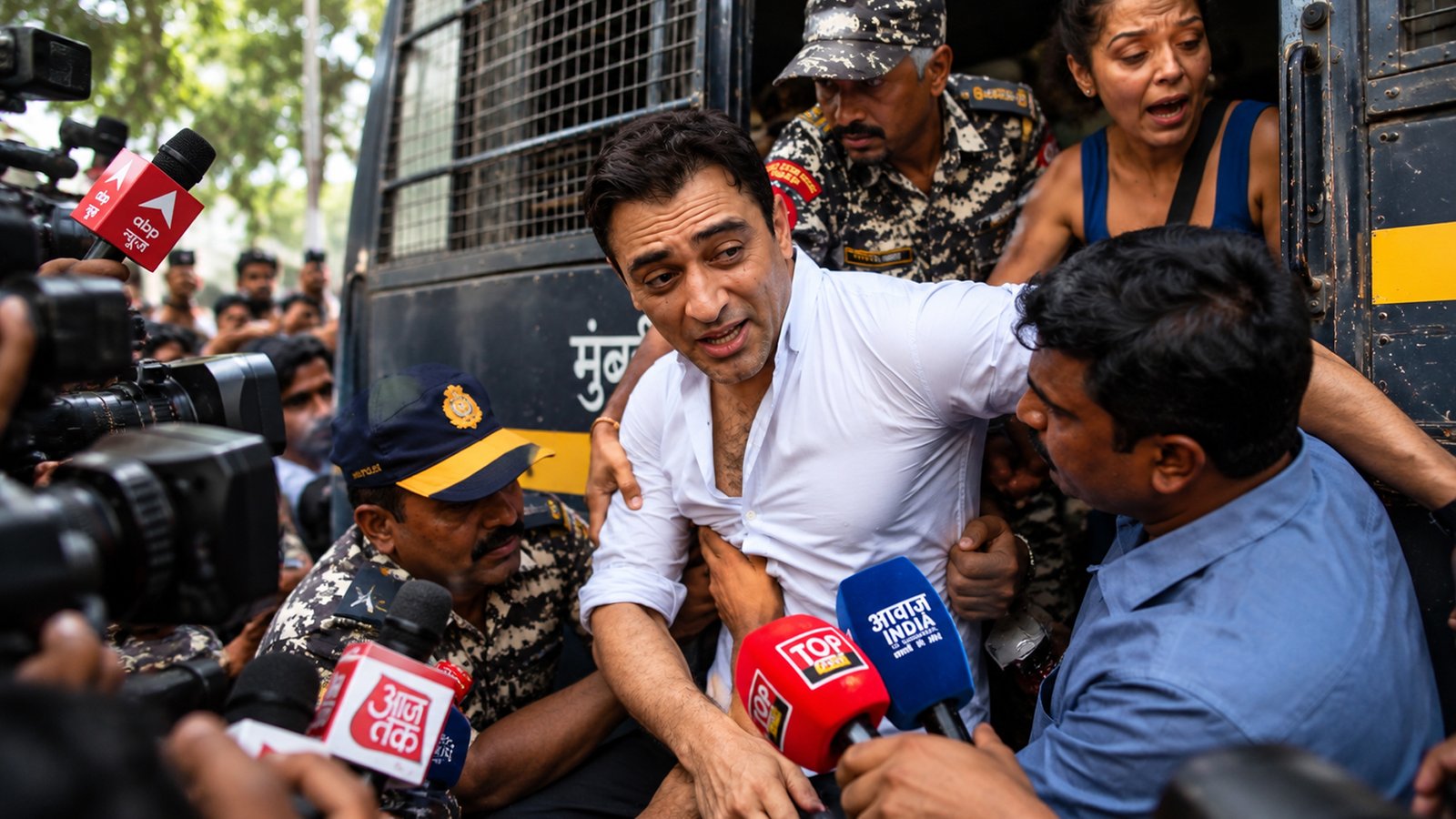
Actor Imran Khan, known for films such as Jaane Tu… Ya Jaane Na, has been asked to leave India by October 28 following his participation in a protest against Chief Election Commissioner Gyanesh Kumar in Mumbai. The notice has brought the actor’s immigration status and the rights of Overseas Citizen of India (OCI) cardholders into focus.
The Foreigners Regional Registration Office (FRRO) issued the notice after Khan attended a demonstration at August Kranti Maidan on October 10. The protest called for Kumar’s resignation amid allegations of irregularities in the Special Intensive Revision (SIR) of electoral rolls.
Khan, a US citizen who holds an OCI card, was among several people detained during the demonstration. He is now preparing to challenge the direction to leave India in the Bombay High Court, according to reports published on October 15. The legal challenge is expected to question the basis for the immigration action and whether his participation in the protest amounted to a violation of the law.
The October 10 demonstration in Mumbai was organised in support of the Cockroach Janta Party (CJP) and its campaign against Chief Election Commissioner Gyanesh Kumar. The protesters demanded his resignation over concerns surrounding the SIR exercise, which involves the revision of electoral rolls.
The gathering took place at August Kranti Maidan, where police detained Khan and other demonstrators. Police had cited the lack of permission for the proposed gathering and restrictions on protest venues in Mumbai.
Khan said he had attended the demonstration in his personal capacity as a Mumbai resident and was not representing any political organisation. His participation, however, attracted scrutiny because he is an American citizen rather than an Indian national.
The issue escalated after BJP leader Kirit Somaiya approached the Mumbai Police on October 12. Somaiya questioned Khan’s involvement in the protest and sought action over what he alleged were violations of rules governing foreign nationals and OCI cardholders.
The complaint was forwarded to the immigration authorities, following which the FRRO issued the notice directing Khan to leave India by October 28.
At the protest, Khan explained that he was attending as a resident of Mumbai and wanted to understand why people’s movement was being restricted and their voices suppressed.
His position is relevant to the legal dispute because the case concerns not only his citizenship but also the specific restrictions, if any, applicable to his participation in the demonstration.
According to reports published on October 15, Khan intends to approach the Bombay High Court through his lawyer, Zulfikar Memon of MZM Legal. The proposed petition is expected to argue that no provision expressly prohibits an OCI cardholder from participating in a protest.
The outcome will depend on the arguments presented, the provisions invoked by the authorities and the court’s assessment of the matter. The reported plan to challenge the notice does not mean that the court has already ruled in Khan’s favour.
An Overseas Citizen of India card allows eligible foreign citizens of Indian origin to visit and live in India under specified conditions. It provides several immigration privileges, including a lifelong, multiple-entry visa, subject to applicable rules.
Despite its name, OCI status does not confer Indian citizenship. Cardholders remain citizens of the countries whose passports they hold and do not enjoy all the constitutional and political rights reserved for Indian citizens.
Article 19 of the Constitution guarantees Indian citizens freedom of speech and expression and the right to assemble peacefully, subject to reasonable restrictions. These specific protections do not extend to foreign nationals in the same manner.
However, the distinction does not automatically establish that every foreign national’s participation in a public protest is illegal. The circumstances, applicable immigration conditions and specific legal provisions are important in determining whether a violation has occurred.
The legal basis for the notice issued to Khan is therefore central to the dispute.
The Immigration and Foreigners Act, 2025, provides the framework for regulating the entry, stay and removal of foreign nationals in India. Under Section 29, the Central Government can direct the removal of a foreign national for violating provisions of the Act, its rules or orders made under it, or on the basis of an adverse security report.
The law also provides powers to regulate the continued presence and activities of foreign nationals in the country. The precise grounds recorded in Khan’s notice will therefore be important in determining the legal questions before the court.
A direction to leave India and cancellation of OCI registration are separate actions governed by their respective legal provisions. Neither should be treated as having occurred unless supported by the relevant official action.
The October 28 deadline makes the proposed legal challenge significant. Khan’s petition could bring greater clarity to the legal provisions relied upon by the authorities and the restrictions applicable to OCI cardholders participating in political demonstrations.
The case has also placed the relationship between immigration rules and political expression under scrutiny. While foreign nationals do not enjoy every constitutional right available to Indian citizens, the legality of any action against an individual must be assessed under the applicable law.
The case is now about more than a celebrity’s participation in a protest. Its outcome could help clarify how immigration provisions apply when an OCI cardholder joins a politically sensitive demonstration in India.