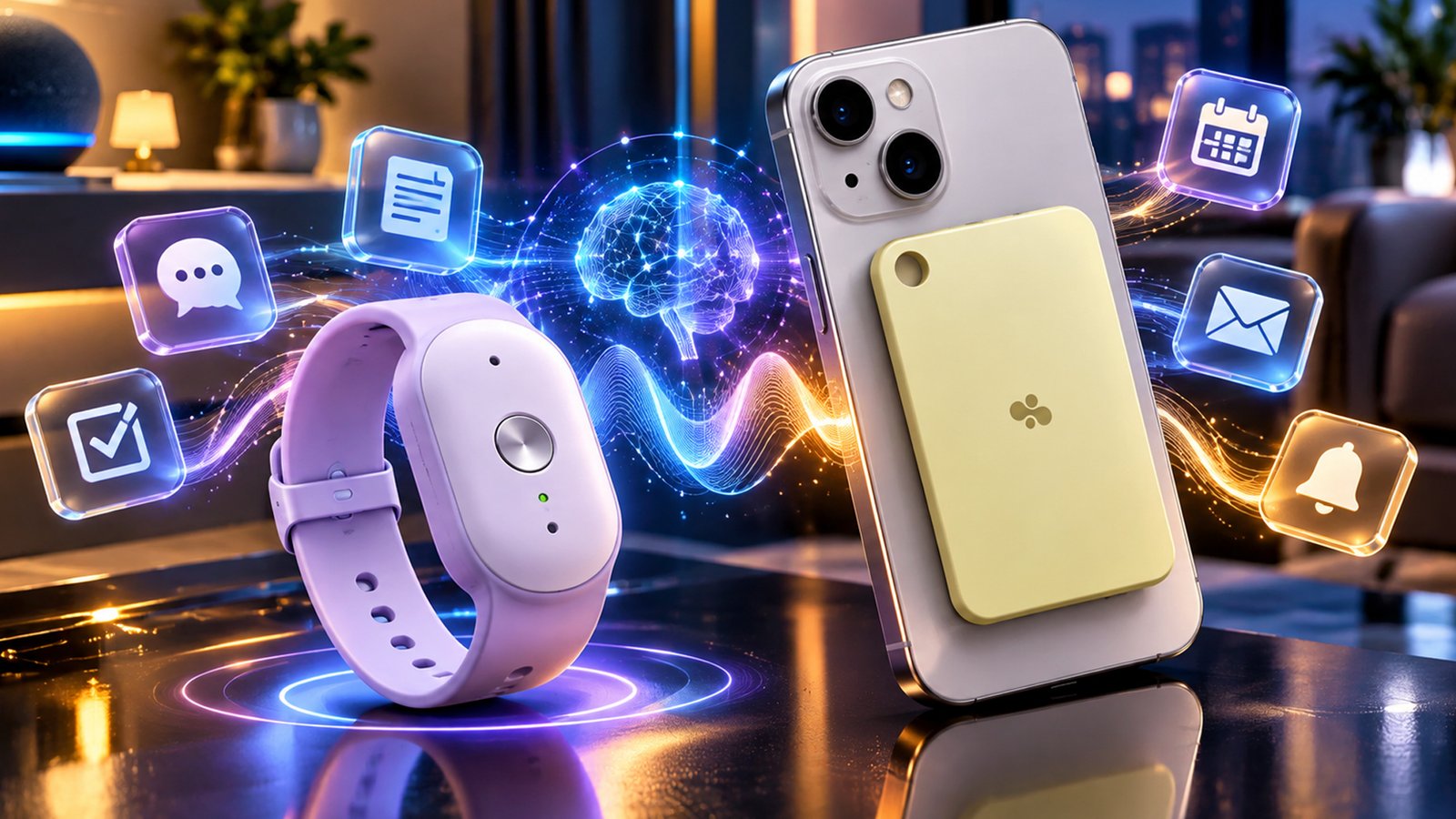
Amazon has introduced two new personal artificial intelligence devices, Bee Frontier and Bee Eclipse, designed to help people remember conversations, organise tasks and manage everyday commitments. Announced on October 15, the devices expand Amazon’s push into AI-powered wearables that can turn spoken conversations into summaries, reminders and actionable insights.
The products are part of the Bee brand, which Amazon acquired in 2025. Unlike conventional smartwatches and fitness bands, the new devices focus on capturing useful information from daily conversations and helping users act on it later.
The idea addresses a familiar problem: people often forget details discussed during meetings, phone calls or casual conversations. A date agreed with a colleague, a task promised to a client or a shopping item mentioned by a family member can easily slip through the cracks. Bee uses AI to capture these details and organise them into information users can revisit.
Amazon says the devices can generate conversation summaries, identify action points, suggest reminders and help users recall important details without having to take notes manually.
Bee Frontier is the next-generation wearable in the product line. It can be worn around the wrist using a silicone band or clipped to clothing, allowing users to carry it throughout the day.
Priced at $74.99 in the United States, the device comes in three colours: Onyx, Lavender and Sage. It features dual microphones with noise filtering, IP67 water resistance and up to seven days of battery life. Charging takes place through a USB-C port.
The device is intended for people who want help remembering information during meetings, social interactions and everyday activities. For example, after a discussion about a project, Bee could provide a summary of key points and list tasks that need to be completed.
Its microphone controls allow users to start and stop audio processing with a button. A visible indicator light signals when the device is active, and users can configure it to stop automatically after a period of silence.
The second product, Bee Eclipse, takes a different approach. It is a slim, credit-card-sized device that attaches magnetically to the back of a compatible smartphone. The design is intended for people who prefer not to wear another gadget.
Bee Eclipse is priced at $99.99 in the United States and is expected to become available soon. Amazon says it offers more than 21 days of battery life on a single charge.
Like Frontier, Eclipse can turn conversations into summaries, insights and to-do lists. It can also process both sides of phone calls when activated, helping users recall details from conversations without relying entirely on handwritten notes or manual recordings.
This could be useful for professionals who regularly speak with clients, students who need to revisit discussions and people coordinating family plans. Users can start and stop the device manually, with an indicator light showing when it is processing audio.
The hardware is only one part of Amazon’s plan. Bee can connect with services such as Gmail, Google Calendar and Microsoft Outlook, allowing it to turn information from conversations into practical tasks.
After a meeting, for instance, the system could identify follow-up actions, help draft an email or suggest a calendar appointment. Users can review summaries through the Bee mobile app, while a desktop application is also available as part of the paid subscription.
The service supports more than 40 languages, according to Bee’s product information, and is designed to personalise its responses over time. It can also identify recurring themes and suggest goals or actions based on information it processes.
Amazon is extending these capabilities through integrations with Alexa+ and Amazon.com. With Alexa+, users can ask for summaries and reminders using voice commands. Connecting Bee to Amazon.com can also support personalised shopping suggestions based on items mentioned in conversations.
The features aim to make the AI assistant more useful beyond simply transcribing speech. Instead of producing a block of text that users must read and organise themselves, Bee attempts to turn spoken information into tasks and decisions.
Devices that process conversations throughout the day raise concerns about consent, security and the privacy of people nearby. Amazon says Bee is designed to process audio in real time and delete it rather than store recordings.
According to the company, transcripts, summaries and extracted tasks are encrypted using keys controlled by the user. Amazon says its secure processing environment is designed to prevent the company itself from accessing private conversation data unless users choose to share it.
Both devices have physical controls and visible indicators to show when they are active. Amazon also says users can delete their stored summaries and transcripts. For Bee Eclipse, the company says users are prompted to obtain permission from call participants when recording starts.
These safeguards will be important as consumers decide whether they are comfortable using AI devices in workplaces, public spaces and personal conversations. Users should still consider local recording laws and seek consent where required.
Bee offers basic conversation summaries, recaps and 14-day memory without an additional subscription. Its Bee Pro plan costs $11.99 per month in the United States and adds unlimited recent summaries, daily memories, suggested tasks, a personal AI assistant, third-party integrations and other features. New customers receive a 30-day Bee Pro trial, according to Amazon.
The company has not announced Indian pricing or an India launch date for the new devices.
The launch places Amazon in a growing market for AI-powered personal devices, where technology companies are exploring ways to make artificial intelligence available beyond phones and computers. Bee Frontier and Bee Eclipse will need to demonstrate that they offer enough everyday value to justify both the hardware cost and any ongoing subscription.
Their appeal will ultimately depend on how reliably they remember useful details, how well they fit into existing routines and whether users trust them to handle personal conversations responsibly.