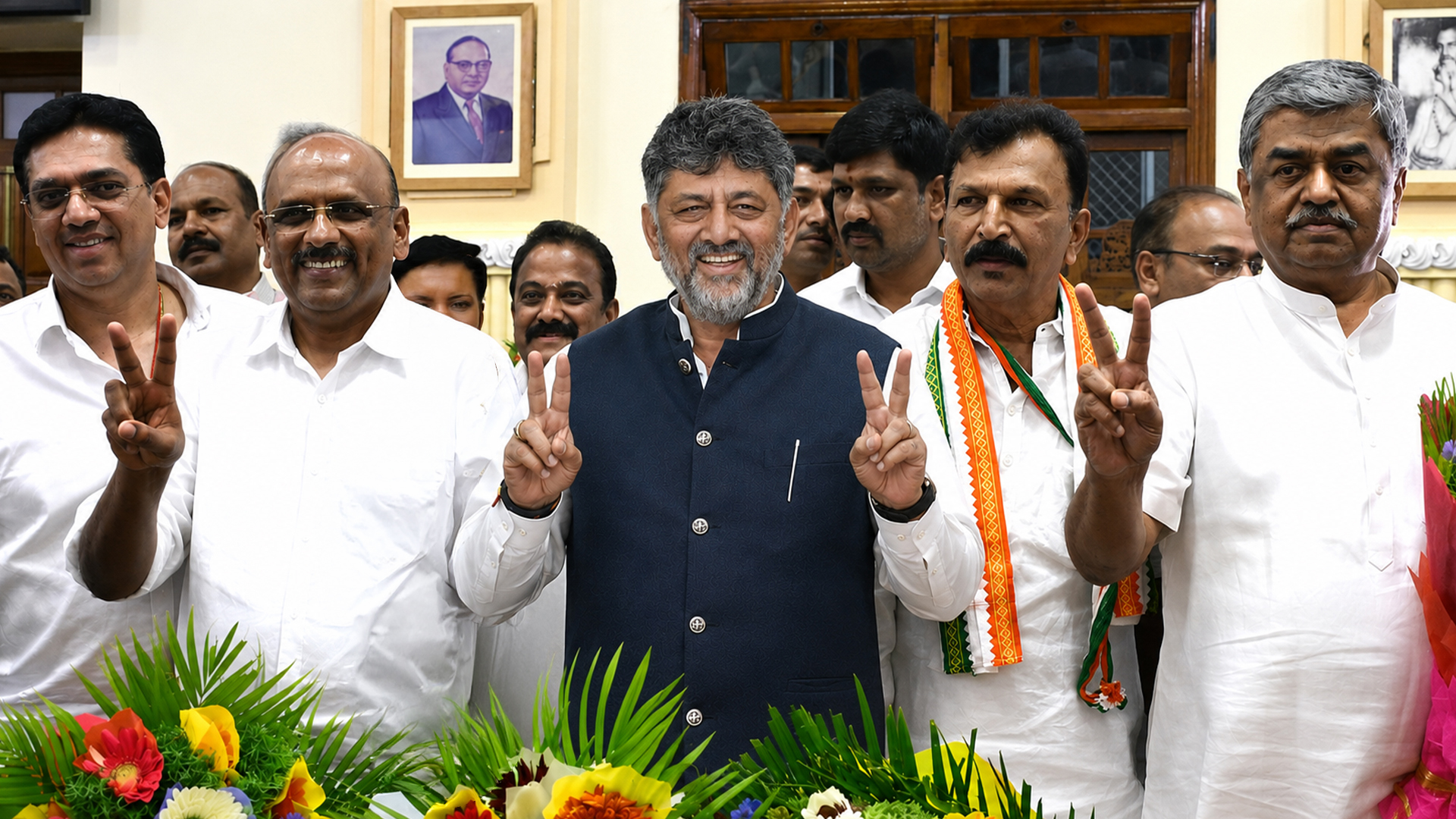
The Congress on Friday won five of the seven seats in the Karnataka Legislative Council elections, reinforcing its dominance in the state legislature. The BJP secured the remaining two seats, but the outcome sparked allegations of cross-voting and political manoeuvring.
The elections were held from the Karnataka Legislative Assembly quota, where MLAs vote to elect members to the Upper House. With a comfortable majority in the Assembly, Congress was widely expected to secure most of the seats on offer.
Congress candidates B.K. Hariprasad, K. Govindaraj, Dinesh Gooligowda, Abdul Jabbar and Ramesh Babu emerged victorious. The BJP’s successful candidates were N. Ravi Kumar and T.N. Javarayi Gowda.
While the results largely reflected the ruling party’s numerical advantage, the voting pattern triggered controversy. Congress leaders claimed that some opposition legislators may have voted in favour of its candidates. The BJP, meanwhile, alleged irregularities in voting and suggested that cross-voting had influenced the final outcome.
The election has once again highlighted the unpredictability of indirect polls, where voting often takes place through secret ballots and party equations do not always translate into expected results. Such contests frequently expose internal dissension and shifting political loyalties.
For Chief Minister Siddaramaiah and the Congress leadership, the result is being seen as a political boost. The additional seats will strengthen the party’s position in the Legislative Council and help it push its legislative agenda more effectively.
The BJP, however, downplayed the setback and said it would analyse the voting pattern in detail. Party leaders indicated that the outcome raised questions about whether legislators had voted along official party lines.
Political observers noted that the Council election result underscores Congress’s strong grip on Karnataka politics at present. At the same time, the allegations of cross-voting are likely to fuel fresh debates within both major parties over discipline and internal cohesion.
Also Read: 8.25% EPF interest credit set to begin soon