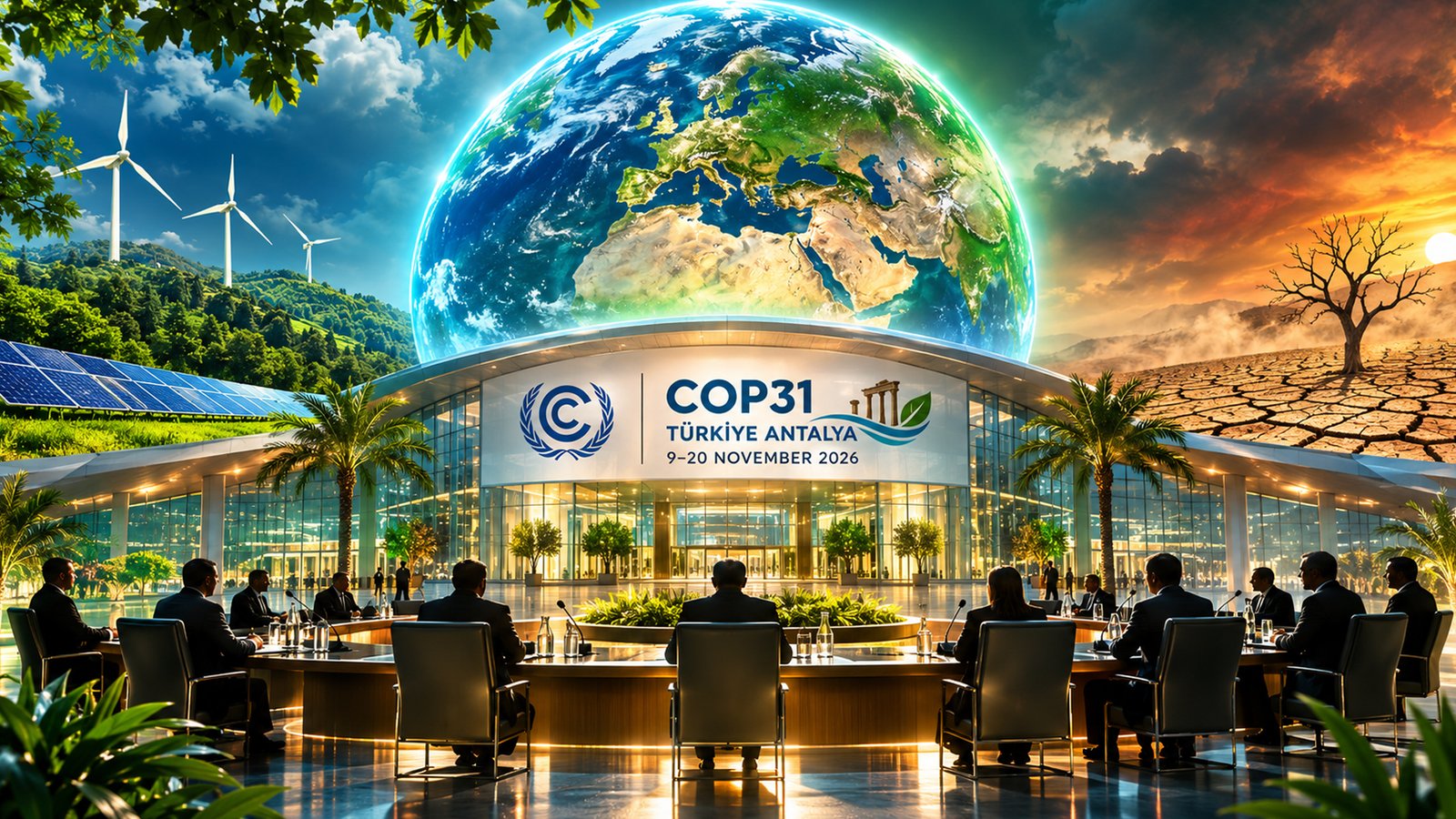
The 31st United Nations Climate Change Conference (COP31), being held in Antalya, Türkiye, has brought climate justice, financial responsibility and the future of fossil fuels back into the centre of global discussions. As countries negotiate ways to tackle rising temperatures, United Nations Secretary-General António Guterres has called for a new global climate justice compact, urging wealthy nations and major polluters to take greater responsibility for the damage caused by climate change.
The proposal comes at a critical moment for international climate negotiations. Developing countries are demanding financial assistance to deal with extreme weather events, rising temperatures and environmental destruction, while developed economies face growing pressure to fulfil their long-standing climate finance commitments. The central question at COP31 is no longer simply how the world can reduce emissions, but also who should pay for the transition and the damage already caused.
Speaking at the high-level leaders’ summit in Antalya, Guterres warned that the world was running out of time to contain global warming. He said that even if countries fully implemented their existing climate commitments, global temperatures could rise by more than 2.5 degrees Celsius by the end of the century. This would be considerably higher than the 1.5-degree threshold that countries agreed to pursue under the 2015 Paris Agreement.
The UN chief stressed that crossing the 1.5-degree threshold should not become an excuse for governments to slow down climate action. Every fraction of a degree matters because higher temperatures increase the intensity and frequency of heatwaves, floods, droughts and other climate-related disasters.
His proposed climate justice compact rests on four broad priorities. These include accelerating the transition away from fossil fuels, protecting vulnerable communities, increasing affordable climate finance and strengthening international cooperation. The proposal also emphasises the need for national transition plans that protect workers and communities dependent on coal, oil and gas industries.
One of the strongest messages from Guterres was that fossil fuel companies and major polluters must contribute more towards addressing the climate crisis. He called on governments to consider taxing windfall profits earned by oil and gas companies and directing the money towards climate-related support.
To underline the imbalance, Guterres compared the profits of the world’s nine largest oil companies, which earned around $95 billion in a single quarter, with the approximately $600 million available to the international fund supporting countries facing climate-related loss and damage. He argued that the burden of climate action should not fall disproportionately on nations that have contributed relatively little to global emissions.
The demand for climate finance has emerged as one of the most difficult issues at COP31. Developing countries need substantial resources to build climate-resilient infrastructure, strengthen disaster preparedness, protect agriculture and expand renewable energy. However, the availability of international funding remains far below what is required.
A major development at the beginning of the conference was the adoption of a standalone Climate Finance Work Programme. The inclusion of this programme was a significant demand from developing countries, including India. It provides a dedicated platform to examine how developed countries are meeting their financial obligations under the Paris Agreement.
The programme is expected to look beyond headline funding figures and examine whether climate finance is predictable, accessible and adequate. Developing countries have repeatedly argued that financial commitments should translate into actual resources rather than remain political promises.
However, the agreement came after disagreements between developed and developing nations. Proposals for separate discussions on tripling adaptation finance and climate-related trade measures were dropped during negotiations over the conference agenda.
The scale of the adaptation funding gap highlights the challenge. According to the United Nations Environment Programme’s 2026 Adaptation Gap Report, developing countries may require around $305 billion annually by 2035 to adapt to climate change. International public adaptation finance stood at only $28.2 billion to $31.7 billion in 2024.
This difference is particularly worrying for countries already facing repeated climate disasters. Poorer nations often lack the financial capacity to rebuild infrastructure, protect vulnerable populations and prepare for extreme weather events. Many are also dealing with debt burdens that restrict their ability to invest in long-term climate resilience.
The question of climate responsibility has also gained attention through research examining the historical contribution of different countries to global warming. A recent analysis published in Down To Earth argues that conventional measures based on total historical emissions do not fully capture the inequality between wealthy and poorer populations.
The research uses a lifestyle-based approach to assess how much the planet would have warmed if everyone had historically consumed energy and emitted carbon at the level of an average citizen in different countries. Its findings indicate that if the entire global population had followed the historical lifestyle of an average American, global warming would have reached approximately 3.7 degrees Celsius. A similar calculation based on the average Qatari lifestyle suggests warming of more than 5 degrees Celsius.