Former Australia vice-captain David Warner has reignited the controversy surrounding the 2018 ball-tampering scandal, accusing Cricket Australia (CA) of conducting a flawed investigation and suggesting that the governing body may have covered up important details.
In a fresh statement on Instagram on Saturday, November 14, Warner questioned why three members of Australia’s bowling attack — Mitchell Starc, Josh Hazlewood and Nathan Lyon — were allegedly not interviewed during Cricket Australia’s original investigation into the infamous Sandpapergate episode.
Warner said he was unaware of the three bowlers being questioned as part of the inquiry and challenged the governing body’s conclusion that the wider bowling group had no knowledge of the ball-tampering plan.
“As far as I am aware, CA did not interview Josh Hazlewood, Mitchell Starc or Nathan Lyon in their 2018 investigation. If that’s correct, then how can CA push the idea that the bowlers didn’t know?” Warner wrote.
He went on to accuse Cricket Australia of deciding who should take responsibility before completing its investigation. According to Warner, the inquiry was inadequate and appeared designed to support a particular version of events.
The former Australia opener described the investigation as a “shoddy” exercise and said the governing body’s continued position raised serious questions about whether the full story had ever emerged.
His latest comments have added another dimension to the renewed debate over Sandpapergate, which has returned to the spotlight following revelations in former Australia batter Usman Khawaja’s autobiography, Sabr.
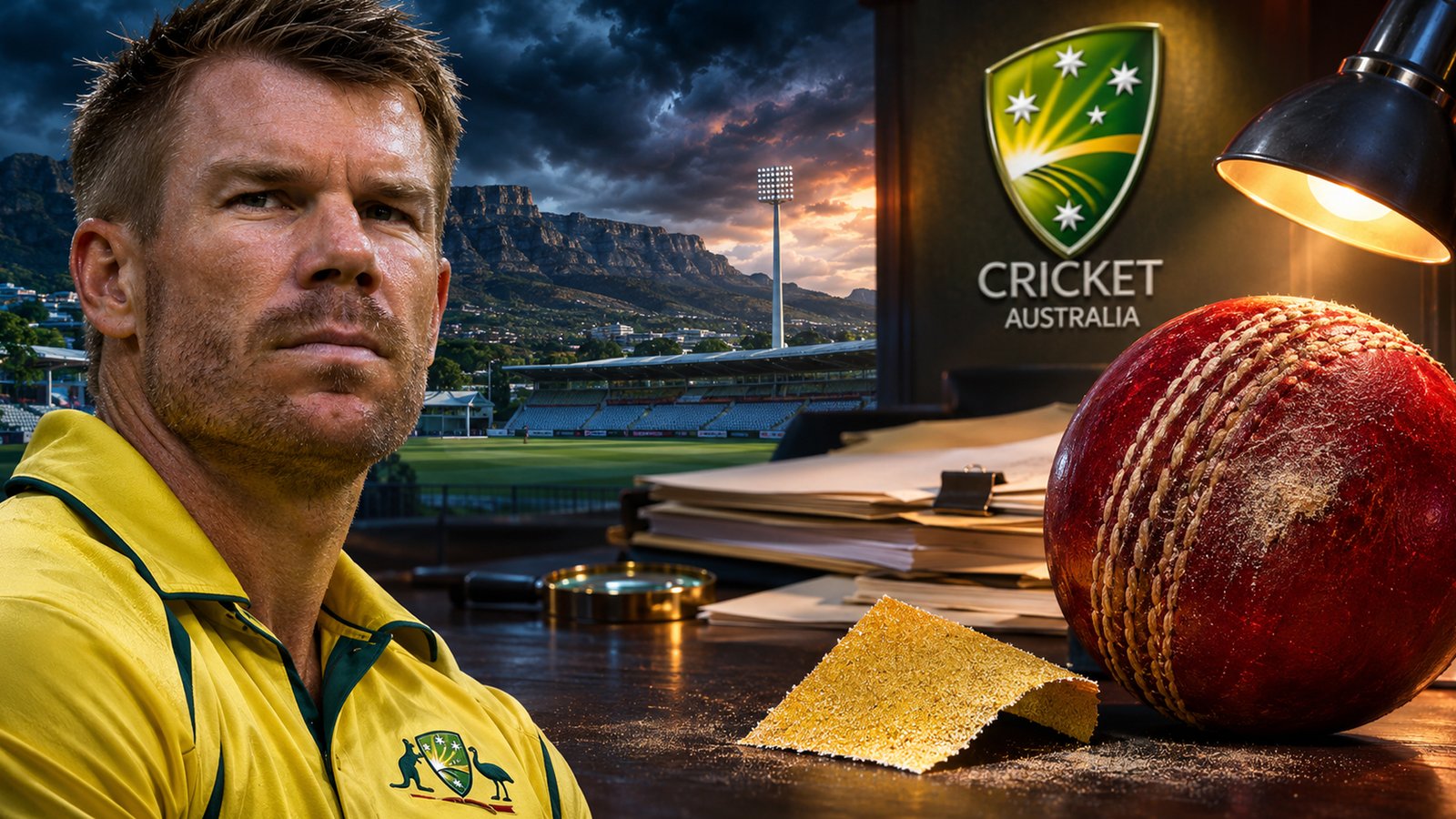
The controversy first erupted during the third Test between Australia and South Africa at Newlands, Cape Town, in March 2018. Australian batter Cameron Bancroft was caught on television cameras attempting to alter the condition of the cricket ball using a piece of sandpaper. The incident triggered a major crisis for Australian cricket and led to an investigation by Cricket Australia.
The investigation identified three players as responsible for the incident. Warner was accused of devising the plan, Bancroft was found to have carried out the ball-tampering attempt, while then-captain Steve Smith was held responsible for knowing about the plan and failing to prevent it.
Following the findings, Smith and Warner received 12-month suspensions, while Bancroft was handed a nine-month ban. Smith was also removed from the captaincy, while Warner was prohibited from holding a leadership position in Australian cricket.
The punishment attracted considerable attention internationally, with the scandal damaging Australia’s reputation and raising questions about the team’s culture and approach to the game.
The latest controversy began after Khawaja made fresh claims in his autobiography Sabr, suggesting that knowledge of the ball-tampering operation extended beyond the three players who were punished.
Khawaja’s account challenged the widely accepted version of events that only Smith, Warner and Bancroft knew about the plan. He suggested that the wider Australian dressing room was aware of what was happening.
Warner has strongly supported his former teammate’s account, describing Khawaja’s claims as truthful. He has also criticised the way the original investigation was handled, arguing that the three players who faced disciplinary action were left to carry the consequences.
The allegations have reopened difficult questions about the responsibility of other members of the Australian team during the South Africa tour.
However, the claims remain disputed, and there has been no independent confirmation that the entire Australian team knew about the use of sandpaper.
Australia’s current Test captain Pat Cummins has firmly rejected Khawaja’s claims, particularly the suggestion that the entire bowling group knew sandpaper was being taken onto the field.
Speaking at a lengthy press conference on Friday, Cummins described the allegations as “complete and utter nonsense”. He maintained that he had no knowledge of sandpaper being used during the Cape Town Test and insisted that his account had remained consistent since the incident.
Cummins also disputed the suggestion that he and other players had helped organise a wider ball-tampering operation. He said he was surprised by Khawaja’s account and defended the version of events he had presented during the original investigation.
Warner subsequently criticised Cummins’ response, accusing the Australian captain of throwing Khawaja under the bus. The former opener said he felt for his old teammate and stood by the claims made in the autobiography.
Starc has also responded to the renewed allegations. Speaking at the launch of Australia’s summer cricket season earlier this week, the left-arm fast bowler said his recollection of the incident had not changed.
He maintained that the bowling group was unaware of any foreign object being taken onto the field to alter the ball’s condition. Starc said the players only became aware of what had happened after seeing the incident on the stadium’s big screen in Cape Town.
In 2021, Cummins, Starc, Hazlewood and Lyon had jointly maintained that they did not know about the use of sandpaper on the field. Starc has reiterated that position, while Hazlewood and Lyon have not yet publicly responded to Warner’s latest allegations.
Warner’s accusations have placed Cricket Australia under renewed scrutiny, particularly over the credibility and completeness of its 2018 investigation.
However, the governing body has defended its handling of the matter and indicated that it does not see a compelling reason to reopen the inquiry.
A Cricket Australia spokesperson said all players had been given an opportunity to speak during the original investigation. The organisation also maintained that players and former players had been able to approach it with additional information during the eight years since the incident.
The governing body reiterated that it respected every player’s right to provide their own account of what happened during the South Africa tour.
Cricket Australia chief executive Todd Greenberg has also indicated that there is no compelling reason to revisit the original investigation.
Warner’s latest allegations, however, have brought attention back to questions that have remained unresolved within Australian cricket.
At the heart of the dispute is whether the 2018 investigation established the full extent of the players’ knowledge or whether responsibility was limited to those directly identified in the inquiry.
For Warner, the alleged absence of interviews with three prominent bowlers raises doubts about the conclusions reached at the time. For Cummins and Starc, their accounts remain unchanged.
Eight years after Sandpapergate, the controversy continues to divide former teammates, with Khawaja’s revelations and Warner’s accusations challenging the established narrative. Whether the latest claims will lead to further disclosures remains uncertain, but the episode has once again placed Australian cricket’s most damaging scandal under the spotlight.