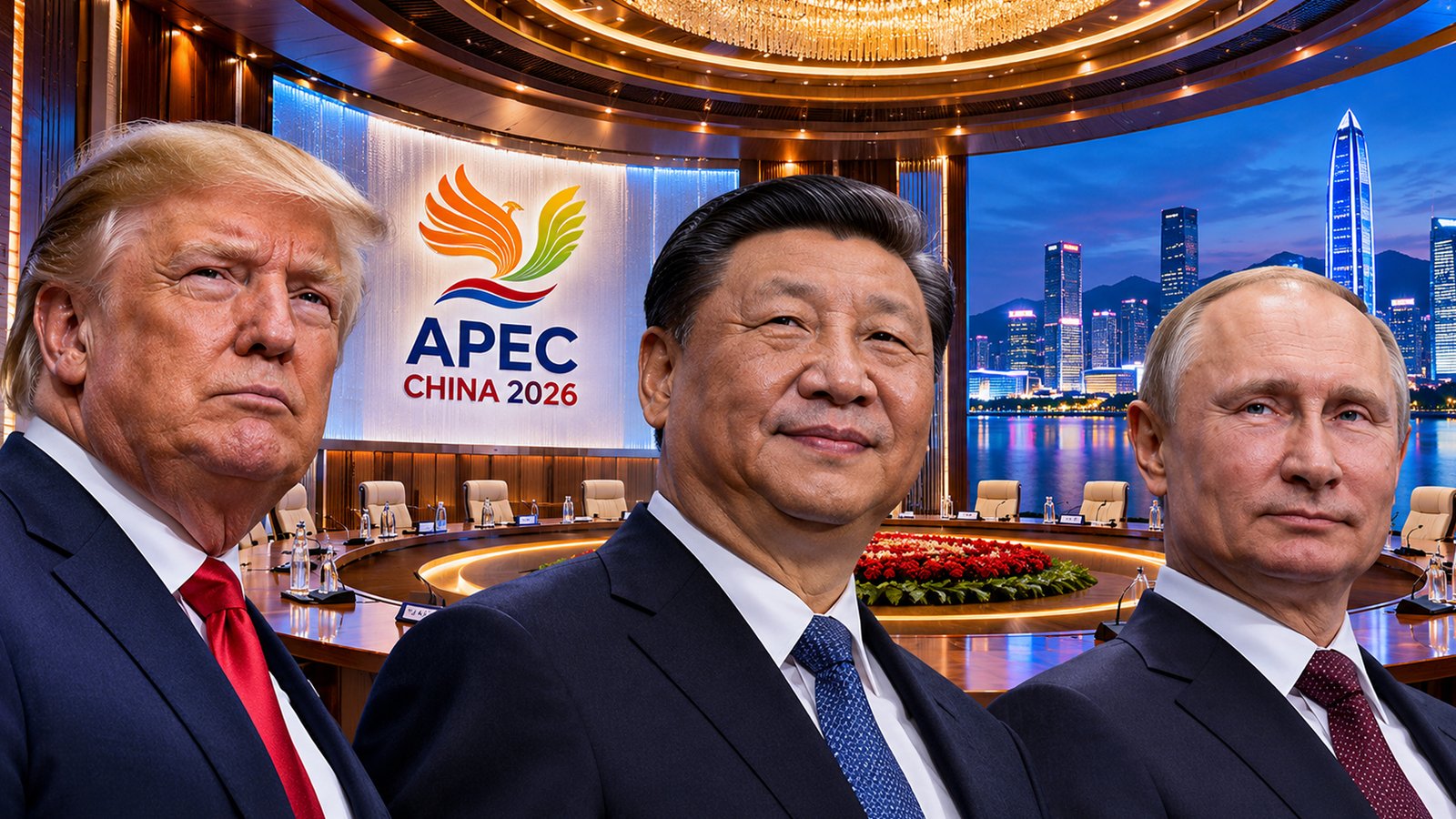
US President Donald Trump, Chinese President Xi Jinping and Russian President Vladimir Putin are set to hold an unprecedented trilateral meeting in China on November 19, bringing together the leaders of three major global powers at a time of growing geopolitical tensions. The meeting, scheduled on the sidelines of the Asia-Pacific Economic Cooperation (APEC) summit in Shenzhen, is expected to focus on nuclear arms control and the ongoing Iran conflict.
The White House confirmed the planned engagement on Friday, November 13, saying Trump intends to discuss reducing nuclear weapons worldwide. The proposed gathering will mark the first known three-way meeting involving the leaders of the United States, China and Russia.
White House spokesperson Olivia Wales said nuclear weapons proliferation was a serious concern for Trump and that he wanted to explore ways to reduce global stockpiles. However, a senior US administration official cautioned that Washington was not expecting a formal agreement to emerge from the discussions.
The official described the meeting as an initial opportunity for the three countries to begin a conversation at the highest political level.
Nuclear disarmament is expected to be one of the central subjects of the meeting. Trump’s administration has expressed interest in a new agreement covering the nuclear arsenals of the United States, Russia and China.
The discussions come several months after the expiry of the New Strategic Arms Reduction Treaty, commonly known as New START, in February 2026. The agreement was the last major nuclear arms control treaty between Washington and Moscow. Its expiry removed restrictions on the world’s two largest nuclear arsenals for the first time in more than five decades.
Trump has called for a new and modernised nuclear agreement that includes China alongside Russia and the United States. However, securing Beijing’s participation could prove difficult.
China has traditionally resisted joining nuclear arms reduction negotiations, arguing that its nuclear arsenal is considerably smaller than those of Washington and Moscow. According to US estimates, China possesses more than 600 nuclear warheads, while the United States and Russia each have arsenals exceeding 5,000.
Beijing has maintained that the two countries with the largest stockpiles should take the lead in nuclear disarmament before China considers similar restrictions.
The proposed meeting could provide an opportunity to address these differences, although expectations of an immediate breakthrough remain low.
The ongoing war involving the United States, Israel and Iran is another important issue expected to feature in the discussions.
Washington has indicated that Trump wants to discuss the conflict with Xi and Putin, particularly in view of its wider implications for regional security, energy supplies and international stability.
Russia and China maintain significant political and economic relationships with Tehran. Their influence could become important in any diplomatic effort to reduce tensions and explore a possible resolution.
The conflict has also affected global energy markets, with disruptions and uncertainty surrounding oil supplies raising concerns among major economies.
Trump’s decision to bring Iran into the trilateral agenda reflects Washington’s interest in involving other influential powers in discussions about the conflict. However, the positions of the three countries differ considerably, and it remains uncertain whether their discussions will produce a common approach.
Despite Russia’s continuing war with Ukraine, the conflict is not expected to form part of the formal trilateral discussions.
A senior US official indicated that Washington would avoid raising the issue because it is being handled through a separate diplomatic channel involving Russia and Ukraine.
The decision could nevertheless attract attention in Europe and Kyiv. Ukrainian President Volodymyr Zelenskyy has expressed concern that the three powerful leaders could discuss a possible settlement without Ukraine’s participation.
Putin’s presence alongside Trump and Xi could also carry considerable diplomatic significance for Moscow. Russia has faced Western sanctions and political isolation following its invasion of Ukraine in 2022, but continues to maintain close ties with China.
Beijing and Moscow have strengthened their economic and strategic cooperation, with China emerging as an important trading partner for Russia.
The planned meeting is expected to take place during Trump’s visit to China for the APEC summit on November 18 and 19.
Trump is scheduled to meet Xi separately on November 19, including a bilateral meeting and working lunch, before concluding his China visit with the trilateral engagement. A separate one-on-one meeting between Trump and Putin is not currently planned.
The proposed gathering has drawn comparisons with the 1945 Yalta Conference, where the leaders of the United States, Britain and the Soviet Union discussed the post-war international order.
However, Kremlin spokesperson Dmitry Peskov has played down the comparison, saying that any agreements reached in Shenzhen should be based on mutual respect and benefit rather than attempts by powerful countries to impose their positions on others.
For Xi, hosting the meeting offers an opportunity to demonstrate China’s growing diplomatic influence. It also comes as Beijing seeks to maintain a fragile trade understanding with Washington, with several economic differences still unresolved.